Cost-Efficient Media Buying Tactics for Delhi’s Bus Shelter and DOOH Networks
Cost-efficient media buying in Delhi uses bus shelter ads and DOOH networks to maximise reach, frequency, and urban ROI.
Cost-Efficient Media Buying in Delhi has become a priority for brands navigating rising media costs and fragmented urban audiences. As India’s political and administrative capital, Delhi offers massive daily commuter volumes. However, premium outdoor sites often come with premium pricing.
Therefore, smart advertisers increasingly rely on bus shelter advertising and DOOH (Digital Out-of-Home) networks to balance visibility with budget efficiency. When planned correctly, these formats deliver high dwell time, repeated exposure, and strong brand recall without excessive spends.
Understanding Delhi’s Bus Shelter Advertising Ecosystem
Why Bus Shelters Are Cost-Effective in Delhi
Bus shelters are among the most efficient outdoor formats in Delhi because they combine high footfall with long dwell time. Commuters waiting for buses spend several minutes at shelters, allowing brand messages to be absorbed naturally.

Moreover, bus shelters are spread across residential, commercial, and mixed-use zones. As a result, advertisers can hyper-target specific neighbourhoods without citywide overinvestment.
Key Advantages of Bus Shelter Advertising
-
Lower CPM compared to large hoardings
-
Proximity to pedestrians and slow-moving traffic
-
Consistent daily exposure across routes
Because of these benefits, bus shelters form the backbone of cost-efficient media buying strategies.
DOOH Networks in Delhi: High Impact Without High Waste
Digital Screens with Flexible Buying Options
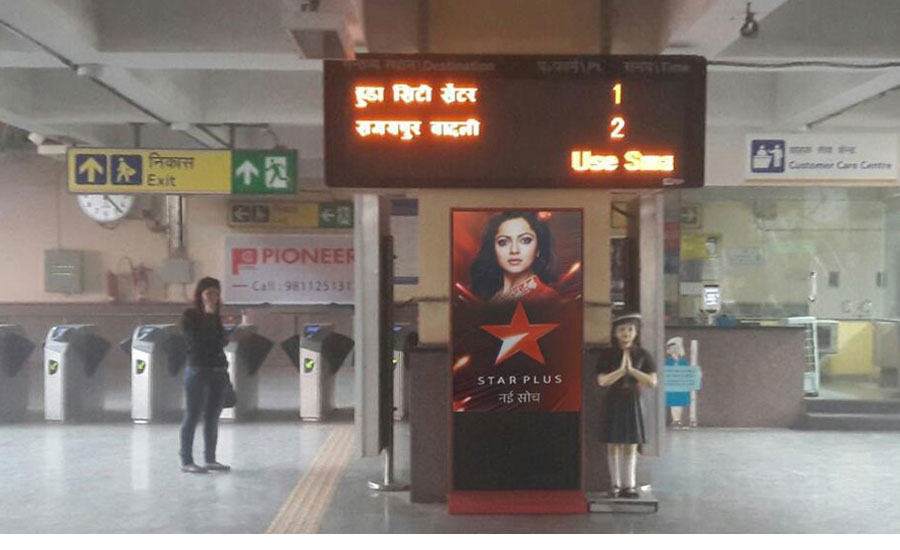
DOOH advertising strengthens cost-efficient media buying in Delhi by allowing brands to pay only for relevant impressions. Digital screens across malls, metro stations, arterial roads, and office hubs support time-based and loop-based buying.
Additionally, DOOH allows multiple advertisers to share the same screen. Therefore, costs are distributed while impact remains high.
Why DOOH Improves Media Efficiency
-
Short creative loops increase frequency
-
Day-part targeting avoids wasted impressions
-
Contextual messaging improves engagement
Instead of locking budgets for long durations, brands can test, optimise, and scale DOOH campaigns efficiently.
Combining Bus Shelter Ads and DOOH for Better ROI
Sequential Exposure Strategy
The most effective cost-efficient media buying in Delhi happens when bus shelters and DOOH work together. Rather than choosing one format, planners sequence exposure across commuter journeys.

For example:
-
Bus shelters build familiarity in residential zones
-
DOOH screens reinforce messaging near offices and malls
-
Digital creatives refresh interest during peak hours
As a result, brands achieve higher recall without increasing site counts.
Location Selection: The Core of Cost Efficiency
Micro-Zoning Over Blanket Coverage
Delhi is a city of micro-markets. Consequently, selecting the right zones matters more than selecting more sites.
High-performing zones include:
-
Office corridors and IT clusters
-
Metro feeder routes with dense bus shelter networks
-
Mixed-use areas with high pedestrian activity
By focusing on these pockets, advertisers reduce wastage while maintaining visibility.
Timing and Duration: Buying Smart, Not Long
Optimising Campaign Duration
Long-term bookings are not always cost-efficient. Instead, shorter, high-frequency bursts often perform better in Delhi’s fast-moving environment.
Similarly, DOOH campaigns scheduled during peak commuting hours deliver stronger impact than all-day placements. Therefore, aligning media timing with audience movement enhances efficiency.
Creative Tactics That Reduce Media Costs
Simpler Creatives, Stronger Results
Cost-efficient media buying in Delhi also depends on creative execution. Clear visuals, bold typography, and minimal messaging perform better at bus shelters and digital screens.

Moreover, adaptable DOOH creatives allow quick updates without reprinting costs. Hence, brands save both production and media expenses.
Industries That Gain Most from Cost-Efficient Outdoor Buying
Several sectors consistently benefit from bus shelter and DOOH strategies:
-
FMCG and QSR brands
-
Education and coaching institutes
-
Healthcare and diagnostic services
-
Fintech and app-based platforms
-
Local retail and real estate launches
These categories rely on frequent, localised exposure rather than expensive dominance buys.
Measuring Effectiveness of Cost-Efficient Outdoor Campaigns
While outdoor media focuses on visibility, modern planning improves accountability.
Brands track:
-
Area-wise uplift in walk-ins
-
Search and app install spikes during campaigns
-
DOOH impression and loop data
Therefore, cost-efficient media buying in Delhi balances both performance and presence.
Conclusion: Smarter Media Buying Wins in Delhi
Delhi rewards advertisers who plan intelligently rather than aggressively. Cost-Efficient Media Buying in Delhi leverages the city’s extensive bus shelter infrastructure and growing DOOH networks to deliver strong reach at controlled costs.
By focusing on location relevance, timing, and integration, brands achieve consistent urban visibility without overspending. In a price-sensitive yet high-impact market like Delhi, smart outdoor strategies always outperform expensive excess.