From Static to Smart: The Evolution of Bus Shelter Advertising in Indian Metros
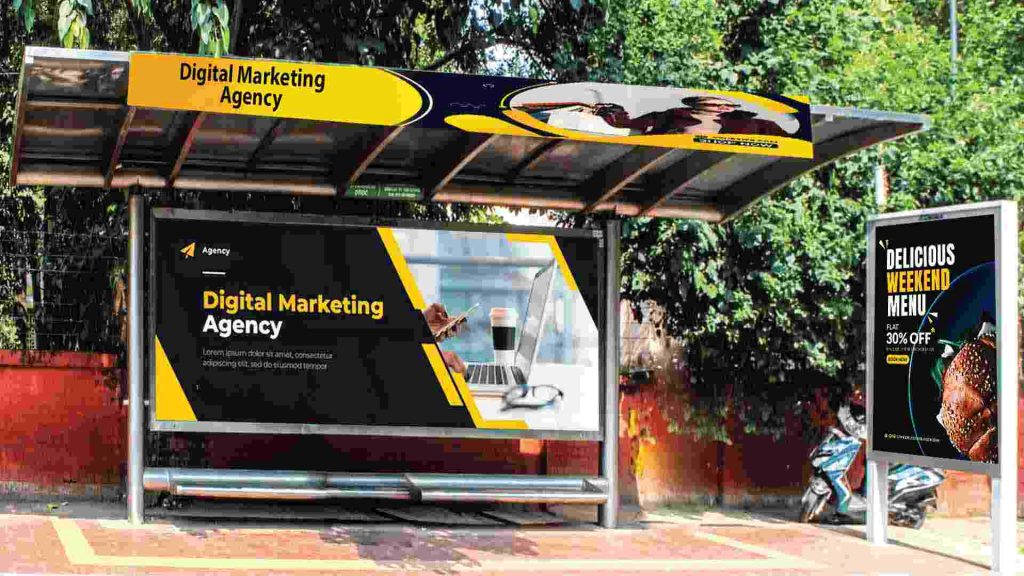
Bus Shelter Advertising in Indian Metros has undergone a remarkable transformation over the last decade. Once limited to static posters and backlit panels, bus shelters have now evolved into intelligent urban media assets. As Indian cities modernise their transport infrastructure, advertising formats within these spaces have adapted accordingly.
Today, bus shelters in cities like Mumbai, Delhi, Bengaluru, Hyderabad, and Chennai are no longer passive display units. Instead, they have become part of a connected, data-driven outdoor ecosystem that influences modern media planning decisions.
The Early Phase: Static Bus Shelter Advertising
Simplicity and Scale Defined the Beginning
In its earliest form, bus shelter advertising relied on printed vinyls, paper posters, and backlit panels. These formats delivered scale at relatively low costs and helped brands reach pedestrians and daily commuters.

However, static bus shelter ads had clear limitations. Creatives could not be changed quickly, messaging remained generic, and performance tracking was minimal. As a result, advertisers used shelters mainly for brand presence rather than targeted communication. Despite these challenges, static shelters laid the foundation for transit advertising in Indian metros.
Infrastructure Growth Accelerates Change
Urban Development Creates New Media Possibilities
As metro cities expanded their public transport networks, bus shelter infrastructure improved. Cities introduced weatherproof shelters, seating, lighting, and route information systems.
This shift aligned with broader smart city initiatives. Consequently, bus shelters started transforming into organised street furniture assets rather than standalone structures. Advertisers gained cleaner, more visible surfaces, while city authorities gained better-maintained public amenities.
The Shift Towards Smart Bus Shelter Advertising
Entry of Digital and DOOH Formats
The real evolution began with the introduction of DOOH (Digital Out-of-Home) screens at bus shelters. Digital panels replaced static backlit units in high-footfall zones, IT corridors, and commercial districts.
As a result, Bus Shelter Advertising in Indian Metros moved from fixed messaging to flexible communication. Advertisers could now rotate multiple creatives, schedule ads by time of day, and align messaging with commuter behaviour.
Why Smart Bus Shelters Changed Media Buying
From Long-Term Bookings to Flexible Buys
Earlier, advertisers booked bus shelters for weeks or months. Today, smart shelters allow loop-based and time-based buying. Therefore, brands can test campaigns, optimise creatives, and control budgets more efficiently.

Additionally, multiple advertisers share the same digital inventory. Hence, costs reduce while frequency improves.
Data, Context, and Audience Relevance
Smarter Targeting at the Street Level
Smart bus shelters integrate location data, traffic density, and commuter patterns. Consequently, media planners align messaging with:
-
Morning and evening rush hours
-
Office and residential zones
-
Weekend and weekday behaviour
For example, fintech or food delivery ads perform well during evening waits, while corporate or education brands dominate morning slots. This level of contextual relevance was impossible with static formats.
Integration with Smart City and Transit Systems
Bus Shelters as Urban Touchpoints
In Indian metros, bus shelters now support:
-
Digital route maps
-
Real-time arrival information
-
CCTV and public safety systems
-
Environmental sensors
Advertising integrates seamlessly into this ecosystem. Therefore, brand messaging coexists with utility, increasing acceptance and attention among commuters.
Creative Evolution: From Posters to Dynamic Content
Visual Storytelling Improves Recall
Static posters depended on bold visuals and minimal copy. While effective, they lacked engagement. Smart bus shelters now support:
-
Motion graphics
-
Sequential storytelling
-
Contextual and time-based creatives
As a result, Bus Shelter Advertising in Indian Metros delivers higher attention and stronger brand recall.
Industries Leading the Shift to Smart Bus Shelters
Several categories have embraced this evolution:
-
FMCG and QSR brands
-
Fintech and app-based services
-
Education and edtech platforms
-
Healthcare and diagnostics
-
Real estate and co-living brands
These industries benefit from high dwell time and repeated exposure offered by bus shelters.
Measuring the Impact of Smart Bus Shelter Advertising
Unlike traditional formats, smart shelters offer better measurability. Advertisers now evaluate:
-
Screen play counts
-
Time-slot performance
-
Area-wise response trends
-
Correlation with mobile and search activity
Therefore, bus shelter advertising is no longer treated as purely upper-funnel media.

Challenges in the Transition from Static to Smart
While the evolution is positive, challenges remain:
-
Higher initial infrastructure costs
-
Power and maintenance requirements
-
Regulatory approvals across cities
However, as adoption increases, economies of scale continue to improve feasibility.
The Future of Bus Shelter Advertising in Indian Metros
The next phase will focus on:
-
Real-time content triggers
-
Integration with mobile retargeting
-
AI-led scheduling and optimisation
As Indian metros continue to grow, bus shelters will remain one of the most valuable street-level advertising assets.
Conclusion: From Utility to Intelligence
Bus Shelter Advertising in Indian Metros has evolved from simple posters into smart, connected media platforms. This transformation reflects broader changes in urban mobility, technology adoption, and advertiser expectations.
From static visibility to smart engagement, bus shelters now sit at the intersection of transit, technology, and communication. For brands looking to build consistent urban presence with efficiency, the future of bus shelter advertising has never looked smarter.