How Road Angles Influence Billboard Advertising Visibility and Engagement
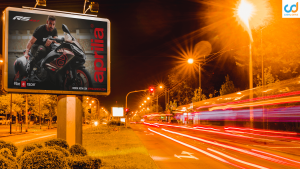
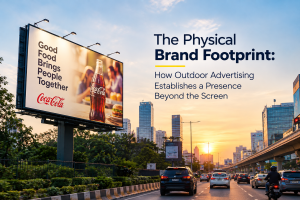
Most marketers treat billboard buying like traditional real estate: “Location, location, location.” They see a spot on a high-traffic highway and assume that because 100,000 cars pass it, 100,000 people will see their message.
They are wrong.
A billboard can be 50 feet wide and beautifully designed, but if the road angle is off by just 10 degrees, your “high-impact” ad becomes nothing more than a blurred smudge in the driver’s peripheral vision. In the world of outdoor advertising, physics beats creative every single time. Here is the breakdown of how road geometry actually dictates your location based advertising billboard visibility and engagement.
1. The “Perpendicular Pivot”: The Gold Standard
The most effective billboard is the one that sits directly in the driver’s natural line of sight. This means the board should be angled as close to perpendicular to the flow of traffic as possible.
When a board is angled directly toward the oncoming lane, the driver doesn’t have to turn their head or take their eyes off the pavement to see it. The ad occupies the center of their windshield for several critical seconds. If the board is parallel to the road, the driver has to “hunt” for it. In those three seconds of hunting, they’ve already passed you. When we talk about billboard visibility and engagement, we are really talking about “frontal exposure time.”
2. The Curve Advantage: Exploiting the Bend
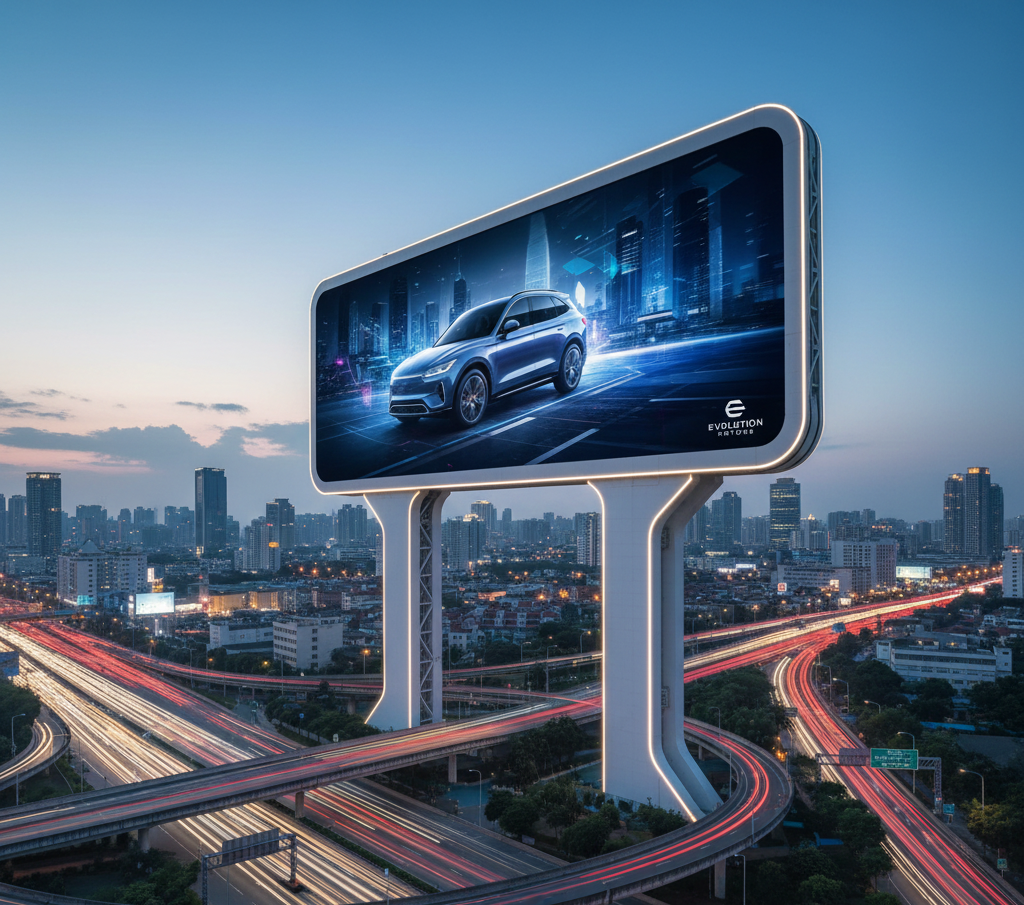
Experienced media buyers love a curved road. Why? Because when a road curves, every driver is naturally aiming their car and their eyes directly at the outside of the bend.
If you place a billboard at the “apex” of a curve, the road is essentially pointing the audience directly at your message. You aren’t just one of many signs on the side of the road; you are the destination of their gaze. This creates a “forced dwell time” that a straight road can never provide. On a curve, your ad isn’t something they pass; it’s something they drive toward.

3. Peripheral Fade: The 20-Degree Rule
The human eye is incredible, but it has strict mechanical limits. Once an object moves more than 20 degrees away from the center of our vision, we stop reading text and start seeing only vague shapes and colors.
If your billboard is set too far back from the shoulder, or if the angle is too sharp, you fall into the “peripheral fade” zone. You might be physically visible, but you aren’t readable. High-impact billboard advertising visibility and engagement depend on staying within that 20-degree cone of focus for as long as possible. If the road angle forces the driver to look away from the road to see your ad, the brain will subconsciously ignore it as a safety measure.
4. The Elevation Trap: Looking Up vs. Looking Out
It’s not just about left and right; it’s about up and down. A billboard placed too high on a steep hill or atop a tall building creates a “neck-strain” factor.
Drivers are subconsciously trained to keep their eyes on the horizon line for safety. If your board requires them to look up at a 45-degree angle, most simply won’t do it. The best engagement happens when the board is “at grade” or just slightly above the horizon, allowing the message to slide into their consciousness without them having to adjust their posture or take their eyes off the flow of traffic.
5. Speed vs. Stagnation: The T-Bone Effect
The angle of your board should change based on the speed of the road.
-
On a High-Speed Highway: You need a “Long-Read” angle. The board should be visible from half a mile away at a very shallow angle to give the brain time to process the image as it approaches.
-
At an Intersection (Stop & Go): You want the “T-Bone.” This is a board that sits directly across from a stoplight, perpendicular to the waiting cars.
At a red light, you have a captive audience with zero speed and high boredom. This is where you can afford a sharper angle because the driver has the time to look around. On a highway, if the angle isn’t perfect, you’re just a flash of color in a window.
Conclusion
If you want to maximize your billboard visibility and engagement, you have to stop looking at maps and start looking at sightlines. A “cheaper” board with a perfect perpendicular angle on a curve will always outperform a “premium” board that sits parallel to a straightaway.
Before you sign a contract for outdoor space, get in a car and drive the route yourself. If you have to strain your neck or search the horizon to see the spot, so will your customers. Design for the physics of the road, not for the comfort of the office.