How OOH Advertising Boosts Digital Campaign Performance in India
4 min read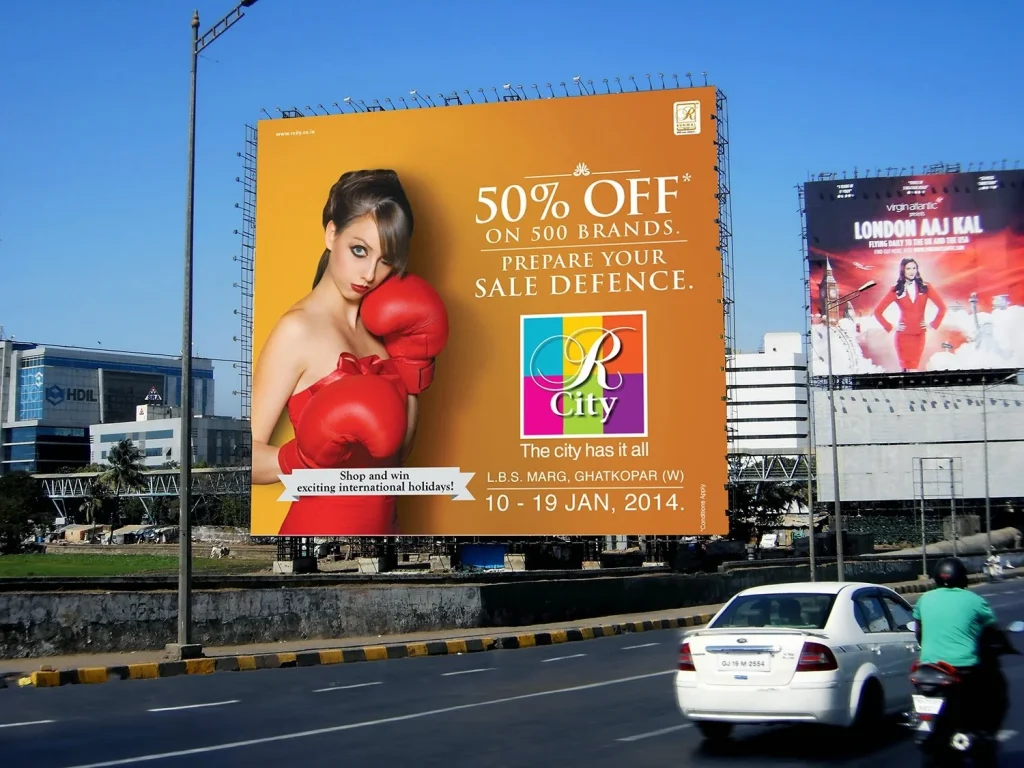
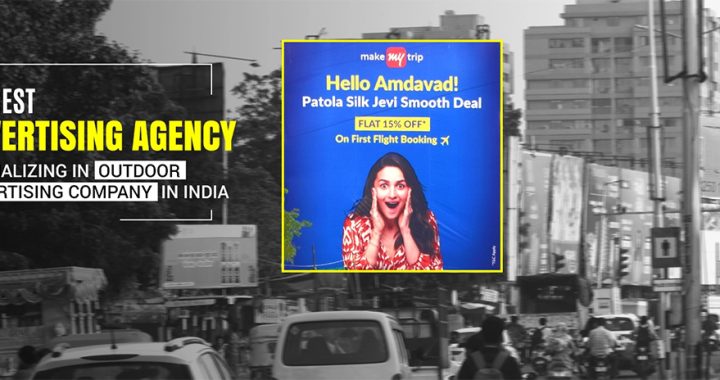
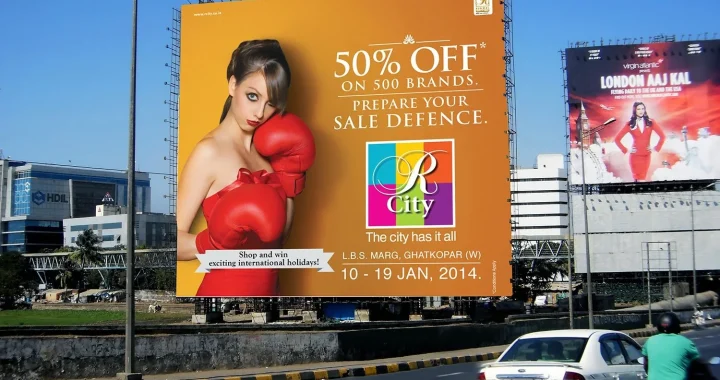
In the hyper-competitive Indian market of 2026, a strange paradox has emerged: as we spend more time staring at our smartphones, the giant billboards we pass on the way to work have become more influential than ever. We are living in an era of “Digital Fatigue,” where the average urban consumer in Delhi, Mumbai, or Bangalore is bombarded by thousands of push notifications and banner ads every day. In this cluttered environment, Out-of-Home (OOH) advertising has evolved from a traditional branding tool into the ultimate “booster engine” for digital performance.
The secret to a high-performing campaign in India today isn’t choosing between physical or digital; it’s understanding how a massive hoarding on a flyover can actually lower your Cost-Per-Click (CPC) on Instagram.
1. The Search Trigger: Moving from “Who?” to “How?”
One of the most immediate impacts of a well-placed OOH ad is the “Search Spike.” In India, mobile-first users are reactive. When a consumer sees a visually stunning billboard for a new EV or a high-end skincare brand while stuck in traffic, their first instinct is to Google it.
Data shows that campaigns supported by OOH see a significant increase in Organic Search volume. Instead of a brand having to bid aggressively on expensive “generic” keywords (like “best electric car”), a powerful OOH presence ensures that users are searching for the Brand Name specifically. This shifts the digital budget from expensive acquisition to high-intent conversion, making the entire digital funnel significantly more efficient.
2. Breaking the “Scroll-Thru” Barrier
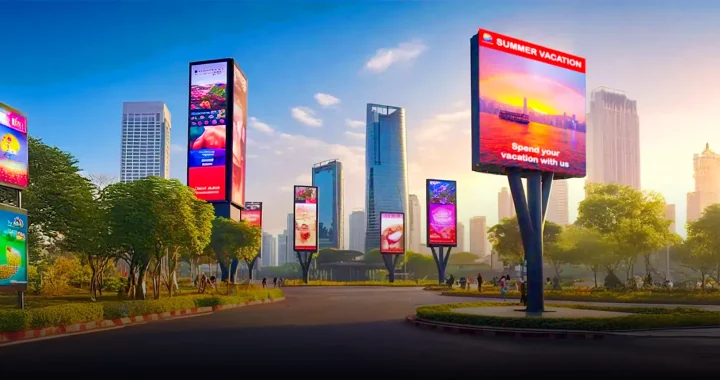
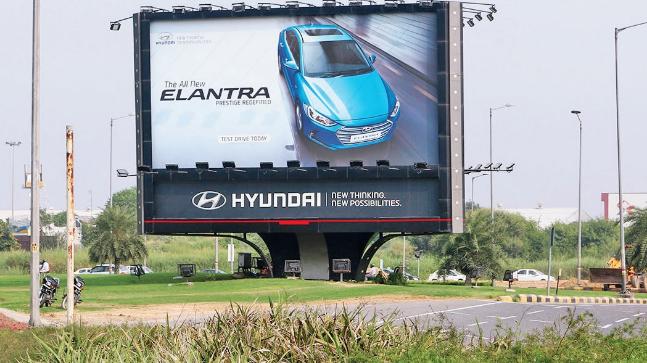
We have all developed “banner blindness”—the subconscious ability to ignore digital ads the moment they appear on our screens. However, when a user sees a brand on a massive, backlit unipole or a high-definition Digital OOH (DOOH) screen in a premium business park, that brand gains physical legitimacy.
When that same user later encounters a sponsored post from the same brand on Facebook or LinkedIn, the “re-targeting” isn’t just another ad; it’s a familiar face. This “OOH-to-Mobile” path increases Click-Through Rates (CTR) by as much as 40%. The physical ad builds the trust, while the digital ad provides the convenience to click and buy.
3. The “Shareability” Quotient
In the age of Instagram and Snapchat, OOH in India has become “content bait.” Modern brands are no longer just putting up information; they are creating Landmark Moments. Whether it’s a 3D anamorphic display in a shopping hub or a witty, topical billboard that taps into the local culture of a city, people love to photograph and share “cool” outdoor ads.
This creates a viral loop where a single physical billboard in Bangalore can end up being viewed by millions of people across India via social media shares. This “earned media” is the holy grail of marketing—where your OOH budget starts generating free digital impressions that no algorithm can manipulate.

4. Contextual Relevance in the “Last Mile”
OOH allows for a level of geographic precision that digital targeting often struggles with due to privacy regulations. In India, brands are using OOH to dominate specific micro-markets. For example, a food delivery app might place OOH ads near major office complexes during lunchtime.
When the user opens their app and sees a notification for a “lunch special,” the physical ad they just walked past provides the context. This “proximity marketing” ensures that the digital nudge feels timely and helpful rather than intrusive. It creates a seamless journey from the physical “seeing” to the digital “doing.”
5. Building Brand “Weight” in a Virtual World
Digital-only brands often struggle with a lack of “substance.” There is a psychological weight to a physical structure that a 15-second Reel cannot match. For startups and D2C (Direct-to-Consumer) brands in India, OOH acts as a “Trust Signal.”
Seeing a brand on a major city landmark tells the Indian consumer that the company is stable, professional, and here to stay. This perceived stability is often the final nudge a customer needs to finally enter their credit card details on a mobile website they’ve been hovering over for weeks.
Conclusion: The “Phygital” Synergy
The most successful marketers in India are no longer viewing OOH and Digital Advertising as two separate line items in a budget. Instead, they are treating them as a single, “phygital” ecosystem. OOH is the “Awareness Anchor” that provides the scale, trust, and search triggers, while Digital is the “Capture Net” that handles the engagement and the transaction.
In 2026, if you want your digital ads to work harder, you need to take them outside. By bridging the gap between the sky-high billboard and the palm-held screen, brands can create a surround-sound effect that is impossible to ignore.