The Role of OOH Advertising in India’s Smart Cities and Urban Development
3 min read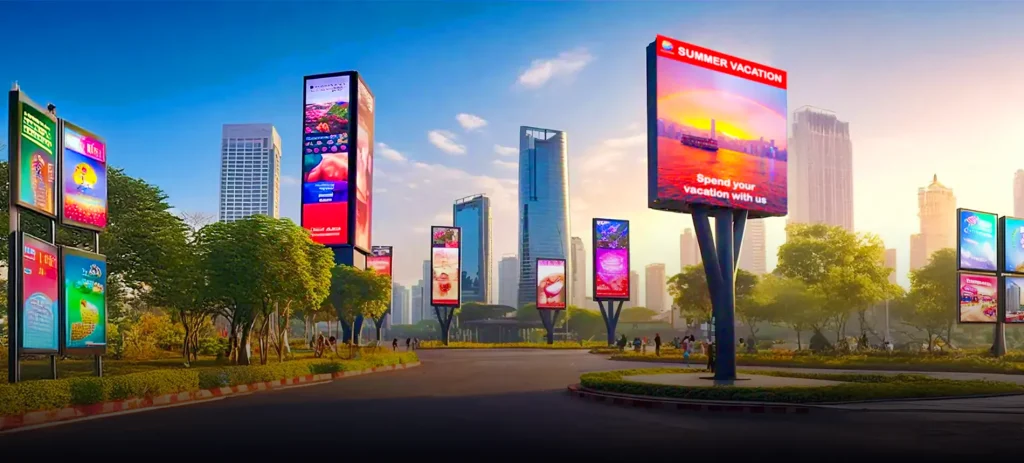
For decades, the Indian urban experience was defined by a specific kind of visual chaos a dense thicket of static flex banners and aging hoardings that competed for a sliver of the commuter’s attention. However, as we move through 2026, the skyline of Urban India is undergoing a radical, technology-led purification. The “Smart City” is no longer just a policy buzzword; it has become a living, breathing laboratory for Digital Out-of-Home (DOOH) innovation. In these newly mapped urban corridors, advertising is shedding its skin as a “distraction” and emerging as a vital, data-driven utility.
From Static Boards to “Living” Infrastructure
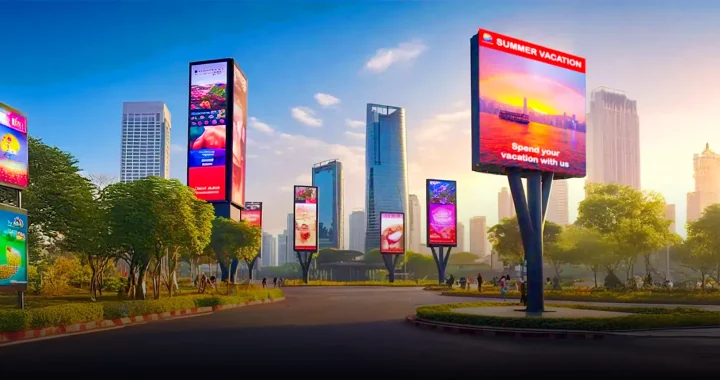
The hallmark of a 2026 Smart City like Indore, Surat, or Navi Mumbai is the disappearance of the “siloed” billboard. In its place, we see the rise of Contributive Infrastructure. The modern OOH pylon is a multi-tasking marvel: while it displays a vivid, high-definition campaign for a global brand, it simultaneously functions as a 5G small-cell tower, a real-time air quality monitor, and an emergency broadcast point.
This shift has fundamentally changed the “Social Contract” between the brand and the citizen. When a brand’s budget funds a smart bus shelter that provides free high-speed Wi-Fi and solar-powered cooling to commuters, the ooh advertising is no longer viewed as an intrusion. It is seen as a contribution. This “Utility-First” approach is how the OOH industry is securing its future in an increasingly ad-blocked world by becoming a welcome part of the city’s functional DNA.

The Rise of the “Programmatic Pulse”
The most significant technological leap in the last 24 months has been the mass adoption of Programmatic DOOH (pDOOH). We have officially entered the era of “Moment-Based Buying” rather than “Location-Based Renting.” In a 2026 Indian Smart City, an ad doesn’t just sit on a screen; it reacts.
Linked to the city’s central command center, these screens now use Real-Time Data Triggers to ensure absolute relevance. If traffic sensors near the Delhi-Gurgaon border detect a massive bottleneck, the surrounding digital screens might instantly pivot from luxury fashion to quick-commerce delivery apps or audio-streaming services. If the temperature in Bangalore unexpectedly dips, beverage brands can trigger “hot coffee” creatives within milliseconds. This isn’t just advertising; it’s a synchronized response to the city’s immediate needs. For the marketer, this means Zero Ad-Waste spending money only when the environment, the audience, and the intent perfectly align.
The “Green” Skyline: Sustainability as a Standard
As India aggressively pursues its Net Zero mandates, the OOH industry is leading the charge in “Sustainable Urbanism.” The modern Smart City strictly regulates visual clutter, favoring fewer, high-impact digital sites over a multitude of low-quality static ones. These 2026 installations are increasingly Carbon-Neutral, utilizing smog-eating coatings that chemically neutralize pollutants from the surrounding air and solar-integrated panels that feed excess energy back into the city grid.
For the Indian consumer who is more environmentally conscious today than ever before this matters. A brand that chooses a solar-powered, eco-certified digital site is capturing the “Moral Share” of the market. In the Smart City, being “Green” is no longer a CSR footnote; it is a prerequisite for entering the city’s most premium advertising zones.
Conclusion
Ultimately, OOH in India’s Smart Cities has evolved into the “Visual Interface” of the metropolis. It is the medium that tells us the weather, warns us of traffic, celebrates our local festivals, and introduces us to the brands that fit our modern lifestyles. By bridging the gap between the physical sidewalk and the digital ecosystem through QR-led Phygital experiences, OOH has become the anchor of the urban journey.
As our cities grow more intelligent, our advertising is finally following suit. The brands that will dominate the next decade are not those with the biggest banners, but those that understand how to pulse in rhythm with the Smart City’s heart.