Outdoor Advertising Isn’t Making a Comeback in 2026 — It Never Left
2 min read
Every few years, the marketing industry declares the “rebirth” of something it once predicted would fade away. Outdoor advertising has often been placed in that category. Yet the idea that billboards and hoardings disappeared is more myth than reality.
They didn’t vanish.
They evolved quietly while attention shifted elsewhere.
In 2026, brands aren’t rediscovering outdoor media out of nostalgia. They’re returning to it out of necessity.
Digital Growth Created Unexpected Blind Spots
There’s no denying the power of digital marketing. It introduced performance metrics, behavioural targeting, and measurable optimisation. But scale brought saturation, and saturation brought fatigue.
Consumers today scroll through:
✔ Endless sponsored posts
✔ Auto-playing videos
✔ Retargeted banners
✔ Notifications competing for attention
Visibility exists in abundance. Attention does not.
Outdoor Advertising Lives Outside the Noise
Outdoor media operates under conditions digital ads rarely enjoy.
It doesn’t appear between distractions.
It isn’t fighting for milliseconds inside a crowded feed.
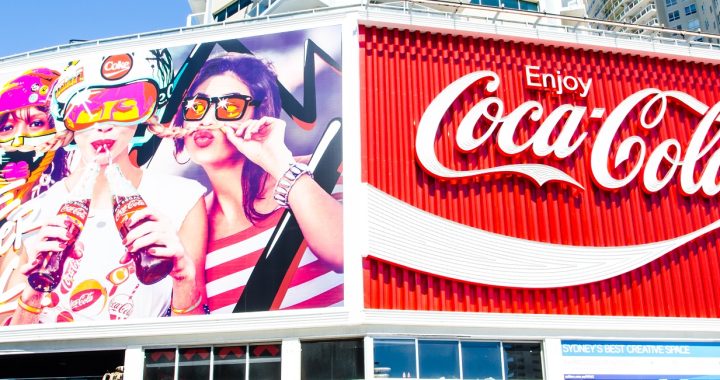
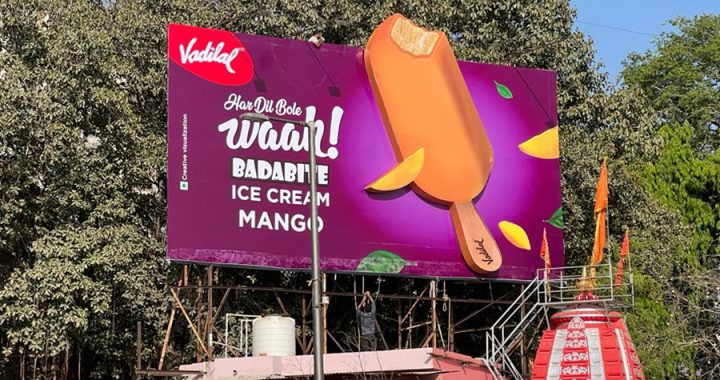
A billboard stands where it is placed. It becomes part of the commute, the skyline, the routine visual landscape. Even when ignored, it is often seen again and again until familiarity forms.

Familiarity Has Its Own Influence
Brand recognition rarely arrives dramatically. More often, it builds gradually.
A name seen repeatedly on city roads
A visual encountered near daily routes
A message absorbed without deliberate effort
By the time consumers search or engage online, the brand may already feel known.
That sense of familiarity changes behaviour.
Clicks Measure Action. They Don’t Measure Presence
Digital campaigns excel at tracking interaction. But presence sustained visibility without requiring action — is harder to quantify.
Outdoor advertising fills that gap.
It maintains brand existence in the physical world, reinforcing identity even when audiences aren’t actively searching.
The Psychology of Scale Still Matters

Large-format advertising engages attention differently than small screens. Size alone creates visual authority. Context amplifies it further highways, transit hubs, commercial districts.
Some messages benefit from precision.
Others benefit from presence.
Smart brands recognise when scale strengthens perception.
Integration Is Replacing Channel Rivalry
In 2026, OOH marketing strategies increasingly reflect consumer behaviour rather than media categories.
Outdoor advertising builds recognition.
Digital marketing captures intent.
One sustains visibility.
The other drives measurable response.
Together, they create continuity.
DOOH Has Redefined Flexibility
Digital Out-of-Home (DOOH) has removed many historical limitations of static formats.
✔ Creative updates without reprinting
✔ Time-sensitive messaging
✔ Contextual content shifts
✔ Campaign synchronisation
Outdoor media now adapts while retaining physical-world impact.
Conclusion
Outdoor advertising isn’t returning to relevance it has remained relevant, particularly as digital ecosystems grow more crowded. In 2026, its value lies not in replacing digital marketing, but in balancing it.
Presence, familiarity, recognition, recall these outcomes still shape consumer decisions.