Why Apartment Lobby Advertising Is Becoming a Powerful Branding Tool
For years, the marketing world was obsessed with “the screen.” We thought if we could just get an ad onto a smartphone or a laptop, we’d won. But a funny thing happened: people got tired. They started paying for ad-blockers, hitting “skip” with lightning speed, and ignoring anything that looked like a sponsored post.
This digital fatigue has led to a massive pivot back to the physical world, specifically to the apartment lobby advertising.
The lobby isn’t just a waiting room anymore. In modern urban societies, it’s a high-traffic “sensory zone” where families transition from their public lives to their private ones. Here’s why this transition is the most powerful moment for a brand to strike.
The “Vetting” Factor: Built-in Credibility
The biggest hurdle for any brand is trust. If you see an ad on a random website, you don’t know if the company is a scam or a legitimate business.
But when a resident walks into their lobby and sees a beautifully designed kiosk or a digital display, their brain does some quick math: “My building management let them in. They paid for this space. They must be real.” This implicit endorsement by the Resident Welfare Association (RWA) is something money can’t buy on social media. It bypasses the “stranger danger” filter and places the brand inside the resident’s circle of trust immediately.

3 Clever Ways to Own the Lobby Space
1. The “Problem-Solver” Pop-up
The most effective lobby ads don’t look like ads; they look like services.
-
The Idea: An organic grocery brand doesn’t just put up a poster; they set up a small “freshness stall” on a Tuesday evening when they know residents are coming home tired and wondering what to cook for dinner.
-
Why it works: You aren’t asking for their time; you’re giving them a solution to a daily problem.
2. High-Dwell Digital Storytelling
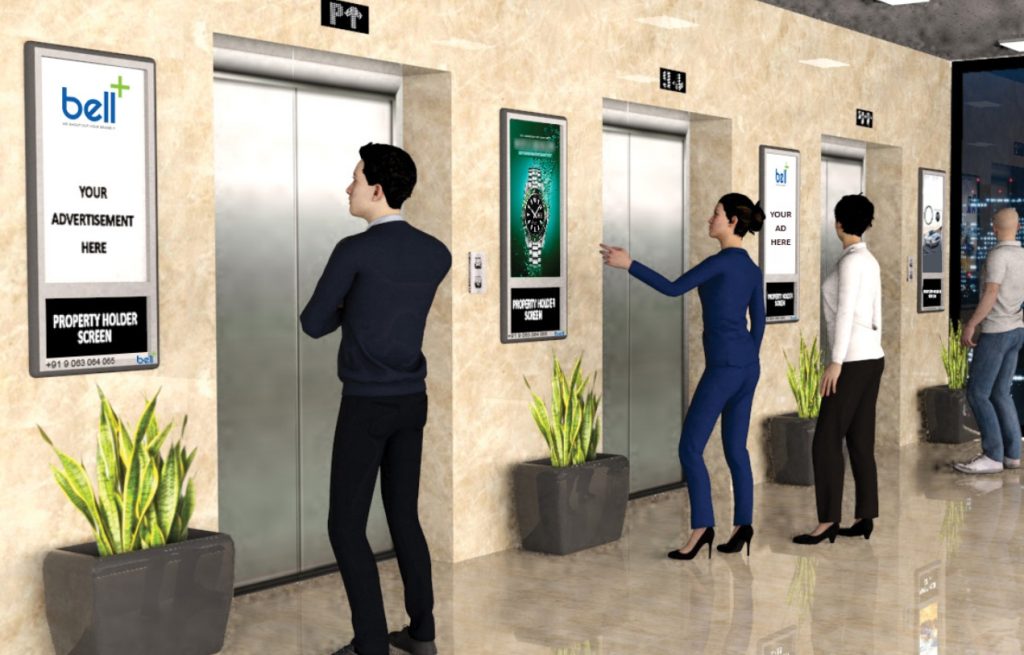
Elevator lobbies are places of “forced waiting.” Whether it’s 30 seconds or three minutes, it’s a gap in the day that people fill by looking around.
-
The Idea: Use vertical DOOH (Digital Out-of-Home) screens that don’t just show “salesy” graphics, but offer localized content—weather, society announcements, and then your brand’s message.
-
Why it works: It turns the ad into a utility. People look at the screen for information and stay for the brand story.

3. Tactile Staging (The Showroom Effect)
Some things need to be seen in 3D to be believed. Luxury cars, high-end home appliances, or premium furniture feel different when they are in your own lobby compared to a shiny showroom 10 miles away.
-
The Idea: Staging a “lifestyle corner” in the lobby where residents can actually sit on the sofa or see the finish on a new EV.
-
Why it works: It triggers the “Neighbor Effect.” When one resident stops to look, three more follow. It creates a community conversation that no digital ad can replicate.
Conclusion
The lobby is where the whole family meets. It’s where the parent picks up the kid from the school bus and where couples meet before heading out.
By advertising here, you aren’t just reaching an individual; you’re reaching the household unit. Decisions about schools, insurance, cars, and vacations are made at home. By planting the seed in the lobby, you ensure your brand is the topic of conversation at the dinner table ten minutes later.