Notice Board Advertising in RWAs an Underrated High Impact Branding Medium
The landscape of urban India has undergone a radical transformation over the last decade. The traditional independent bungalow and the open-street neighborhood are rapidly being replaced by “vertical cities” massive gated communities and high-rise Resident Welfare Associations (RWAs) that house thousands of families within a single perimeter. In these self-contained ecosystems, residents live, work out, socialize, and shop. For a brand, breaking into this “fortress” is the ultimate challenge. While digital marketing attempts to tunnel under the walls through smartphone screens, it often gets lost in the chaotic noise of notifications and “doom-scrolling.”
Yet, there remains one physical touchpoint that has stood the test of time, evolving from a simple wooden plank to a premium branding asset: The RWA Notice Board.
1. The Psychology of “Mandatory” Viewing
In a world of “skip-ad” buttons, the notice board is unskippable. When a resident approaches the elevator lobby, their brain is subconsciously wired to scan the notice board for updates that affect their daily life. Is there a power cut scheduled? Is the swimming pool under maintenance? When is the next society meeting?
Because the notice board is the source of essential information, any brand placed alongside these notices inherits a sense of urgency and importance. The consumer doesn’t view the advertisement as an intrusion; they view it as part of their “community update.” This psychological alignment significantly boosts brand trust and message retention.

2. Capturing “High-Intent” Micro-Moments
The average wait time for an elevator in a high-rise society ranges from 30 to 90 seconds. In the marketing world, that is an eternity. During this window, residents are in a “passive-receptive” state. They have finished their walk or are leaving for work; they aren’t yet buried in a task, but they are looking for a visual distraction.
A well-designed notice board ad captures this micro-moment. Unlike a highway billboard that you zoom past at 60 km/h, or a Facebook ad you swipe past in half a second, the notice board ad has a “captive audience.” It allows for more detailed storytelling a luxury usually reserved for long-form print media, but delivered at a fraction of the cost.
3. The Power of “Official” Association
There is an invisible “Trust Tax” that digital brands pay. Every time a new service appears on Instagram, the consumer wonders if it’s a scam or a low-quality fly-by-night operation. However, notice boards are controlled by the RWA committee.
When a brand occupies space on the official board, there is an implicit “Seal of Approval.” Residents assume that if the RWA has allowed the poster, the business is legitimate and has undergone some level of vetting. For high-involvement categories like healthcare, financial planning, or child education, this institutional trust is the single biggest driver of conversion.
4. Hyper-Frequency Without the Fatigue
Marketing frequency the number of times a person sees an ad is a double-edged sword. On digital platforms, seeing the same ad ten times is annoying. In a society elevator lobby, seeing the same brand every morning and evening builds subconscious familiarity. It becomes a part of the resident’s “safe zone.” When they eventually see that same brand on a supermarket shelf or an app, the brain triggers a “friend-or-foe” response. Because the brand has been a silent companion in their home lobby for a week, it is categorized as a “friend,” leading to a much higher likelihood of purchase.
5. Bridging the Physical and Digital Worlds
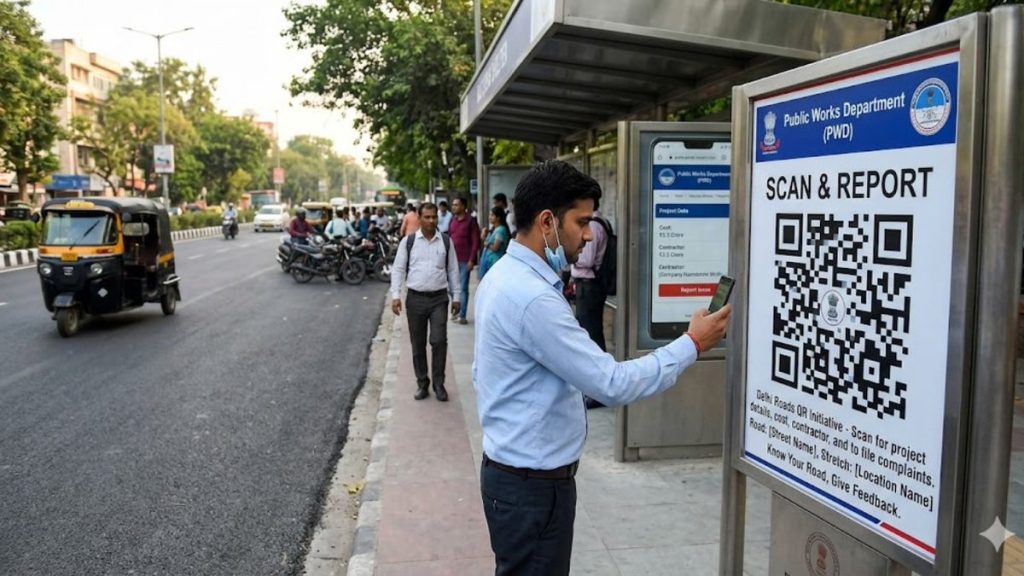
In 2026, notice board advertising is no longer “analog.” Smart brands are using this medium as a high-conversion gateway. By integrating bold QR codes and “Society-Exclusive” offers, brands can track exactly how many leads a specific notice board generates.
A resident sees an ad for a new gourmet grocery delivery service while waiting for the lift, scans the code, and by the time they’ve reached their floor, the app is downloaded and the first order is placed. It is the shortest distance between a physical impression and a digital transaction.
Conclusion
As we move further into a tech-driven future, the value of physical proximity is actually increasing. People are craving local reliability. Notice board advertising in RWA works because it respects the resident’s space while providing genuine value. It is a high-impact, low-clutter, and deeply trusted medium that proves that sometimes, the best way to reach a customer’s heart is to start right outside their front door.