Complete RWA Advertising Strategy From Entry Gate to Elevator Branding
3 min read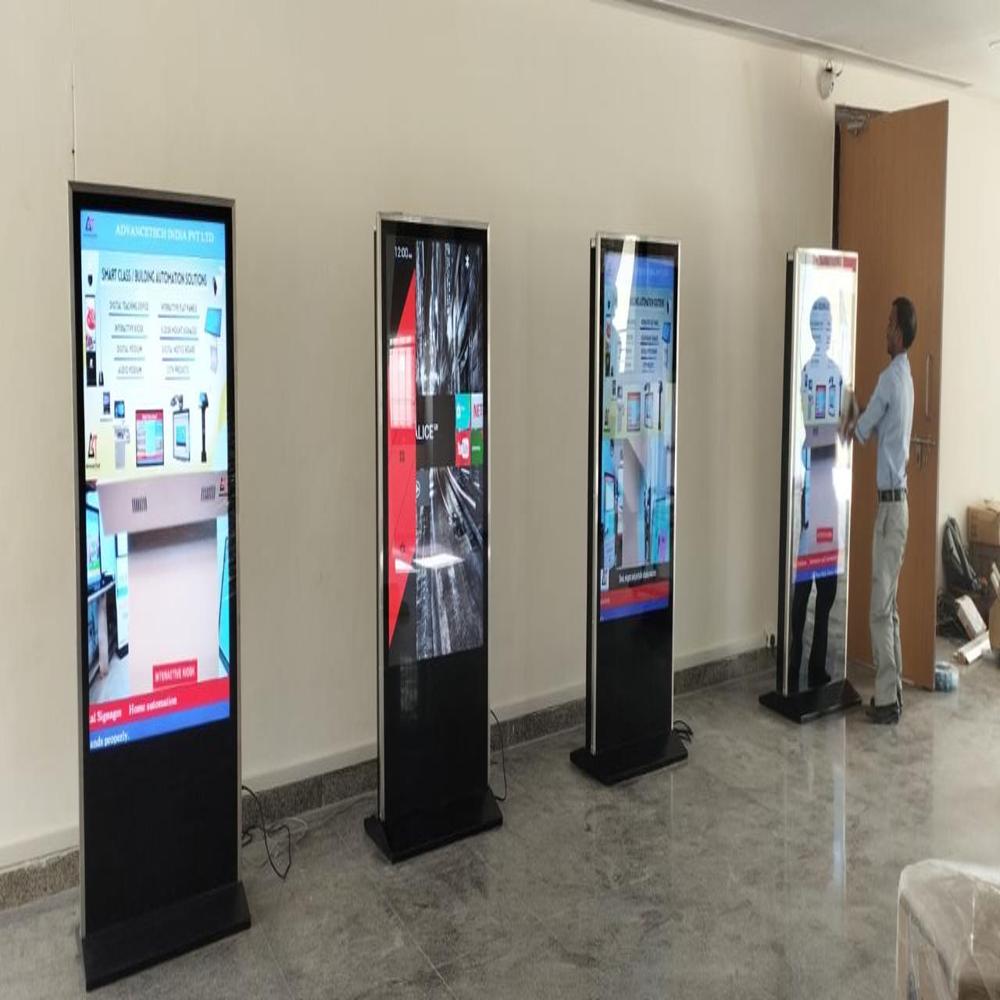
Marketing in a premium residential society is like a relay race. To win, you can’t just have one fast runner; you need a seamless handoff from the moment a resident enters the gate to the moment they step out of the elevator.
A “Complete RWA Strategy” treats the entire society as a journey. Here is how to map out that journey for maximum impact.
Phase 1: The “Handshake” (The Entry Gate)
The main gate is the first touchpoint. It’s the transition from the “outside world” to the “private world.“
-
The Boom Barrier: This is the most underrated real estate in advertising. Every vehicle whether it’s a resident’s car or a visitor’s cab must stop here. A branded boom barrier provides a 100% “forced view.“
-
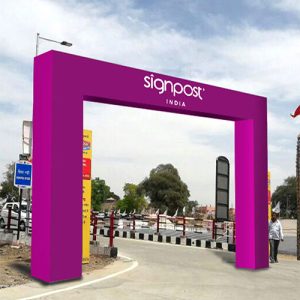
The Standee/Archway: Placing a high-impact visual at the gate sets the tone. It signals that the brand is part of the community’s ecosystem.
-
The Goal: High-level awareness. You aren’t selling details here; you are just announcing your presence.
Phase 2: The “Dwell Zone” (The Lobby)
Once through the gate, the resident parks and enters the lobby. This is a “dwell zone” a place where people slow down, wait for a neighbor, or check their mail.
-
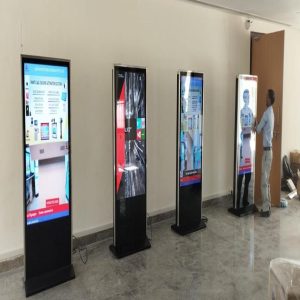
Digital Standees: Use the lobby for more detailed storytelling. Since residents often spend 1-2 minutes here, you can use short, 15-second video loops.
-
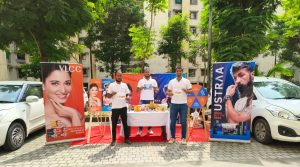
Product Displays: If you have a physical product (a new Dyson vacuum, an Ather scooter, or organic grocery samples), the lobby is your showroom. It allows for “touch and feel” engagement right at their doorstep.
-
The Goal: Education and Consideration. This is where the resident learns “what” the brand is and “why” it matters to them.

Phase 3: The “Captive Audience” (Elevator Branding)
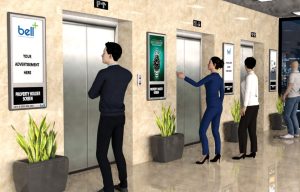
The elevator is the “closer.” It is the most intimate space in the entire society. Inside a lift, there are no distractions no traffic, no noise, and usually, poor phone signal.
-
Digital Screens (DOOH): These screens are the primary source of entertainment in a 30-second ride. Use this time to show a clear “Call to Action” (CTA).
-
QR Code Integration: Because residents are in a quiet, stable environment, they are much more likely to scan a QR code inside a lift than they are on a moving bus or a busy street.
-
The Goal: Conversion. Give them a society-specific coupon code or a “Click to Book” prompt while they have nothing else to do.
Phase 4: The “Digital Shadow” (Society Apps)
A complete strategy doesn’t end with physical signs. It follows the resident onto their phone.
-
In-App Banners: Most premium societies use apps like MyGate or NoBrokerHood. A banner ad that mirrors the creative seen at the gate and in the lift creates a “360-degree” loop.
-
The Goal: Retention. It reinforces the physical message and makes it easy to click and buy instantly.
Conclusion
If you only brand the lift, the resident might feel the ad is “random.” If you only brand the gate, they might forget RWA Advertising it by the time they get to their floor.
But when they see the Gate (Awareness) – rightarrow – Lobby (Engagement) – rightarrow – Elevator (Recall), the brand becomes a familiar “neighbor.” This sequence builds a psychological bridge of trust that traditional city-wide advertising can never replicate.