How RWA Advertising Influences Family Decision-Making in Urban Households
4 min read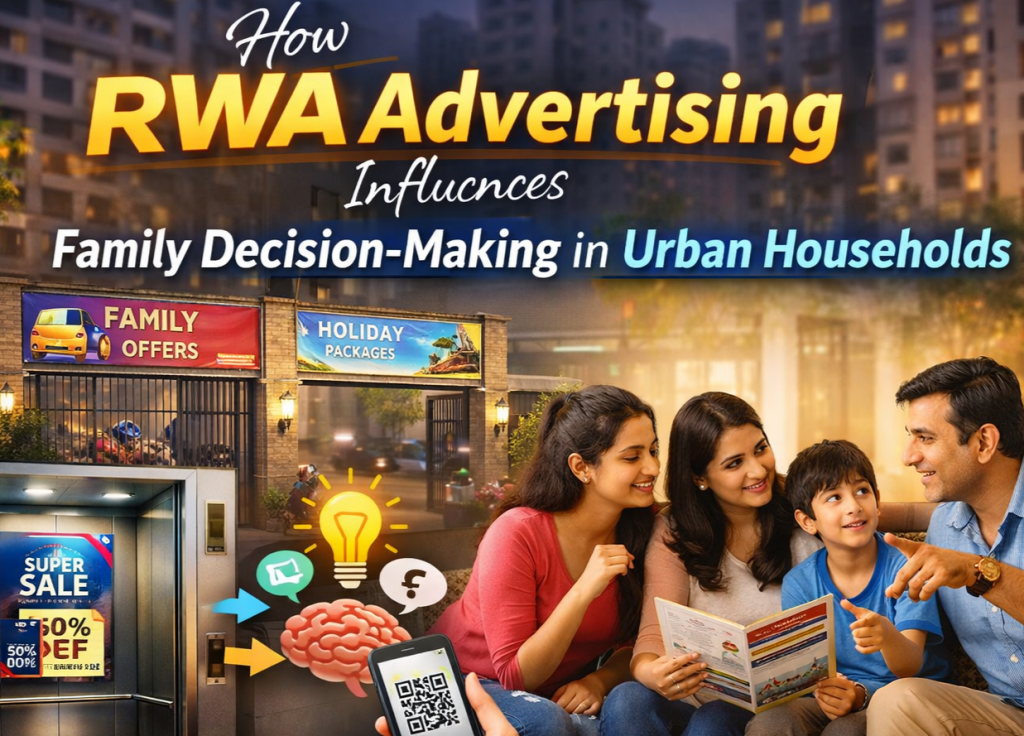
In the modern urban landscape, the “Great Indian Middle Class” has migrated from traditional independent houses to sprawling, high-security gated communities. For brands, this shift has changed more than just delivery addresses it has fundamentally altered how families communicate and make purchasing decisions. While digital ads battle for attention on cluttered smartphone screens, Resident Welfare Association (RWA) Advertising has emerged as a quiet but formidable force that penetrates the very heart of the household.
But how exactly does an ad on a society gate or a digital screen in a lift influence what a family buys? To understand this, we must look beyond the “impression” and into the psychology of the urban family unit.
1. The “Safe Zone” Advantage: Building Implicit Trust
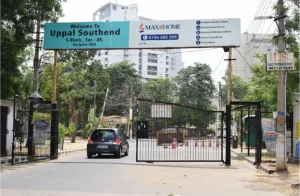
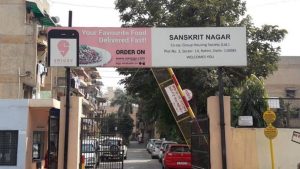
The most significant barrier to any advertisement is skepticism. When you see an ad on a busy highway, it is a “stranger” trying to sell you something. However, when a resident sees a brand’s presence inside their society at the clubhouse, the lift lobby, or the main entrance there is a psychological “filter of trust” at play.
Residents implicitly know that the RWA board has vetted the brand before allowing them entry. This serves as a soft endorsement. In a household’s decision-making process, trust is the first hurdle. Whether it’s a new organic food brand, a premium preschool, or a high-end EV, being “inside the gates” gives the brand an immediate air of credibility that a random Instagram pop-up simply cannot replicate.
2. Capturing the “Joint Decision-Makers”
In urban India, major purchasing decisions buying a car, choosing a holiday destination, or investing in a home appliance are rarely individual acts. They are collaborative family discussions.
Traditional advertising often targets the individual (e.g., car ads for men, FMCG ads for women). However, RWA branding captures the family when they are together.
-
The Evening Walk: A couple walking in the society park spots a kiosk for a new luxury real estate project.
-
The School Bus Wait: Parents standing at the society gate discuss a newly branded tutoring service they see on the gate panels.
-
The Lift Ride: A family sees a DOOH (Digital Out-of-Home) screen showcasing a new weekend getaway.
By placing ads in these communal spaces, brands spark “on-the-spot” conversations. The decision-making cycle moves from “I might need this” to “We should look into this” in a matter of seconds.
3. High-Frequency Recall Without the “Skip” Button
Digital fatigue is real. In 2026, the average urban consumer is proficient at ignoring “sponsored” content. However, RWA branding is part of a resident’s physical environment.
A resident passes the society gate at least twice a day. They use the lift 4–6 times daily. This creates High-Frequency Recall. Unlike a TV commercial that can be muted, RWA branding becomes a familiar part of the daily commute. By the time a family reaches the “Evaluation” stage of a purchase, the brand they have seen every morning for a week is already at the top of their mind. It feels like a local recommendation rather than a cold advertisement.

4. The Power of “Society Activations” and Experiential Marketing
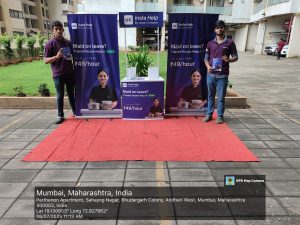
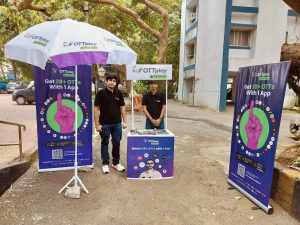
One of the unique strengths of RWA advertising is Society Activation where brands set up experience zones within the complex.
-
Test Drives: For automobile brands, offering a test drive that starts and ends at the resident’s own parking lot removes all friction from the buying process.
-
Sampling: For FMCG brands, giving a sample to a homemaker at their doorstep or the lobby creates an immediate “trial-to-purchase” loop.
When a neighbor is seen testing a product or carrying a brand’s bag, it triggers social proof. In gated communities, “what the neighbors are buying” is a powerful psychological trigger that accelerates family decision-making.
5. Laser-Focused Hyperlocal Targeting
Urban households are not a monolith. A family living in a premium society in Gurugram’s Golf Course Road has different needs and spending power than a family in a mid-range complex in Noida.
RWA advertising allows for pinpoint demographic targeting. Brands can skip the “spillage” of mass media and focus 100% of their budget on societies where the residents have the exact income profile they desire. This ensures that the message reaches the right family at the right time, leading to a much higher ROI (Return on Investment) compared to traditional outdoor hoarding.
Conclusion: Why It Works
RWA advertising isn’t just about visibility; it’s about integration. It meets families where they are most relaxed, most collaborative, and most receptive. By turning a brand into a “neighbor,” RWA branding bypasses the noise of the digital world and enters the dinner-table conversations where the real decisions are made.
For brands looking to capture the premium urban market, the secret isn’t just to be louder it’s to be closer. And there is nothing closer than the place they call home.