Why RWA Branding Works Better Than Influencer Marketing for Local Businesses
3 min read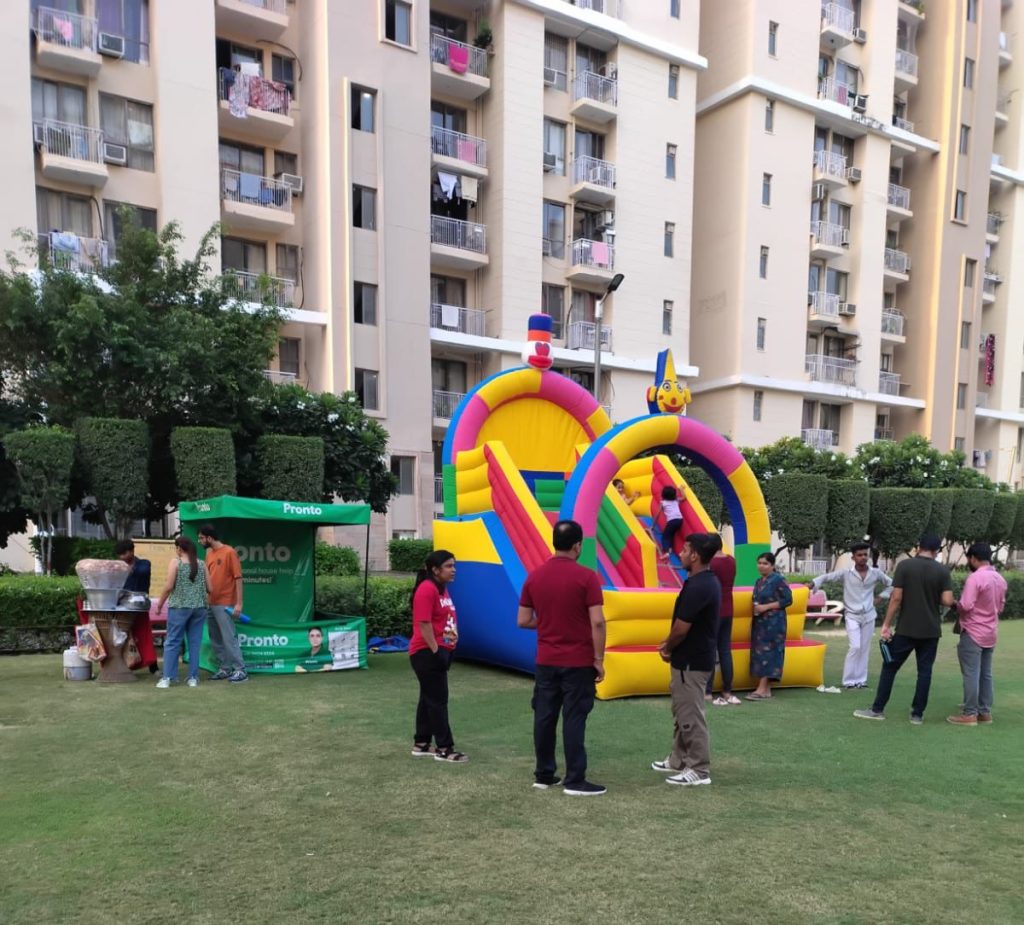
In the age of social media, many local businesses be they neighborhood dental clinics, boutique gyms, or organic grocery stores instinctively turn to influencer marketing. However, there is a growing realization in urban hubs like Mumbai, Bangalore, and Delhi that a “blue tick” doesn’t always translate to local footfall.
For a business that relies on a specific geographic radius, RWA (Resident Welfare Association) branding is proving to be a far more effective and sustainable strategy. Here’s why targeting gated communities beats the “Influencer” hype for local commerce.
1. The “Geographic Accuracy” Gap
The biggest flaw in influencer marketing for local businesses is wastage. An influencer might have 50,000 followers, but those followers are likely spread across the country, if not the world. If you own a premium bakery in South Kolkata, paying an influencer whose audience is only 5% local means 95% of your budget is effectively invisible to your potential customers.
RWA branding is surgically precise. When you place a kiosk or a banner inside a specific residential complex, 100% of the people seeing your ad are physically capable of visiting your store. There is zero “spillover” waste. You are talking to people who live exactly where you operate.

2. Contextual Trust vs. Parasocial Relationships
Influencer marketing relies on a parasocial relationship the feeling that a follower “knows” the creator. However, consumers are increasingly aware that influencers are paid to promote products. This has led to a “trust deficit” where followers enjoy the content but doubt the recommendation.
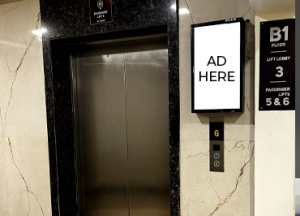
RWA branding leverages Institutional Trust. In urban India, the RWA is a formal governing body. When a business sets up an activation inside a society’s clubhouse or places branding in the elevators, the residents view it as a “vetted” service. The RWA’s implicit permission acts as a filter, giving the local business an instant layer of credibility that a stranger on a screen simply cannot provide.
3. The “Physical Presence” Advantage
Digital ads and influencer reels are fleeting. They are swiped away in seconds. For a local service like a dry cleaner or a daycare center the consumer needs to remember the name when the need arises, not just when they are bored on their phone.
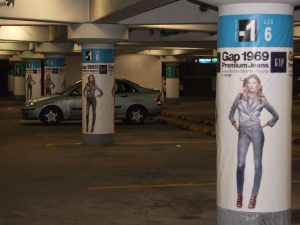
RWA branding provides high-frequency physical touchpoints. Seeing a brand every day at the society exit gate creates “top-of-mind awareness.” When a resident’s air conditioner breaks down, they won’t scroll through Instagram to find that one reel they saw three weeks ago; they will call the service provider whose standee they see every morning in the lobby.
4. Direct Community Engagement (The Neighbor Effect)
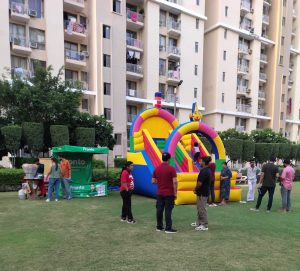
Influencer marketing is a one-way conversation. RWA branding, particularly through “Society Activations” (stalls, sampling, or workshops), allows for two-way interaction. A local organic farm can let residents taste their produce right next to the society park. This leads to immediate peer-to-peer validation. If “Mrs. Sharma from Flat 402” buys a basket of strawberries, three other neighbors watching will likely do the same. This “neighborly endorsement” is infinitely more powerful for local businesses than a testimonial from a creator living in a different city.

5. Cost-Effectiveness and ROI
For a local business, influencer fees have become prohibitively expensive, often requiring high production costs for videos that may never reach the right eyeballs.
In contrast, RWA branding offers a lower cost-per-conversion. The investment goes directly into reaching a high-intent, high-income micro-market. For the price of one sponsored post from a mid-tier influencer, a local business can often secure a month-long presence in multiple premium societies, ensuring they reach every single household in their primary catchment area.
6. Integration with Resident Utilities
Modern RWA branding isn’t just about posters; it’s integrated into the lifestyle of the resident. Being featured on society management apps or having a presence during society festivals (like Diwali or Holi melas) embeds the business into the social fabric of the community. A local business becomes a “neighborly” brand rather than an “internet” brand, fostering long-term loyalty that survives beyond a single promotional campaign.
Conclusion
While influencer marketing is great for national e-commerce brands, it often fails the “local test.” For businesses that live and die by their immediate surroundings, RWA branding offers the precision, trust, and physical presence required to convert a resident into a regular customer. In the battle for local dominance, the society gate is a much more powerful platform than the smartphone screen.