


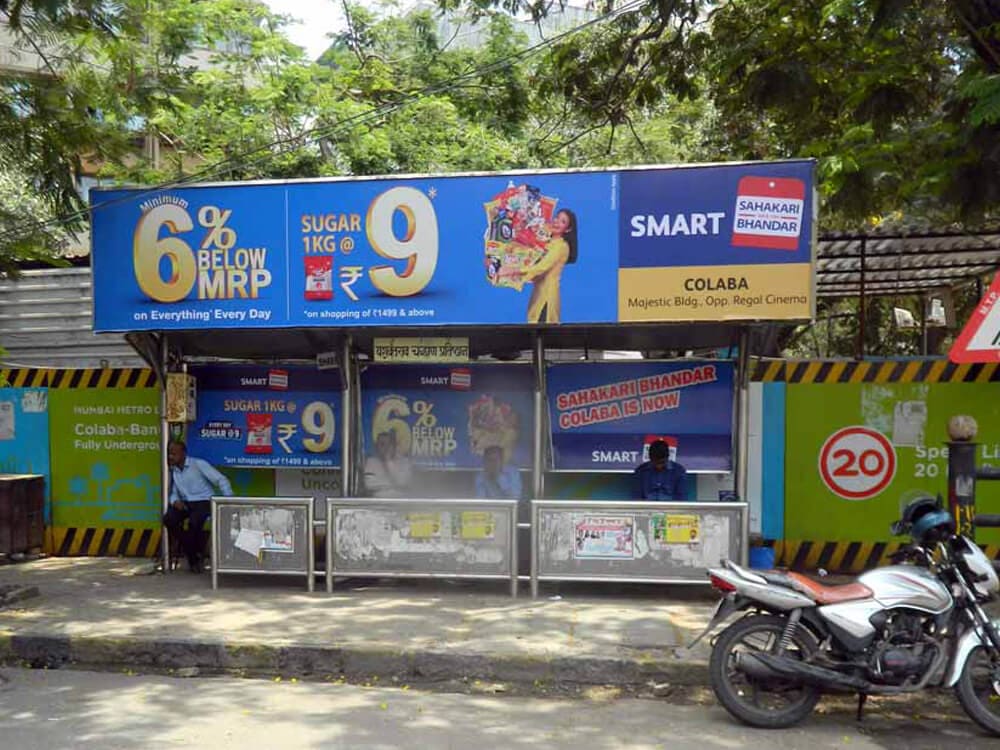
Public communication plays a critical role in shaping civic behaviour and social responsibility. Government messages must reach citizens repeatedly, clearly, and credibly. In this context, understanding bus shelter advertising for government and civic awareness campaigns offers a powerful solution for mass yet localised communication.
Bus shelters operate at the intersection of daily routine and public infrastructure. Because citizens interact with them consistently, they provide an ideal platform for sustained awareness-building initiatives.
Why Bus Shelters Are Effective for Public Awareness Messaging
Government and civic campaigns differ from commercial advertising. They require trust, repetition, and clarity rather than persuasion.
Bus shelter advertising delivers these essentials by offering:
-
Daily exposure within neighbourhoods
-
Non-intrusive communication
-
Association with public infrastructure
-
High visibility across diverse demographics
As a result, civic messages gain credibility and familiarity.
Key Objectives of Government and Civic Campaigns
Public-sector communication typically aims to:
-
Increase awareness of schemes and services
-
Encourage behavioural change
-
Promote public safety
-
Drive participation in initiatives
-
Reinforce national or civic values
Bus shelters support all these objectives effectively through consistent presence.
High-Impact Framework for Civic Bus Shelter Campaigns
1. Neighbourhood-Based Targeting
Different communities require different messaging. Bus shelters allow precise localisation of campaigns.
For example:
-
Health awareness near residential zones
-
Traffic safety near arterial roads
-
Education messaging near schools and colleges
This relevance improves message acceptance.
2. Repetition for Behaviour Reinforcement
Behavioural change requires repeated reminders. Bus shelters enable daily repetition without overwhelming audiences.
Over time, consistent exposure influences habits and decision-making.
3. Clear and Actionable Messaging
Civic creatives must prioritise clarity. Bus shelter formats support large fonts, simple visuals, and direct instructions.
This ensures comprehension across age groups and literacy levels.
4. Visual Consistency Across the City
Uniform branding across shelters reinforces campaign authenticity. Citizens recognise official messaging quickly when visuals remain consistent.
Consistency also prevents misinformation confusion.
Common Government Campaign Use Cases
Bus shelter advertising has proven effective for:
-
Public health awareness
-
Vaccination drives
-
Cleanliness and sanitation programs
-
Road safety initiatives
-
Election participation campaigns
-
Digital governance education
These initiatives depend heavily on trust and reach.
Advantages Over Other Media Channels
Compared to digital-only campaigns, bus shelters provide:
-
Offline reach for non-digital audiences
-
Zero ad-skipping or blocking
-
Community-level presence
-
Long-duration visibility
Compared to hoardings, they deliver greater repetition and readability.


Designing Effective Civic Awareness Creatives
Use Simple Language
Messages should be short, direct, and multilingual where required.
Simplicity ensures inclusivity.
Focus on Visual Symbols
Icons, infographics, and pictorial cues help communicate faster than text-heavy designs.
This is particularly effective in diverse urban populations.
Maintain Authority Tone
Official logos, colour schemes, and formatting reinforce authenticity and seriousness.
Strategic Placement for Maximum Impact
High-impact locations include:
-
Residential neighbourhoods
-
Market areas
-
Schools and hospitals
-
Transport corridors
-
Community centres
These zones ensure daily citizen exposure.
Measuring Impact of Civic Bus Shelter Campaigns
Effectiveness can be evaluated through:
-
Awareness surveys
-
Participation metrics
-
Helpline or portal activity increase
-
Area-wise engagement trends
Bus shelter campaigns often show stronger recall than short-duration digital pushes.


Role in Integrated Public Communication Strategy
Bus shelter advertising works best when integrated with:
-
Digital awareness portals
-
Radio announcements
-
Social media communication
-
Local activations
This integration strengthens message credibility and reach.
Long-Term Value for Government Communication
Civic messaging benefits from continuity. Bus shelters enable long-term campaigns that reinforce behaviour gradually rather than relying on one-time announcements.
This sustained visibility creates lasting social impact.
Conclusion
Bus shelter advertising for government and civic awareness campaigns offers a high-impact, credible, and community-driven communication framework. By embedding public messages into daily urban routines, authorities achieve stronger awareness, better recall, and meaningful behavioural influence.
In cities where attention is fragmented, bus shelters remain one of the most reliable tools for responsible and effective public communication.