


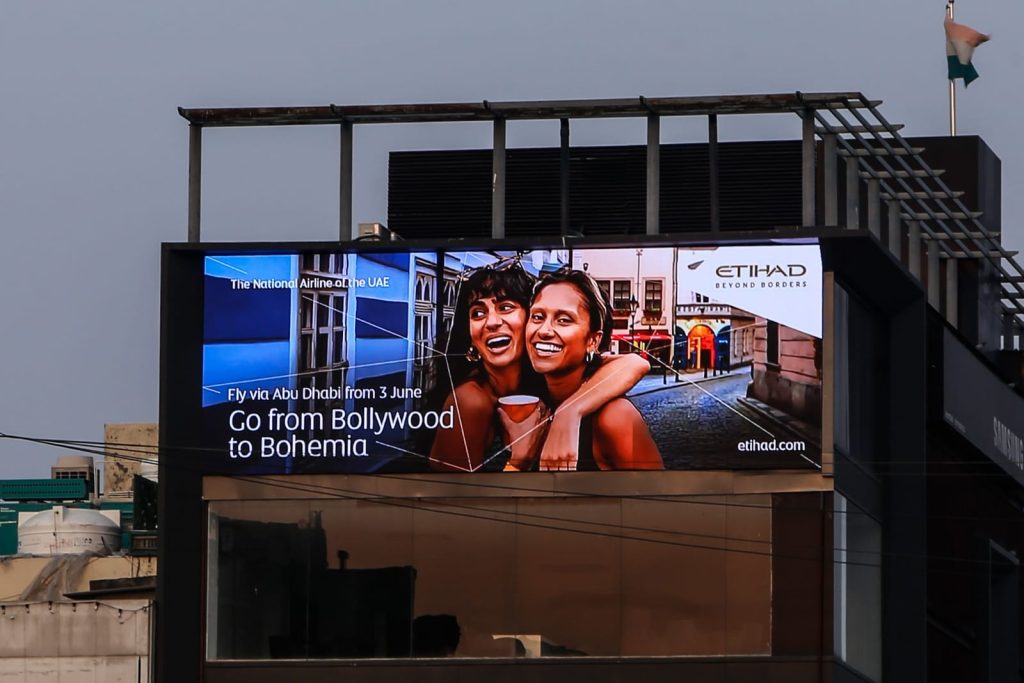
By 2026, India’s aviation sector has officially transformed into a global powerhouse. With the inauguration of the Noida International Airport (Jewar) in March 2026 and the phased rollout of the Navi Mumbai International Airport, the landscape of travel and advertising has shifted. Today, an airport is no longer just a transit point; it is a High-Tech Brand Experience Zone.
For brands aiming to capture the attention of India’s affluent and growing middle-class travelers, staying updated on these 2026 trends is non-negotiable.
1. The Dominance of Programmatic DOOH (pDOOH)
In 2026, the era of buying a static billboard for a month is fading. Digital Out-of-Home (DOOH) has become “Programmatic,” making airport ads as intelligent as social media ads.
Real-Time Ad Bidding
Brands now use data-driven platforms to bid for ad slots in real-time. Your ad only plays when your specific target audience whether they are C-suite executives or Gen Z leisure travelers is actually walking past the screen. This reduces “ad waste” and ensures your budget is spent only on high-value impressions.
Data-Triggered Content
Modern screens are now synced with live data. Ads change automatically based on the time of day, weather, or flight schedules. For example, if a flight from London lands, luxury duty-free ads can instantly switch to “International Traveler” specials in the arrival hall.


2. 3D Anamorphic and Immersive Tech
To stand out in a crowded terminal, brands are moving away from 2D images. 2026 is the year of Visual Spectacle.
Naked-Eye 3D Content
At major hubs like Delhi T3 and Mumbai T2, 3D Anamorphic displays are the new gold standard. These screens create an illusion where products (like a luxury car or a flying watch) appear to pop out into the terminal space. These “Instagrammable” moments turn travelers into brand ambassadors as they record and share the visuals online.
Augmented Reality (AR) Interaction
AR kiosks allow travelers to interact with a brand without touching a thing. From virtually “trying on” sunglasses at a Ray-Ban kiosk to exploring the interior of a new SUV via a smart mirror, AR bridges the gap between seeing a product and experiencing it.
3. The “DigiYatra” Impact on Dwell Time
The widespread success of DigiYatra, which has now reached nearly 100% adoption for domestic travel in 2026, has fundamentally changed how passengers spend time at the airport.
Capitalizing on the “Golden Hour”
Because biometrics allow passengers to clear security in under 5 minutes, they have significantly more “dwell time” in the retail and lounge areas. This “Golden Hour” is where brands are now focusing their efforts moving ads away from congested check-in areas to the relaxed, high-intent environment of luxury lounges and dining zones.
Mobile-to-Screen Integration
With passengers constantly using their phones for DigiYatra and airport apps, brands are using Geofencing. As a traveler walks past a digital pillar, they receive a synchronized notification on their phone offering a “Location-Exclusive” discount, creating a seamless omnichannel journey.


4. Sustainability: The New Brand Mandate
In 2026, the premium traveler is hyper-aware of environmental impact. With Indian airports striving for “Net Zero” status, advertising has followed suit.
Eco-Friendly Media Formats
Brands are ditching PVC and plastic-based hoardings for LED-only digital campaigns and recyclable fabric displays. Advertising your brand’s sustainability goals at a solar-powered airport like Kochi or Noida creates a powerful emotional connection with the modern, conscious consumer.
Conclusion
The future of airport advertising in India is Agile, Immersive, and Data-Driven. In 2026, success is not about having the “biggest” ad, but the “smartest” one. By leveraging 3D technology, programmatic precision, and the extra dwell time provided by DigiYatra, brands can transform a passenger’s wait into a meaningful brand relationship.