


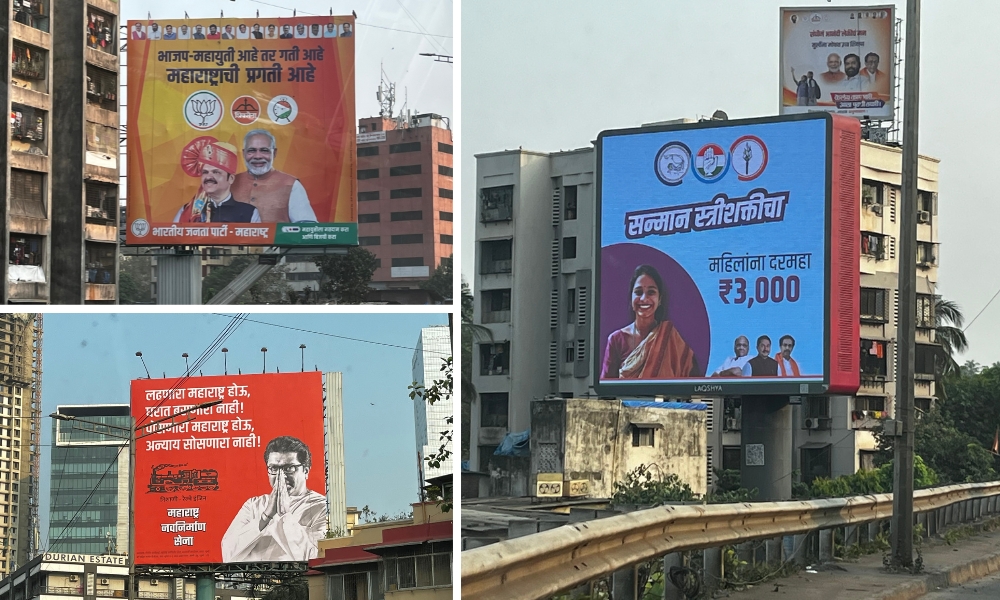
Every election season in India brings not only political rallies and media debates but also a surge in Out-of-Home (OOH) advertising. From towering hoardings on highways to digital screens in metro stations, political parties turn cities into living billboards of their campaign messages.
OOH advertising has evolved from being a visibility tool into a strategic communication platform that shapes public sentiment, amplifies promises, and builds emotional connections with voters. This article explores how political parties use OOH advertising to influence voter behavior, the trends driving this space, and why it remains one of the most trusted mediums during elections.
Why OOH Advertising Matters in Political Campaigns
During election periods, voter attention is fragmented across television, social media, and digital noise. However, outdoor media still provides what every campaign craves — high visibility, credibility, and local presence.
OOH formats — hoardings, bus wraps, metro ads, LED screens, and wall murals — allow parties to reach millions daily across urban and rural constituencies. Because these formats are visible 24×7, they create continuous psychological reinforcement.
Moreover, while online ads can be skipped or blocked, outdoor displays are unavoidable, giving them unmatched recall power.
1. The Power of Visibility and Symbolism
Political OOH campaigns rely heavily on symbols, colors, and faces. A party’s emblem or leader’s portrait becomes a shorthand for identity and emotion.
Large hoardings along highways or city centers typically highlight:
-
Party symbols and slogans (“Abki Baar”, “Congress ka Haath Aam Aadmi ke Saath”, etc.).
-
Core promises — development, jobs, welfare, or governance.
-
Key leaders and regional candidates to create visual trust.
This visibility cements recognition, especially among rural and first-time voters who may not follow daily digital chatter.
Example: In multiple state elections, parties used wall murals and flex banners across villages to reinforce leader images, ensuring visibility even where internet access was limited.


2. Geo-Targeted OOH for Constituency Focus
Modern election campaigns use micro-targeting similar to brand advertising. Political strategists now select OOH sites based on:
-
Constituency boundaries and population clusters.
-
Socio-economic zones (markets, industrial belts, universities).
-
Commuter routes used by working-class voters.
This allows hyperlocal messaging — for example, showcasing infrastructure promises in one district and employment drives in another.
Media planners often use GIS mapping and voter demographic data to align ad placements precisely with campaign objectives.
3. Transit Advertising: Taking the Message on the Move
During elections, buses, autos, and cabs become mobile canvases carrying campaign visuals deep into neighborhoods.
-
Bus Branding: City transport buses wrapped with leader images and party slogans circulate constantly through major routes.
-
Auto Rickshaw Ads: Cost-effective and hyperlocal, these reach inner lanes and market areas where static hoardings may not exist.
-
Metro and Train Media: Used in metros like Delhi, Mumbai, and Hyderabad to target urban voters commuting daily.
Transit advertising provides repetition through movement, which builds top-of-mind recall among everyday travelers.
4. Digital Out-of-Home (DOOH) in Modern Campaigning
As cities adopt smart infrastructure, DOOH screens — LED billboards, digital kiosks, and metro concourse panels — have become essential in election messaging.
Political parties now:
-
Display real-time messages reacting to breaking news or events.
-
Showcase countdown creatives for manifesto launches or rallies.
-
Use multilingual creatives to engage diverse populations.
In Tier-I metros, DOOH allows dynamic storytelling — for instance, updating promises with data visuals or testimonials. Because DOOH supports quick content rotation, campaigns can respond instantly to rival messaging or emerging narratives.


5. OOH + Digital Integration
The new-age campaign connects physical and digital worlds. Hoardings often include:
-
QR codes linking to manifestos or social handles.
-
Hashtags encouraging social sharing of rallies.
-
Call-to-action numbers for volunteer sign-ups.
This OOH-to-online bridge helps convert passive exposure into measurable engagement. Voters who spot an ad can immediately join a campaign via WhatsApp or Telegram groups, making outdoor placements both awareness- and action-driven.
6. Regional Language Customization
India’s linguistic diversity demands localization. Political campaigns tailor OOH creatives into regional languages and dialects, adapting tone and visuals for cultural nuance.
For instance:
-
In Tamil Nadu, local idioms and film-style posters resonate deeply.
-
In Uttar Pradesh or Bihar, slogans use colloquial Hindi for mass appeal.
-
In Telangana, bilingual creatives (Telugu + English) address urban and rural voters simultaneously.
This personalization builds emotional relatability, a decisive factor in close contests.
7. Rural OOH: Wall Paintings and Local Banners
While metro DOOH dominates headlines, rural OOH remains a backbone of political outreach. Traditional methods like wall paintings, flex banners, and pole kiosks continue to shape awareness.
In smaller towns and villages, these formats:
-
Serve as community landmarks.
-
Feature local candidates and booth information.
-
Reinforce central leadership imagery.
Because many rural voters spend significant time outdoors in markets or farms, such media enjoy higher visibility than online or TV ads.
8. Ethical, Regulatory, and Environmental Aspects
The Election Commission of India (ECI) enforces strict rules during campaign periods. Parties must:
-
Obtain permissions for each outdoor site.
-
Avoid defacement of public property.
-
Disclose expenditure transparently.
Additionally, many civic bodies encourage eco-friendly media — using recyclable vinyl, cloth banners, and solar-powered screens — to minimize waste.
Compliance not only ensures legality but also reflects responsible governance in the public eye.
9. Cost and ROI Considerations
Political OOH investments vary widely.
| Format | Average Cost (per site/month) | Key Benefit |
|---|---|---|
| Highway Hoardings | ₹1–3 lakh | Mass reach, long visibility |
| DOOH Screens | ₹2–6 lakh | Dynamic content, flexibility |
| Bus/Auto Branding | ₹500–₹2,000 per vehicle | High frequency, local touch |
| Wall Murals | ₹10–₹50 per sq. ft. | Rural coverage, low cost |
While digital media provides data analytics, OOH offers trusted visibility and brand permanence. Parties typically dedicate 15–25% of campaign budgets to outdoor advertising for this reason.
10. The Emotional Psychology Behind OOH
Large, vibrant political hoardings create a sense of momentum and inevitability — voters subconsciously perceive the most visible party as the strongest contender.
Color psychology plays a major role:
-
Red conveys energy and movement.
-
Green and saffron signify identity and values.
-
Blue communicates calm and inclusiveness.
Combined with leader portraits and action slogans, OOH creates an aura of leadership confidence, which influences undecided voters.
11. Measuring Impact in Election Campaigns
Though votes are the ultimate metric, modern campaigns track intermediate data such as:
-
Footfall uplift near branded rallies.
-
Social mentions of slogans appearing on OOH creatives.
-
Regional survey spikes correlated with outdoor visibility zones.
Data analytics teams merge geotagged outdoor sites with voter sentiment surveys to gauge real-time impact and optimize media mix mid-campaign.
12. The Future: Smart Political OOH
Looking ahead, OOH will integrate deeper with AI-based planning and hyperlocal data. Political parties are beginning to:
-
Use programmatic DOOH to deliver timed creatives by geography.
-
Monitor audience heat maps through traffic and mobile data.
-
Run AR-enabled experiences at bus shelters or kiosks.
The next election cycles will see a fusion of technology, personalization, and mobility — turning every street corner into a responsive communication hub.
Conclusion
OOH advertising remains one of the most visible, credible, and persuasive channels during election seasons in India. While digital campaigns grab headlines, it’s the hoardings, bus wraps, metro ads, and wall murals that shape first impressions and ground-level visibility.
For political parties, outdoor media is not merely about promotion — it’s about presence, familiarity, and trust. As India’s cities grow smarter and rural areas more connected, OOH will continue to define how democracy communicates with its people — loudly, visually, and everywhere.