Railway Station Branding vs Onboard Train Advertising: What Delivers Better Recall
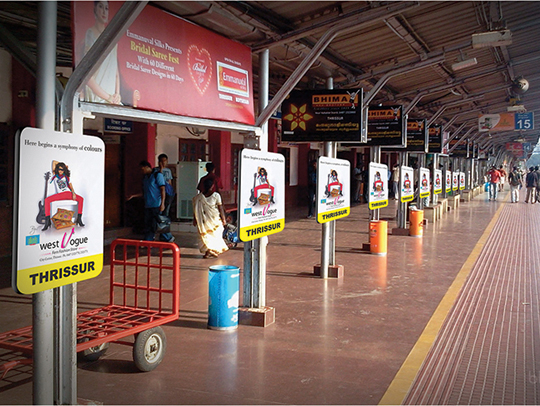
Railway station branding vs onboard train advertising explained to understand which format delivers stronger brand recall.
Railway advertising offers brands access to one of India’s largest and most diverse commuter audiences. However, visibility alone does not guarantee effectiveness. For marketers, the real question is what delivers better brand recall—railway station branding or onboard train advertising? Both formats operate in high-footfall environments, yet they influence memory and engagement in different ways. Understanding how recall works in each context helps brands allocate budgets more strategically and design stronger campaigns.
Understanding Railway Station Branding
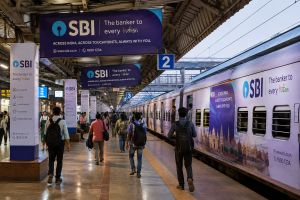
Railway station branding includes advertising across platforms, concourses, entry–exit gates, foot overbridges, waiting halls, and digital screens. These spaces see massive daily footfall, including commuters, travelers, and visitors.
Why Station Branding Drives Strong Visual Recall
Railway stations are visually expansive environments. Large-format hoardings, LED video walls, and wall wraps dominate passenger sightlines. Because commuters repeatedly pass through the same stations, frequency of exposure plays a major role in recall.
Key recall drivers for station branding include:
-
Large creative formats with high visibility
-
Repeated exposure across daily travel routines
-
Strategic placement at natural pause points
As a result, station branding excels at building top-of-mind awareness, especially for mass-market brands.
Understanding Onboard Train Advertising
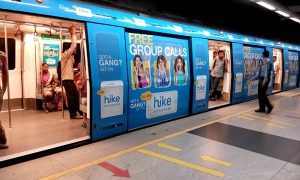
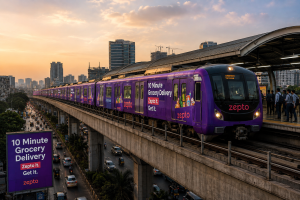
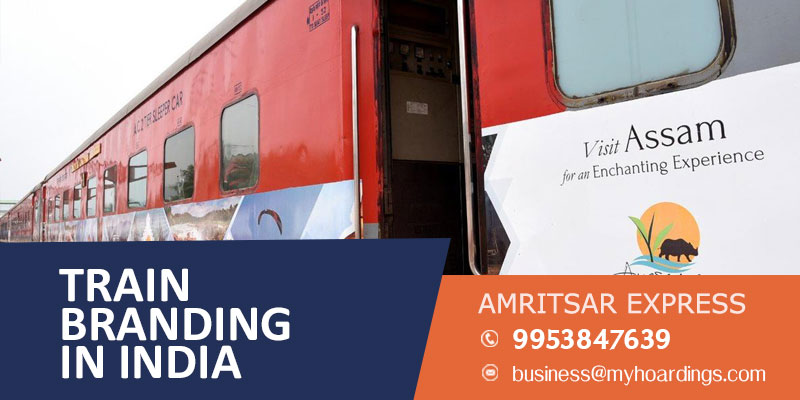
Onboard train advertising includes interior panels, seat-back ads, door branding, ceiling panels, digital screens, and occasionally exterior wraps.
Why Onboard Advertising Enhances Message Retention
Unlike stations, trains offer captive environments. Passengers spend extended periods seated or standing inside coaches, often with limited visual distractions. This extended dwell time allows messages to be absorbed more deeply.
Onboard train advertising benefits from:
-
Longer exposure duration
-
Close-proximity viewing
-
Reduced competition from other media
Consequently, onboard advertising often delivers stronger message comprehension and recall depth.
Dwell Time vs Frequency: The Core Recall Difference
The biggest difference between the two formats lies in how recall is formed.
-
Railway station branding relies on high-frequency, short exposures
-
Onboard train advertising relies on fewer but longer exposures
Station branding reinforces brand familiarity through repetition. Onboard advertising strengthens memory through sustained attention. Therefore, recall quality differs depending on campaign objectives.
Impact of Creative Complexity on Recall
Creative execution significantly affects recall performance.
-
Stations favor simple, bold creatives that work at a distance
-
Trains allow slightly richer messaging due to closer viewing
Brands attempting detailed storytelling often perform better onboard. In contrast, brands focused on logos, taglines, and visual identity benefit more from station branding.
Role of Context and Passenger Mindset
Passenger mindset also influences recall.
At stations:
-
Passengers are alert, moving, and task-focused
-
Ads work best when they are instantly recognizable
Inside trains:
-
Passengers are relatively relaxed
-
Ads benefit from emotional or informative messaging
Because of this difference, onboard train advertising often delivers higher unaided recall, while station branding supports aided recall through repeated exposure.
Digital Screens and Recall Performance
Digital formats have changed recall dynamics for both environments.
-
Station DOOH screens attract attention through motion and scale
-
Onboard digital screens benefit from repeated looping and proximity
However, excessive motion at stations can reduce message clarity. In contrast, subtle motion inside trains often improves recall without overwhelming passengers.
Category-Wise Recall Effectiveness
Recall performance also varies by advertiser category.
-
FMCG, telecom, fintech, and mass brands often achieve better recall at stations due to scale
-
Travel, education, apps, and premium services often perform better onboard due to deeper engagement
Therefore, category context plays a crucial role in deciding the right format.
Measurement Insights: What Studies and Campaigns Indicate
Campaign observations consistently show:
-
Station branding drives faster brand recognition
-
Onboard advertising drives stronger message understanding
Brands using both formats together often see the highest recall lift. This combination allows frequency and dwell time to work in tandem.
Which Delivers Better Recall Overall?
There is no single winner. Railway station branding and onboard train advertising deliver different types of recall.
-
Choose station branding for scale, visibility, and brand salience
-
Choose onboard train advertising for engagement, message retention, and persuasion
For optimal results, brands should integrate both into a unified railway advertising strategy.
Best Practice: Using Both Formats Strategically
The most effective railway campaigns follow a layered approach:
-
Station branding builds awareness and familiarity
-
Onboard advertising reinforces the message during the journey
This combination maximizes recall across multiple cognitive touchpoints.
Final Thoughts: Recall Is Strongest When Context Matches Objective
When evaluating railway station branding vs onboard train advertising, recall should always be linked to campaign goals. Awareness-led campaigns benefit from station dominance, while consideration-led campaigns gain more from onboard presence.
Brands that align format choice with recall objectives consistently achieve better ROI and stronger brand impact in railway environments.