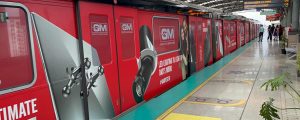
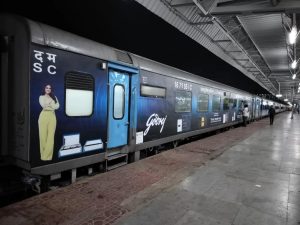
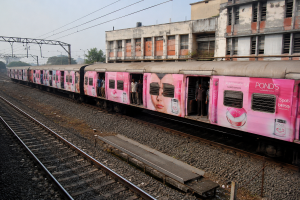
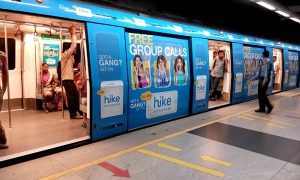
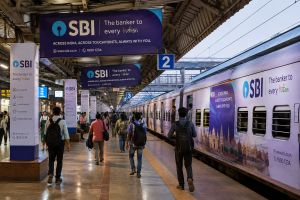
The Moving Neighbourhood Effect: How Train Advertising Can Make a Brand Familiar Across Multiple Cities Without Changing the Campaign??
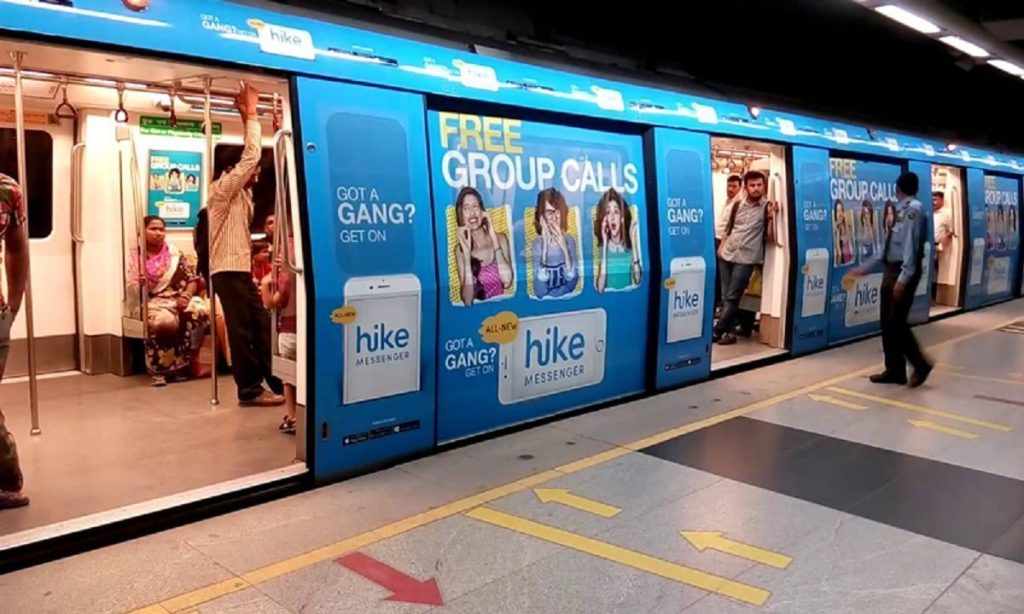
A branded train does not remain in one neighbourhood. It travels through different areas, stations, cities and consumer environments while carrying the same visual identity.
This creates an interesting advertising phenomenon: one campaign can become visible across multiple micro-markets without changing its core creative idea.
Indian Railways currently recognises trains and coaches as mobile assets that can be used for branding and advertising under its non-fare revenue framework.
One Campaign, Multiple Consumer Environments
Imagine a brand wrapping a train operating across an important regional corridor.
In the morning, the branded train may be visible at one station. Later, it can move through another urban area. During the same journey, passengers inside the train experience the campaign while people outside see the moving exterior branding.
The campaign therefore travels with the audience.
Unlike a static hoarding that remains geographically fixed, exterior train branding can create visibility across multiple locations as the asset moves through its scheduled route.
This gives marketers an opportunity to think about routes instead of individual advertising sites.
Building Recognition Across Cities
For brands expanding into multiple markets, consistency is important.
A consumer travelling between two cities may see the same brand on the train at different points of the journey. Another person may notice the same branding at a station. Someone living near the railway corridor may encounter it repeatedly as the train passes through the area.
The creative remains consistent, while the audience changes.
That consistency can help create a stronger visual association with the brand.
The Route Becomes the Media Network
Traditional OOH planning often asks:
Which locations should we buy?
Train advertising introduces another question:
Which route should our brand own?
This can be particularly valuable for brands whose target market is concentrated along specific economic or consumer corridors.
For example, an education brand could focus on a route connecting major student markets. A real-estate brand could target a developing urban corridor. A tourism company could select a route connecting high-value travel destinations.
The train becomes more than a vehicle.
The route itself becomes the media network.
Why Movement Creates Additional Visibility
A moving branded train can generate exposure among more than just passengers.
Its exterior can be seen by:
- Passengers waiting on platforms
- People at railway crossings
- Pedestrians near railway corridors
- Local communities
- Road users near railway areas
- Other passengers and railway visitors
This creates multiple audience layers around one mobile advertising asset. Train advertising providers commonly position exterior wraps as moving billboards capable of reaching audiences across different urban and regional environments.
The campaign therefore extends beyond the people sitting inside the train.