Regulatory Guidelines Brands Must Know Before Advertising on Trains
4 min read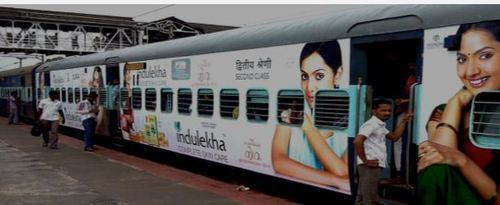
Regulatory guidelines before advertising on trains explained to help brands ensure compliance and avoid penalties.
Train advertising in India offers brands access to millions of daily commuters across suburban railways, metro networks, and long-distance trains. However, railway infrastructure is classified as public and strategic property, which means advertising is tightly regulated. Brands that ignore regulatory guidelines risk campaign rejections, financial penalties, or sudden removal of creatives. Therefore, understanding regulatory guidelines before advertising on trains is essential for smooth execution and long-term brand safety.
This article explains the key regulations, approval processes, and compliance checkpoints brands must know before launching train advertising campaigns in India.
Understanding the Authority Governing Train Advertising
Train advertising is not governed by a single national rulebook. Instead, permissions depend on the type of rail network. Indian Railways controls long-distance and suburban trains, while metro rail corporations regulate metro systems.
Because each authority has its own advertising policy, brands must review network-specific guidelines before planning creatives, formats, or timelines. Assuming uniform rules across train systems often leads to avoidable delays.
Content Restrictions Brands Must Follow
One of the most critical train advertising regulatory guidelines relates to content approval. Since trains serve diverse audiences, authorities impose strict content standards.
Commonly restricted content includes:
-
Political or election-related messaging
-
Religious or sensitive themes
-
Alcohol, tobacco, gambling, or betting promotions
-
Misleading, exaggerated, or offensive claims
-
Content impacting national security or public order
Additionally, surrogate advertising is closely scrutinized. Therefore, brands should ensure that messaging remains neutral, factual, and socially appropriate.
Language and Cultural Compliance Requirements
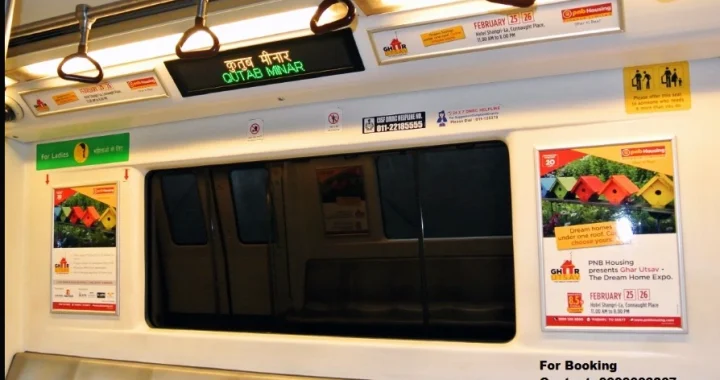
India’s linguistic diversity directly impacts train advertising approvals. Most rail authorities require bilingual or multilingual creatives.
Typically:
-
English must be paired with the regional language
-
Font sizes should maintain parity
-
Local cultural sensitivities must be respected
Ignoring language guidelines can result in creative rejection. Hence, brands should plan localized adaptations instead of direct translations.
Format-Specific Advertising Guidelines on Trains
Different train advertising formats come with different regulatory conditions. Authorities clearly define what is allowed inside trains, outside trains, and on platforms.
Key format-related rules include:
-
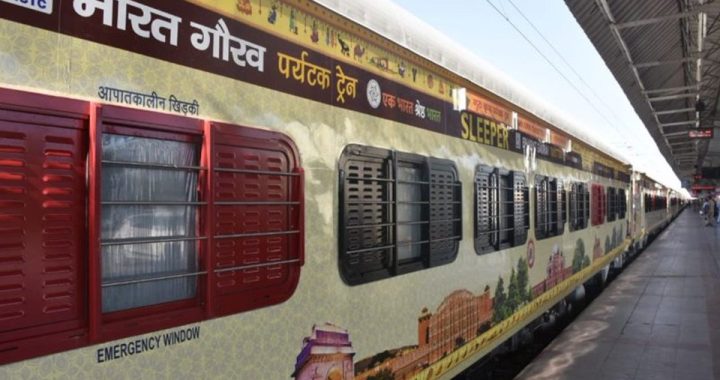
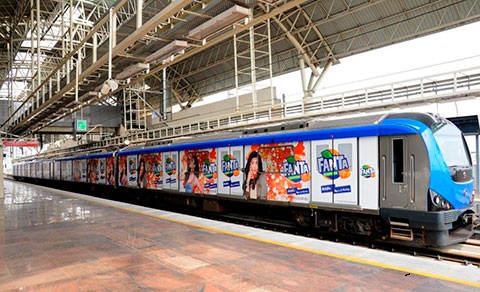
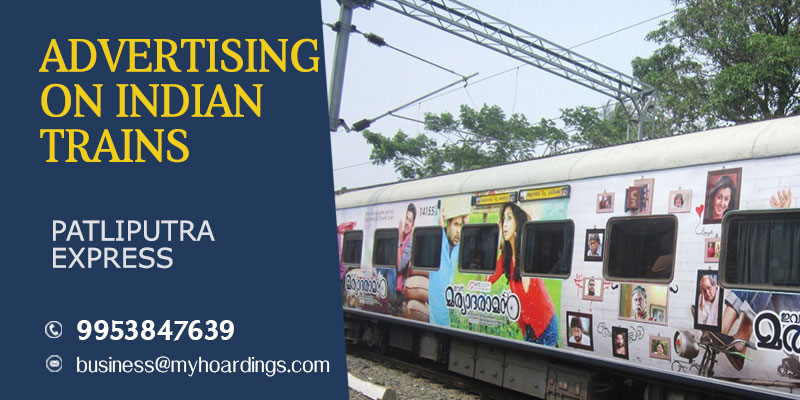
Exterior train wraps must not obstruct windows or safety markings
-
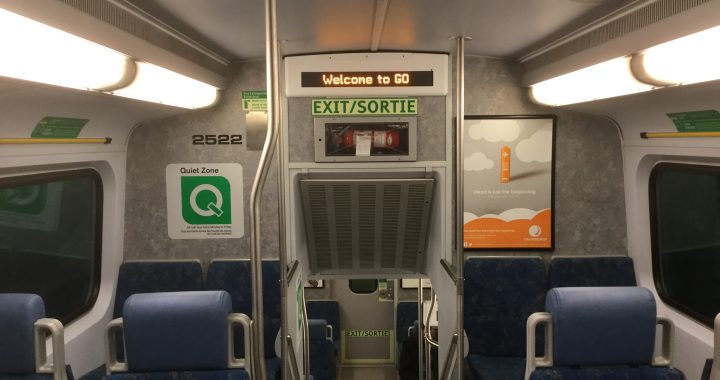
Interior panels must not block emergency signage
-
Door branding may have size and placement limits
-
Platform and station ads must not disrupt passenger flow
Because of these distinctions, brands must audit format guidelines individually rather than applying a one-size-fits-all approach.
Safety and Passenger Convenience Regulations
Passenger safety remains the highest priority for railway authorities. Therefore, advertising cannot interfere with operational safety or commuter convenience.
Common safety restrictions include:
-
No obstruction of emergency exits or alarms
-
No reflective or glare-causing materials
-
No loose installations or sharp edges
-
No distracting visuals near driver cabins
Creatives that compromise visibility or movement are immediately disallowed. As a result, safety compliance must be factored into both design and installation stages.
Digital Train Advertising Compliance Rules
Digital advertising inside trains and stations is growing rapidly. However, digital formats face stricter regulations compared to static ads.
Typical digital guidelines include:
-
Limits on animation speed and transitions
-
No flashing or strobe effects
-
Controlled brightness levels
-
Pre-approved content loops
Digital creatives designed for malls or roadside DOOH often require modification before train deployment. Therefore, brands should design rail-specific versions early.
Approval, Pre-Certification, and Documentation
Before any train advertising goes live, creatives must pass a pre-certification process. This involves submitting artwork, mockups, and technical details for review.
Approval timelines vary but may take several weeks. Additionally, authorities may request revisions. Hence, brands should avoid last-minute submissions and build approval buffers into launch schedules.
Maintaining documented approvals is also critical. During inspections, authorities may request proof of compliance at any time.
Duration, Renewal, and Campaign Pauses
Train advertising contracts are time-bound. Short-term campaigns may require higher scrutiny, while long-term branding requires periodic renewals.
Moreover:
-
Campaigns may be paused during elections
-
Emergency situations may override ad visibility
-
Special permissions may be needed during festivals
Brands should plan timelines with flexibility to accommodate such interruptions.
Importance of Working with Authorized Vendors
Railway advertising inventory is managed by authorized concessionaires. Brands must work only with officially approved vendors to ensure regulatory compliance.
Authorized vendors:
-
Handle permissions and documentation
-
Understand evolving guidelines
-
Coordinate installations safely
-
Reduce legal and operational risks
Choosing unauthorized operators can expose brands to penalties even if creatives are compliant.
Best Practices for Brands Advertising on Trains
To ensure smooth execution, brands should:
-
Conduct a regulatory audit before planning creatives
-
Design flexible, compliance-ready artwork
-
Plan city-wise or network-wise approvals
-
Maintain approval records centrally
By following these practices, advertisers can reduce risk and maximize campaign longevity.
Why Regulatory Awareness Protects Brand Reputation
Understanding regulatory guidelines before advertising on trains does more than prevent penalties. It protects brand reputation, ensures uninterrupted visibility, and strengthens trust with public authorities.
In a highly regulated environment like railways, compliance is not a limitation—it is a strategic advantage.