


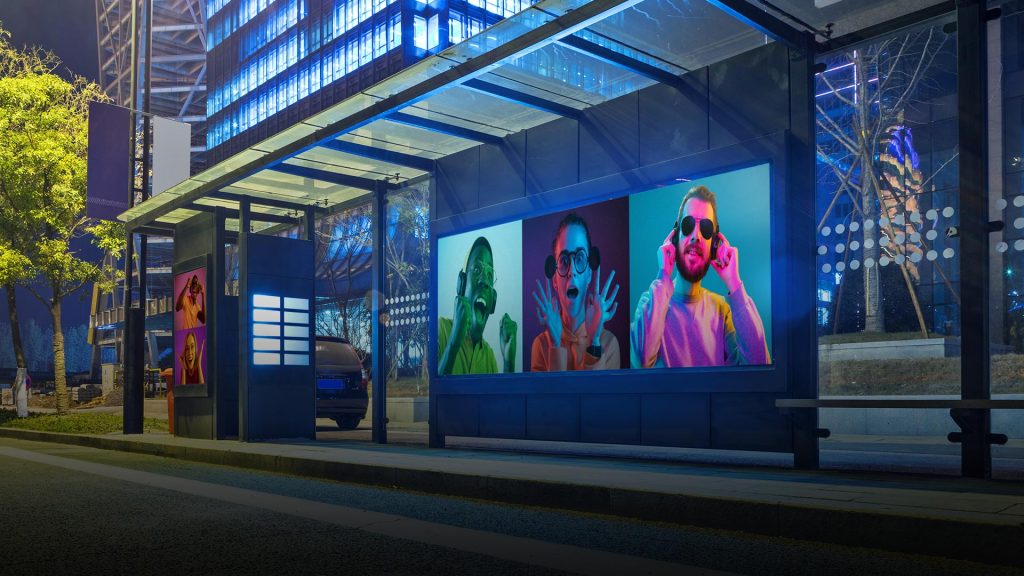
In the last few years, Digital Out-of-Home (DOOH) advertising has emerged as one of the fastest-growing and most exciting media channels in India. As consumers spend more time outside their homes — commuting, shopping, dining, or socializing — brands are finding new ways to engage them through digital screens, motion-based creatives, and data-driven targeting.
With cities upgrading to smart infrastructure and advertisers demanding measurable results, DOOH has become the bridge between traditional outdoor media and digital marketing precision. By 2026, India’s DOOH advertising industry is projected to cross ₹2,000 crore, reshaping how brands connect with audiences in physical spaces.
What Is DOOH Advertising?
DOOH, or Digital Out-of-Home, refers to the use of digital screens, LED displays, and dynamic signage in public environments — from billboards and transit hubs to malls, airports, and office complexes.
Unlike static billboards, DOOH uses motion graphics, videos, and real-time content updates to attract and engage viewers. These screens can be programmed remotely and updated instantly, offering advertisers unmatched flexibility and control.


More importantly, DOOH integrates technology — such as AI, sensors, and programmatic buying — to deliver smarter and more relevant campaigns that adapt to audience behavior and time of day.
The Rise of DOOH in India
India’s DOOH journey began slowly in the early 2010s but has gained incredible momentum since 2020. With smart cities, metro expansions, and new-age retail spaces emerging nationwide, digital displays have become an integral part of urban infrastructure.
According to recent market studies:
-
DOOH now contributes over 20% of total OOH spending in India, up from 7% in 2019.
-
The segment is growing at a CAGR of 25–30%, far outpacing traditional OOH.
-
By 2030, DOOH could account for one-third of India’s total outdoor ad revenue.
This rapid adoption has been driven by three key factors — technology, measurability, and creative innovation.
1. Dynamic, Real-Time Advertising
One of DOOH’s greatest advantages is its ability to update campaigns instantly. Advertisers can modify creative content based on time, location, audience, or even weather conditions.
For example:
-
A coffee brand can promote hot beverages during cold mornings and switch to iced coffee ads in the afternoon.
-
A fashion brand can showcase rainwear when rainfall sensors are triggered.
-
A food delivery brand can push offers around lunch hours near corporate hubs.
This flexibility gives marketers the power to deliver contextually relevant messages, increasing attention and engagement.
2. Data-Driven and Programmatic Buying
Traditional OOH relied on fixed contracts and manual planning. DOOH, however, has introduced programmatic advertising — allowing brands to purchase ad space automatically based on audience data, location analytics, and real-time impressions.
Programmatic DOOH integrates with data management platforms (DMPs) and mobile insights to serve ads when and where they matter most.
For example: a brand can choose to display ads only when footfall reaches a specific level in a mall or when traffic congestion increases on a particular route.


This precision not only improves efficiency but also makes OOH as measurable and accountable as online ads.
3. Better Audience Targeting and Measurement
Unlike traditional hoardings, DOOH enables brands to measure audience engagement through advanced technologies like AI-powered cameras, sensors, GPS data, and mobile tracking.
Modern DOOH networks can track:
-
Viewer count and dwell time
-
Demographic data (age, gender)
-
Impressions and interactions (via QR codes or NFC)
This data-driven insight helps brands optimize campaigns and calculate return on investment (ROI). It also allows for custom audience targeting, bridging the gap between digital and physical marketing.
4. Integration with Mobile and Social Media
One of the most powerful aspects of DOOH is its synergy with mobile and social media marketing.
Through QR codes, NFC tags, or short links, brands can direct viewers from a DOOH screen to a mobile experience — like an e-commerce page, coupon offer, or Instagram contest.
For instance:
-
A movie promotion can direct people to book tickets instantly via a QR scan.
-
A retail brand can offer location-based discounts redeemable through its app.
-
Social media campaigns can feature user-generated content displayed live on DOOH screens.
This online-offline integration transforms passive viewing into active engagement, enhancing campaign impact.
5. DOOH in Transit and Smart City Spaces
Transit zones have become some of the most popular venues for DOOH installations. Airports, metro stations, railway terminals, and bus shelters across India now feature digital screens that reach millions daily.
Cities like Delhi, Mumbai, Bengaluru, and Hyderabad are leading this trend, while Tier-II cities such as Indore, Lucknow, and Kochi are catching up quickly.
As the Smart Cities Mission expands, urban authorities are adopting DOOH to display both public information and commercial ads. This not only improves civic communication but also opens new revenue streams for municipalities.
For advertisers, it means access to premium, high-footfall environments that guarantee visibility and engagement.
6. Creativity Meets Technology
DOOH allows brands to push creative boundaries. The format supports motion graphics, 3D animation, augmented reality (AR), and interactive displays — giving advertisers the chance to create immersive, memorable experiences.
Imagine a 3D car billboard where the vehicle drives “off” the screen, or a beauty brand that lets users virtually “try” lipstick shades using an AR-enabled screen.
These innovations not only capture attention but also enhance brand recall and emotional impact. As consumers increasingly seek experiences, DOOH offers a stage for storytelling that feels alive and exciting.
7. Sustainability and Smart Operations
Sustainability is becoming central to modern advertising. Unlike paper-based hoardings, digital billboards reduce printing waste and use energy-efficient LED panels. Many networks now operate on solar-powered systems, aligning with green advertising principles.
Moreover, since content is updated digitally, there’s no need for physical replacements — reducing logistics and carbon emissions.
This eco-friendly evolution strengthens DOOH’s role in building responsible, future-ready brand communication.
8. Challenges and the Road Ahead
While DOOH’s growth is undeniable, it still faces challenges such as:
-
High initial investment for screen infrastructure
-
Connectivity issues in smaller cities
-
Regulatory inconsistencies across local authorities
However, as technology costs fall and cities embrace digital expansion, these hurdles are expected to ease. The next step will be standardization of measurement metrics and greater collaboration between media owners, advertisers, and civic bodies.
By 2026, DOOH will not just be an alternative to traditional OOH — it will be the core of outdoor advertising strategies.
Conclusion
DOOH (Digital Out-of-Home) advertising is transforming Indian marketing by making outdoor media smarter, interactive, and measurable. With real-time content, precise targeting, and high visual impact, it offers brands a powerful way to connect with audiences across their daily journeys.
As India’s cities grow smarter, DOOH will define the next decade of urban storytelling — blending creativity, data, and technology like never before.
For marketers, the time to embrace DOOH isn’t tomorrow — it’s today.
Partner with MyHoardings to explore DOOH opportunities across India’s most dynamic cities — from metro corridors and airports to premium retail and transit hubs.