


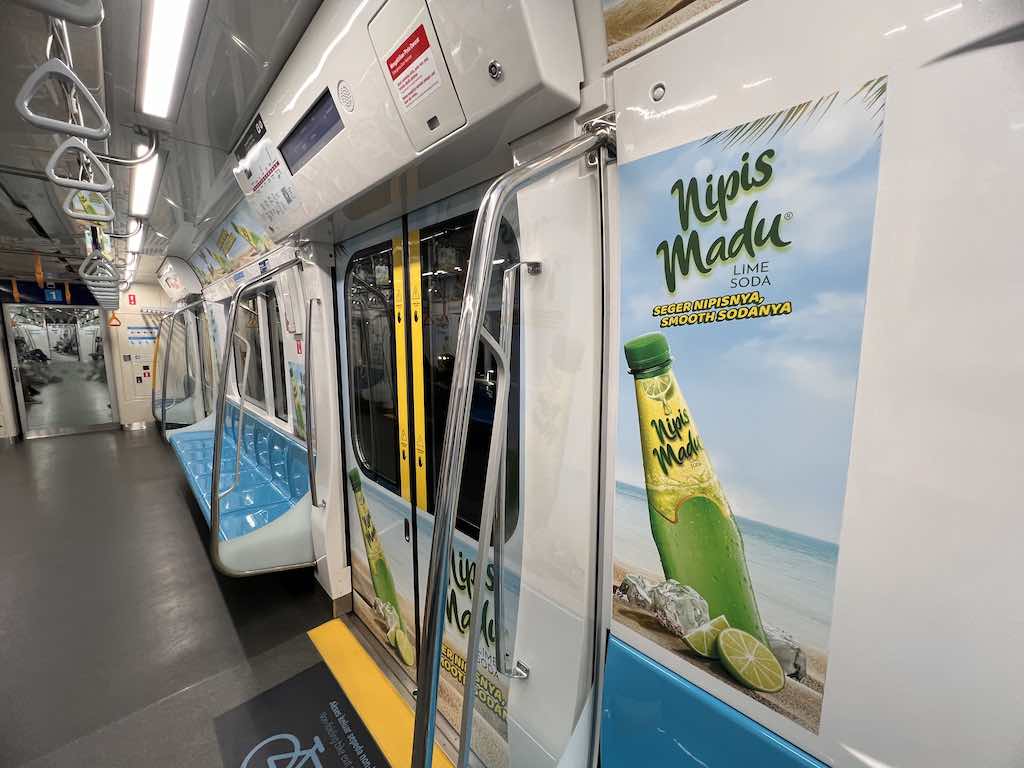
In the rapidly evolving urban landscape of 2026, transit media has become the “fastest-growing” segment of the Out-of-Home (OOH) market, now commanding nearly 40% of all outdoor ad spends in India. For a brand manager, the choice between the Metro and the City Bus is no longer just about budget it is about choosing the specific “psychology of the commute.”
While the Metro offers a controlled, premium environment, the Bus provides an aggressive, moving presence that penetrates the deepest corners of the city. Here is how they stack up in the current market.
1. The Audience Profile: Net-Worth vs. Mass-Reach
The fundamental difference lies in the “Commuter DNA.”
The Metro Audience (The Premium Professional): In 2026, Metro networks in Tier-1 cities like Delhi, Mumbai, and Bengaluru have become the primary lifeline for India’s white-collar workforce. The audience here is tech-savvy, affluent, and almost exclusively carries a smartphone. This makes the Metro a “High-Intent” zone. It is the perfect environment for Fintech, Real Estate, EdTech, and D2C brands that require a “clean” space to build trust and credibility.
The Bus Audience (The Local Lifeblood): Bus advertising remains the king of “Mass Market” penetration. It reaches a diverse spectrum, from local shopkeepers and blue-collar workers to students and homemakers. Unlike the Metro, which stays on fixed underground or elevated tracks, the bus travels through local markets, residential colonies, and school zones. For FMCG, Healthcare, and Budget Retailers, the bus is the most democratic and widely-seen medium in India.


2. Reach Dynamics: Fixed Hubs vs. Mobile Billboards
How your brand moves through the city determines its “Frequency of Recall.”
The “Captive Sanctuary” of the Metro: The Metro’s greatest asset is Dwell Time. A passenger spends an average of 20 to 40 minutes per journey. Whether they are waiting on the platform or sitting inside the coach, they are “captive” to your message. In 2026, with the rise of Digital OOH (DOOH) screens inside coaches, ads can be synchronized with station arrivals, making the message hyper-relevant to the rider’s location.
The “Moving Giant” Effect of Buses: Buses act as high-frequency “Moving Billboards.” A full-wrap bus doesn’t just reach the 60 people sitting inside; it reaches the 60,000 people outside it motorists, pedestrians, and people waiting at bus queues. Because buses often get stuck in traffic, their “exposure time” at signals is immense. This makes them highly effective for “Top-of-Mind” awareness across a vast geographic area.
3. Cost & Scalability in 2026
Budgeting for these mediums has shifted due to the 2026 trend of Programmatic OOH.
The Metro Investment: Advertising in the Metro is generally more expensive. Full train wraps or “Station Domination” packages are premium assets, often starting in the range of several lakhs per month. However, for brands with a high Customer Lifetime Value (LTV) like a bank or a luxury developer the cost per “qualified” impression is often lower than other mediums because the audience has higher spending power.
The Bus Investment: Bus advertising is significantly more accessible for small and medium-sized businesses. A side panel or a rear-back sticker can be secured for as little as ₹15,000 to ₹30,000 in major metros. This “Entry-Level” affordability allows brands to scale horizontally choosing 20 buses across a specific zone rather than putting all their budget into a single static hoarding.


4. ROI Verdict: Trust vs. Proximity
-
Metro ROI is driven by Engagement: Because commuters are on their phones, Metro ads with QR codes see 3x higher scan rates. It is the “Trust Medium.” If your goal is to get someone to download an app or book a site visit, the Metro is the winner.
-
Bus ROI is driven by Frequency: Bus ads excel at “Last-Mile” conversion. If you are opening a new retail store or a hospital, having your ad on a bus that passes through that neighborhood every hour creates a “Local Landmark” effect. The ROI here is measured by local footfall and neighborhood familiarity.
The 2026 Verdict: Which Should You Choose?
In the current market, the most successful campaigns are Hybrid. Leading brands use the Metro for “Corporate Credibility” and use a fleet of city buses for “Mass Visibility.”
-
Choose the Metro if your project is premium, tech-driven, or national in scale.
-
Choose the Bus if your project is hyperlocal, retail-focused, or needs to reach every household in a city.