


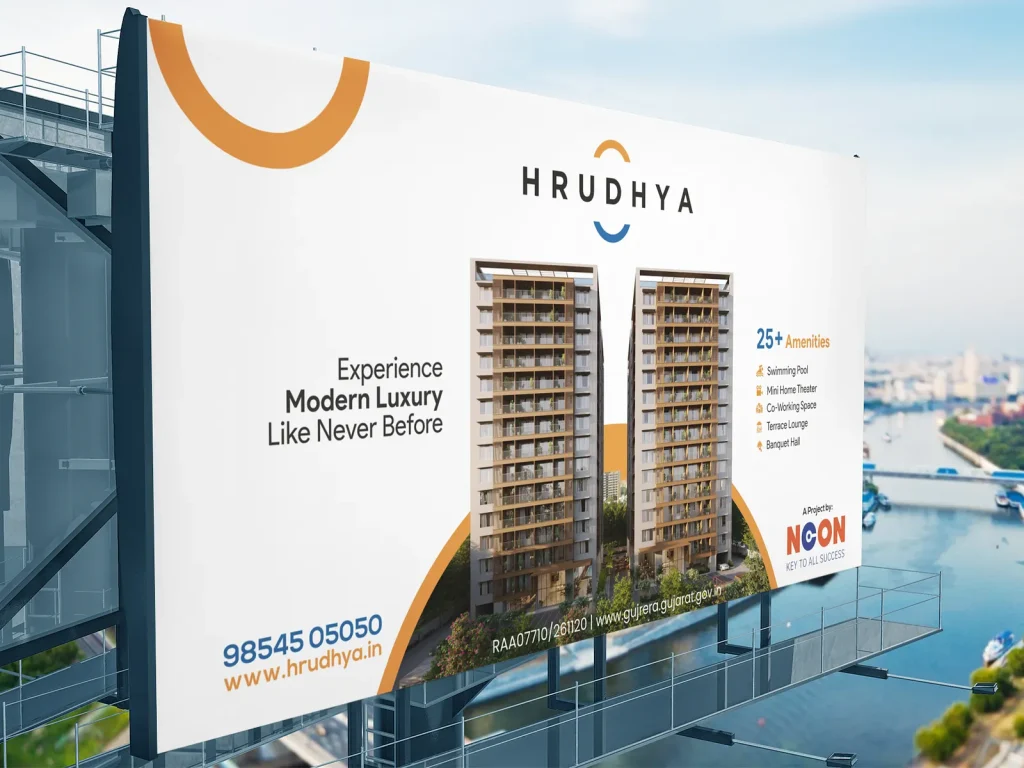
In the high-stakes world of real estate, a lead isn’t just a phone number; it is a multi-million rupee opportunity. While digital ads on Facebook and Google provide volume, they often suffer from “lead fatigue” and low intent. In 2026, premium real estate developers are returning to Outdoor Advertising (OOH) not just for “branding,” but as a sophisticated tool for high-intent lead generation.
By moving beyond the traditional hoarding and integrating “Phygital” (Physical + Digital) strategies, real estate brands are shortening the distance between a “viewer” and a “site visit.”
1. The “Anchor of Trust” in a Digital World
Real estate is a high-trust purchase. A buyer is unlikely to invest their life savings based solely on a mobile ad that can be faked or deleted.
-
The OOH Strategy: Large-format billboards and site-office hoardings act as a physical “Proof of Existence.”
-
The Lead Impact: When a prospect sees a massive 3D-rendered hoarding at a major intersection like the DND Flyway or NH-48, it builds a subconscious “trust baseline.” This makes them 40% more likely to click on the brand’s digital ad later that day, as the brand now feels “established” rather than “experimental.”
2. Using “Contextual Triggers” for Hyperlocal Leads
The best leads come from people who already live, work, or travel near the project. Real estate brands use OOH to target “Life-Stage” moments.
-
The Strategy: Placing RWA Advertising and Bus Shelter ads in older, established residential colonies.
-
The Lead Impact: A resident living in an old 2-BHK apartment sees an ad for a “Luxury 4-BHK Upgradability” project just 2 kilometers away. Because the ad reaches them in their own neighborhood, the relevance is immediate. This “Hyperlocal Hook” generates leads with a much higher conversion-to-visit ratio than a city-wide digital blast.


3. The Digital Bridge: QR Codes & Visual Search
In 2026, the “Static Hoarding” is dead. Every premium real estate billboard now serves as a gateway to a digital funnel.
-
The Strategy: High-contrast QR Codes and Short URLs integrated into the creative design.
-
The Lead Impact: A commuter stuck in traffic scans a QR code that instantly opens a 360-degree Virtual Tour or a WhatsApp Chatbot. This allows the brand to capture the lead’s data at the moment of peak interest, turning a passive viewer into an active prospect in under 30 seconds.
4. Retargeting the “Real World” Audience
One of the most advanced ways real estate brands generate leads is through Geofencing.
-
The Strategy: Setting up a digital “fence” around a high-impact billboard location or a competitor’s site office.
-
The Lead Impact: When a potential buyer passes by a developer’s billboard, their mobile ID is anonymously captured. Later that evening, while browsing Instagram or News apps at home, they are served a “Retargeting Ad” for the same project. This “Surround Sound” marketing ensures the brand stays top-of-mind until the lead finally fills out an enquiry form.


5. Site-Centric Branding: The “Last Mile” Conversion
The area surrounding the actual construction site is the most fertile ground for lead generation.
-
The Strategy: Using Building Wraps and Directional Signage that guide traffic directly to the “Experience Center.”
-
The Lead Impact: By dominating the “Last Mile,” developers capture “Organic Walk-ins.” These are the highest-quality leads because they have already seen the location, the construction progress, and the neighborhood before ever speaking to a sales agent.
Conclusion: The New Funnel is Physical
For real estate brands, Outdoor Advertising is no longer a “vanity spend.” It is the top of a highly optimized funnel. By building trust through scale, targeting by geography, and bridging the gap with mobile technology, developers are proving that in the quest for leads, the “Big Picture” on the street is often more effective than the “Small Picture” on the screen.