
In the modern marketing landscape, “visibility” is no longer the ultimate goal. For brands that demand a real return on investment (ROI), the goal is precision. The traditional “spray and pray” method where an ad is shown to everyone in the hope that someone buys is rapidly being replaced by a more clinical, data-driven strategy.
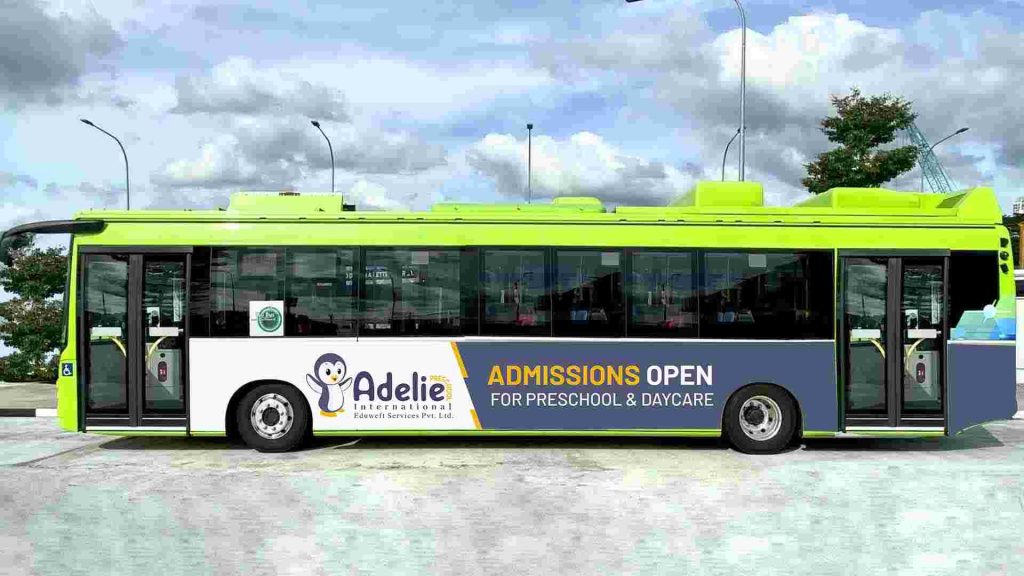
Route-based targeting represents the most sophisticated evolution of Bus Branding. It moves beyond simple awareness and focuses on geographic intelligence. By analyzing exactly where a bus travels, brands can align their message with the specific DNA of a neighborhood. This ensures that every rupee spent is working to reach the right person at the right time.
The Science of Geographic Segmentation
Every bus route in a city like Bengaluru, Indore, or Bhopal tells a distinct demographic story. One route might connect high-end gated communities to luxury shopping malls and international schools. Another route might link affordable housing hubs to massive industrial estates and transport terminals.
Data-driven advertisers do not see these as just roads; they see them as consumer segments. By mapping these routes against specific buyer personas, brands can achieve surgical precision. If you are a premium real estate developer, you don’t need a hundred buses roaming the entire city.
Instead, you need five to ten buses that stay exclusively on high-income corridors. This ensures your budget is never wasted on an irrelevant audience. You aren’t just buying “space”; you are buying “relevance.” Geographic segmentation allows a local brand to feel like a global giant within its own territory.

Analyzing Commuter Patterns and Dwell Time
Data allows us to understand exactly how much time a bus spends in a “High-Value Zone.” On certain city routes, buses might spend 40% of their journey idling in heavy traffic near major IT parks or central business districts.
This “Dwell Time” is a vital data point for creative strategy. If a route is known for slow-moving, heavy traffic, the ad copy can be more detailed and informative. People have the time to read a story, look at a list of features, or even save a phone number.
However, if the route is a fast-moving outer ring road or a highway stretch, the design must change completely. It must be bold, minimalist, and readable at high speeds. Data-driven targeting tells you which creative direction to take based on the average speed of the bus on that specific path.
Aligning Brand Presence with Local Interest Points
Buses are unique because they travel past specific Points of Interest (POIs) multiple times a day. These POIs include clusters of hospitals, chains of schools, massive apartment complexes, or new airport terminals.
Data-driven brands use these landmarks to create what we call a “Contextual Loop.” For example, a pharmacy or a diagnostic lab brand can dominate a route that circles a city’s primary medical hub.
By being seen repeatedly near the actual point of purchase, the brand creates a psychological bridge. It connects the advertisement to the customer’s immediate, real-world need. This is the ultimate form of “Right-Place, Right-Time” marketing that digital banners simply cannot replicate in the physical world.
The ROI of Hyperlocal Saturation
Frequency is the heart of any data-driven campaign. Research suggests that a consumer needs to see a message multiple times before it converts into a mental “save” or a physical action.
By saturating a specific route with a fleet of branded buses, you create what is known as the “Omnipresence Effect.” To the people living and working along that route, your brand begins to feel like the absolute market leader.
Data helps you calculate the exact “saturation point.” This is the number of buses needed to achieve maximum impact without overspending. It allows a local business to own a neighborhood completely, creating a barrier to entry for any competitor trying to enter that specific zone.

Integrating Physical Visibility with Digital Intent
A data-driven approach to bus branding does not exist in isolation. It is designed to fuel digital growth. When a person sees a branded bus in their neighborhood every day, their “Trust Factor” for that brand increases.
Later, when that same person sees a digital ad on their phone or searches for a service on Google, they are significantly more likely to click on your brand. This is because they have already “vetted” you in the physical world.
Data shows that regions with high transit ad saturation often see a corresponding spike in localized search engine queries. Bus branding acts as the “Top-of-Funnel” awareness that makes all your other marketing channels perform better and more efficiently.
The Strategy of Seasonal Route Adjustment
Data also allows brands to be flexible. Commuter patterns change during different times of the year. During festival seasons, routes passing through major shopping markets become high-value targets.
During the start of the academic year, routes connecting residential areas to school zones become the priority. A data-driven approach means a brand can shift its fleet focus based on where the “crowd” is moving at any given time.
This level of agility ensures that the brand is always where the action is. It prevents the campaign from becoming “stale” and ensures that the brand remains a fresh, relevant part of the city’s daily conversation.
Conclusion: Moving from Awareness to Precision
Route-based targeting transforms the public bus from a simple vehicle into a smart delivery system. It is no longer just about how many people see your ad; it is about who sees it, where they see it, and what they are doing when they see it.
This is the fundamental shift from traditional “mass media” to strategic “transit media.” When you use a data-driven approach, every rupee of your marketing budget is backed by logic, geography, and consumer behavior.
In the highly competitive Indian market, this level of precision is what separates the brands that simply “advertise” from the brands that truly “dominate.” By owning the road, you are ultimately owning the market share of the future.