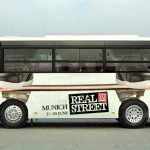
Think about your own morning routine. You’re probably half-asleep, nursing a travel mug, and sitting at the same red light you sit at every single day at 8:15 AM. And every single day, that same bright blue bus with the giant smartphone ad on the side pulls up right next to you.
The first day, you barely noticed it. The third day, you read the tagline. By the second week, you’ve actually started to wonder if your current phone is as slow as the ad suggests. This isn’t just “advertising” it’s a psychological siege. When a brand hitches a ride on a fixed bus route, it isn’t just passing through a neighborhood; it’s moving into the subconscious of everyone who lives there.
The Science of “Seeing it Again”
There’s a reason why big brands spend millions on repetition. In psychology, it’s called the Mere Exposure Effect. It basically means that the more we see something, the more we like and trust it.
Digital ads try to do this by “stalking” you across websites, but that often feels creepy and intrusive. A bus is different. It’s a physical, 20-ton object that exists in your real world. When you see that same bus at your kid’s school, then near your office, and then by your local grocery store, your brain starts to categorize that brand as a “local neighbor.” It feels reliable because it’s a constant in your daily life.

Winning the “Commuter Autopilot”
Most of us drive or commute on “autopilot.” Our brains tune out the road to save energy. But our eyes are still scanning for anything that moves.
Because bus routes are incredibly consistent, a brand can “own” a specific geography. If you want to be the top real estate agent or the go-to hospital in a specific part of town, you put your face on the buses that circle that exact area. By the tenth time a resident sees you while they’re stuck in traffic, you’ve become the “default” choice in their head. They don’t even know why they trust you; they just know they’ve seen you “everywhere.”
Creating a “Fame” Illusion
Have you ever seen a brand on a bus and thought, “Wow, they must be doing well”?
That’s the Frequency Illusion at work. By appearing on the same route every day, a small or medium-sized business can mimic the presence of a global giant. If a person sees your brand three times in one morning commute, their brain assumes you have a massive marketing budget and thousands of customers. Repetition creates a sense of scale that you simply can’t get from a one-off billboard or a social media post that disappears in a second.

The “Last-Mile” Memory
The beauty of bus routes is that they often end where people shop at malls, high streets, and city centers.
If a consumer has been “prepped” by seeing your ad every morning for a week, and then they see that same bus pull up right as they are walking into a shopping center, the “recall” is instantaneous. It’s the ultimate nudge. You’ve followed them from their driveway to the checkout counter without ever saying a word.
Conclusion
Building a brand isn’t about shouting the loudest once; it’s about whispering the same message every single day until it becomes the truth. Bus Advertising routes provide the most disciplined, mechanical repetition in the marketing world. By showing up at the same corner at the same time, day after day, a brand stops being a stranger and starts being a household name. In the race for consumer attention, the slow and steady route always wins.