
In the high-speed, high-stress corridors of Mumbai, Delhi, and Bengaluru, the city bus is more than just transport. It is a rotating billboard that cuts through the noise of a billion-person market. In 2026, as digital ad fatigue reaches a breaking point, brands are rediscovering a simple truth: You cannot “AdBlock” a 40-foot bus when you are stuck behind it in a 20-minute traffic jam.
For the urban Indian commuter, bus branding isn’t just advertising; it’s a constant, moving companion that shapes what they eat, where they shop, and which apps they download before they even reach their destination.
1. The “Signal Stop” Effect: Capturing the Captive Mind
The average Indian commuter in a Tier-1 city spends nearly 90 to 120 minutes daily on the road. A significant portion of this time is spent at traffic signals. When a bus wrapped in a vibrant, full-body advertisement pulls up alongside a car, an auto-rickshaw, or a bike, it occupies 80% of the commuter’s peripheral vision.
Psychologically, this creates a “Captive Theater.” Unlike a mobile ad that feels like an intrusion, a branded bus feels like part of the scenery. Because the brain is seeking a distraction from the heat and the honking, it “rests” on the large-scale visuals of the bus. This is where the first seed of a buying decision is planted.
2. Hyper-Local Trust: The “Neighborhood Hero”
In India, trust is built through physical presence. A brand that exists only on Instagram feels fleeting. But a brand that “owns” the local route from Silk Board to Electronic City or from Dadar to Colaba feels permanent and established.
-
Route-Specific Relevance: If a resident in Gurgaon sees a bus every morning branded with a new luxury apartment project in their specific sector, the brand stops being a stranger. It becomes a “local landmark.”
-
The Last-Mile Nudge: Many retail brands in 2026 are using “Path-to-Purchase” branding. A bus passing near a major mall (like Phoenix Marketcity or Select Citywalk) featuring a “Flash Sale” wrap acts as the final psychological push that turns a passerby into a footfall.

3. The Digital Bridge: QR Codes and Instant Gratification
The biggest shift in 2026 is the integration of the “Scan-while-you-wait” culture. Modern bus wraps in India are now designed with oversized, high-contrast QR codes positioned at eye level for car passengers and commuters at bus shelters.
While stuck at a red light, a commuter can scan a bus to:
-
Instantly download a new Quick-Commerce app with a “first-order” discount.
-
Book a test drive for a new EV scooter.
-
Pre-order groceries that will arrive at their home exactly when their commute ends.
This turns a “brand awareness” tool into a direct conversion engine. The commute itself becomes a shopping window.
4. Frequency over Reach: The “Mere Exposure” Effect
Indian consumers are famously value-conscious and cautious. We rarely buy from a brand the first time we see it. Bus branding excels here because of its predictable repetition. If a commuter sees the same Zee5 or Disney+ Hotstar show advertised on their daily office bus for five days straight, the “Mere Exposure Effect” kicks in. The brain begins to associate that show with their daily routine. By the weekend, when they are deciding what to watch, that specific brand is the first one that comes to mind—not because of a search result, but because of “imprinted familiarity.”

5. Authority and Brand Status
In the Indian middle-class psyche, “size matters.” A full-wrap bus is a display of strength. It signals that a company is a market leader with the “aukat” (status) to dominate the city’s streets. For sectors like Education (EdTech), Fintech, and Real Estate, this physical scale is a shortcut to building institutional trust. If the brand is on the bus, the brand is “real.”
6. The 2026 “Green” Advantage
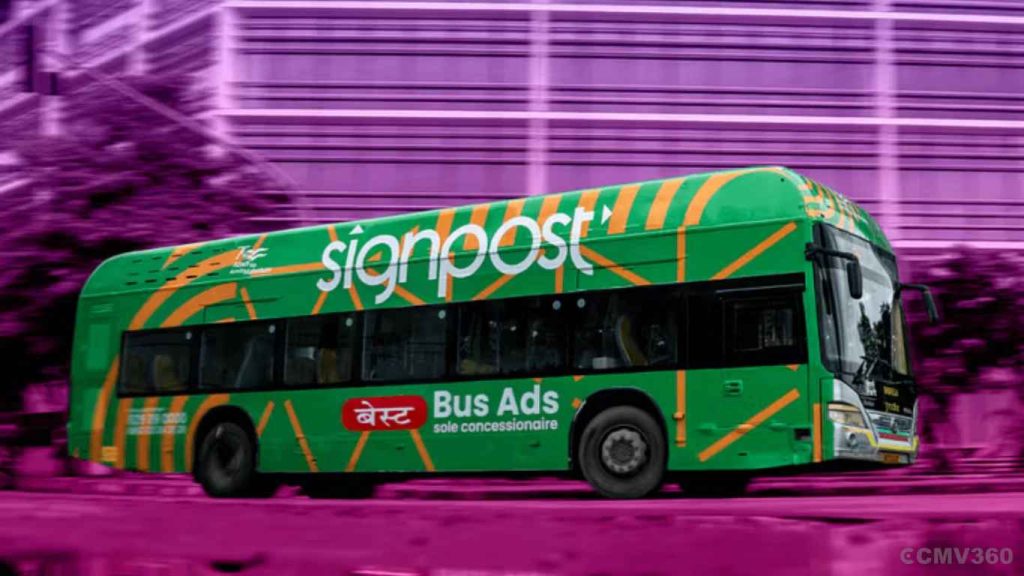
With the rapid transition to Electric Bus fleets across Indian metros, the “Vibe” of bus branding has changed. Brands that advertise on e-buses are perceived as forward-thinking and eco-conscious. Urban Gen Z and Millennial commuters are increasingly making buying decisions based on brand ethics. Seeing a brand associated with “clean” public transport creates a “Halo Effect,” making the consumer feel better about spending money with that company.
Conclusion
Bus branding in India is the ultimate bridge between the digital world and the physical reality of the Indian street. It works because it respects the “Indian Context” it understands the traffic, the long wait times, and the deep-rooted need for visual trust.
As we move through 2026, the brands that win won’t be those that shout the loudest on social media, but those that move with the people, becoming a silent, trusted part of the Great Indian Commute.