
In the modern marketing era, we are constantly told that digital is the only way to grow. Business owners are pressured to master, navigate complex social media algorithms, and spend thousands on “pay-per-click” ads. But for a local business a gym in South Delhi, a jewelry store in Rewa, or a coaching center in Bengaluru the most powerful marketing tool isn’t hidden behind a screen. It’s moving right outside their front door.
Bus branding has emerged as the secret weapon for businesses looking to achieve hyperlocal dominance. It is a high-visibility, high-frequency medium that turns a public utility into a massive, moving billboard. For a local business, this isn’t just advertising; it’s about claiming territory.
1. The Psychology of “Physical Presence”
The biggest challenge for a local business is “Mindshare.” You want your brand to be the first name that pops up when a resident thinks of a service. Digital ads are fleeting they are swiped away in a millisecond. However, a branded bus is a physical presence.
When a resident sees your brand on their local bus route every single morning while they drink their tea or drive to work, a psychological phenomenon called the “Mere Exposure Effect” kicks in. We tend to develop a preference for things merely because we are familiar with them. After seeing your branded bus for the 10th time, the consumer stops seeing you as a “business” and starts seeing you as a “local landmark.” This builds a level of trust that a digital pop-up can never achieve.

2. Owning the “Commuter’s Journey”
The beauty of bus branding lies in its predictability. Buses follow fixed routes. They pass through specific residential colonies, market squares, and office hubs at the same time, every single day.
For a local business, this is a goldmine. If you own a furniture showroom on a specific arterial road, you can brand the buses that ply that exact route. You are essentially following your potential customers throughout their day.
-
You meet them at the bus stop.
-
You sit next to them in traffic.
-
You greet them as they walk to their local grocery store.
This isn’t just “broad” advertising; it is surgical geographic targeting. You are spending your marketing budget only on the people who are physically close enough to actually visit your store.
3. High Dwell Time: The Traffic Advantage
In India’s tier-1 and tier-2 cities, traffic is a reality. While most see traffic as a nuisance, for a branded bus, it’s a captive audience. When a bus is stuck at a signal, it becomes a static billboard at eye level for everyone in cars, on bikes, and on the sidewalk.
Unlike a massive highway hoarding that is 50 feet in the air and passed at high speeds, bus branding is intimate. People have the time to read your USP, note down your phone number, or scan a QR code on the back of the bus. For local businesses like hospitals, schools, or real estate developers, this “dwell time” is where the conversion begins.
4. Cost-Effectiveness: The “CPM” Winner
If you look at the Cost Per Thousand Impressions (CPM), bus branding often beats digital and print advertising hands down.
-
Newspaper ads are expensive and live for only 24 hours.
-
Digital ads require constant bidding, and costs can spike overnight.
-
Bus branding is a one-time investment for a month-long (or year-long) campaign.
A single branded bus can cover 150–200 kilometers a day, generating tens of thousands of impressions across a specific zip code. For a local business with a limited budget, the “return on visibility” is unparalleled. You aren’t paying to show your ad to the whole world; you are paying to dominate your own backyard.
5. Building “Social Proof” Through Scale
There is a certain “bigness” associated with bus branding. When a local business wraps a fleet of buses in their colors, the perception of that business changes. It no longer feels like a “small shop”; it feels like a market leader.
This perceived scale creates Social Proof. If a brand can afford to be on the city’s buses, the consumer assumes they must be successful, reliable, and high-quality. For a new business entering a competitive hyperlocal market, this is the fastest way to leapfrog over older, established competitors.

6. Creative Flexibility: More Than Just a Poster
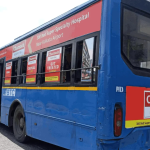
Modern bus branding has evolved. It’s no longer just a sticker on the side. Businesses are now using:
-
Full Wraps: Turning the entire bus into a branded experience.
-
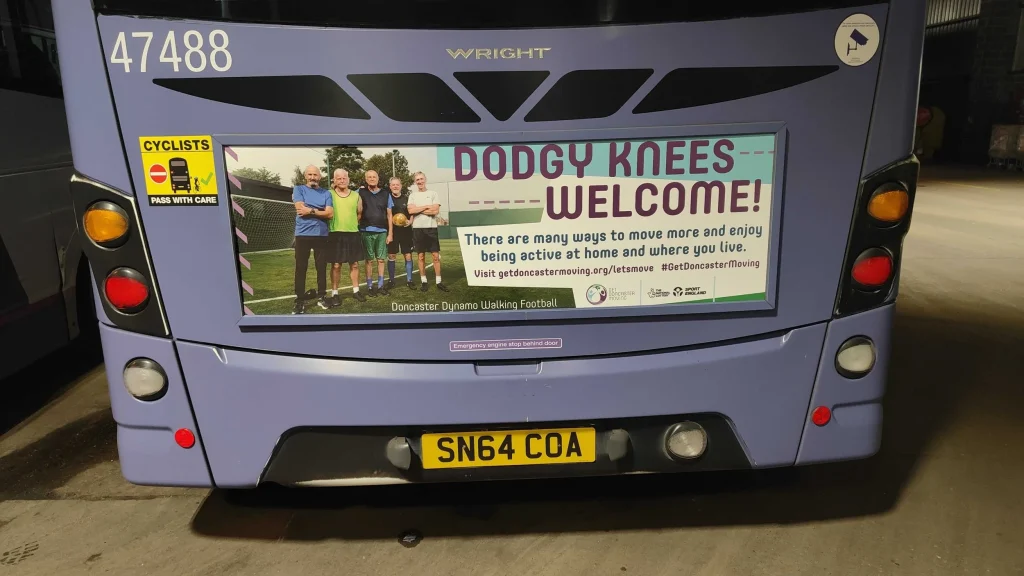
Back Panels: Targeting the drivers stuck directly behind the bus.
-
Interior Branding: Engaging the captive audience inside the bus for 20–30 minutes at a time.
For local businesses, this allows for storytelling. A local cafe can use the back panel to show a steaming cup of coffee with a “Take the next left” direction, creating an immediate call to action.
7. The Synergy with Digital
Bus branding doesn’t replace digital marketing; it supercharges it. This is known as Omnichannel Marketing. A consumer sees your branded bus in the morning (Physical touchpoint). Later that afternoon, they see your ad on Facebook (Digital touchpoint). Because they recognized your brand from the bus, they are 50% more likely to click on the digital ad. The Bus Advertising provides the “familiarity,” and the digital ad provides the “click.”
Conclusion: Taking the Driver’s Seat
Hyperlocal dominance isn’t about having the biggest website; it’s about having the strongest presence in the physical world. Bus branding for local businesses allows local businesses to break out of the “small business” shell and command the attention of their entire community.
By owning the routes, the signals, and the streets, you ensure that your business isn’t just another name in the directory it’s a part of the city’s pulse. If you want to dominate your local market, it’s time to stop waiting for customers to find you online and start meeting them where they live, work, and commute.