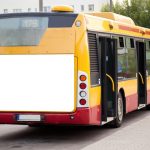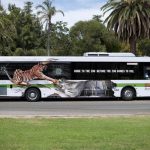

sitting at a red light is one of the most boring parts of the day. You’re stuck, you’re looking around for a distraction, and suddenly, a massive, brightly colored bus pulls up right next to your window.
In that moment, you aren’t “viewing an advertisement” you’re experiencing a giant, moving piece of the city’s landscape. This is why bus branding is such a powerhouse for influencing what we buy. It catches us exactly when our brains are hunting for something to look at.
The “Stuck in Traffic” Psychology
When you’re driving, your brain is on high alert. But the second you hit a traffic signal, that focus drops. You enter a state of “passive observation.” You look at the car in front, the person crossing the street, and inevitably, the side of the bus.
Because you have 60 to 90 seconds of forced downtime, you actually read the copy. You notice the colors. You see the product. Unlike a digital ad that you can close in half a second, you’re physically “stuck” with a bus wrap. That extended eye contact builds a level of brand familiarity that a 5-second skip button simply can’t match.

Visual Dominance at Eye Level
Most billboards are high up in the air, competing with the sky. But a bus? A bus is right there on the asphalt with you. It’s a “moving wall” that takes up your entire field of vision.
When a brand wraps an entire bus, they aren’t just buying ad space; they are dominating the environment. This scale creates an immediate sense of “bigness.” Subconsciously, we think: If this brand can cover a whole bus, they must be the leader in their field. This psychological shortcut associating size with authority is what makes people choose one brand over another when they finally get to the store.
The “Last Mile” Nudge
Think about the routes these buses take. They pass by malls, high streets, and grocery stores. If you’re sitting at a light and see a massive, high-res image of a steaming cup of coffee or a new pair of sneakers, and you know there’s a shop just two blocks away, that ad acts as a physical nudge.
It’s the ultimate “last-minute” reminder. It shifts a brand from the back of your mind to the front of your shopping list right before you reach your destination.
The Mobile Trigger
We all know people check their phones at red lights (even if they shouldn’t). When a bus advertising features a short, punchy URL or a bold social media handle on its “tail” (the back of the bus), it gives people something to do with those 60 seconds of boredom.
It’s a seamless transition: see the bus, grab the phone, search the brand. By the time the light turns green, the consumer hasn’t just seen an ad they’ve entered your digital sales funnel.