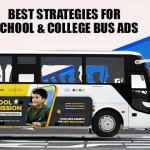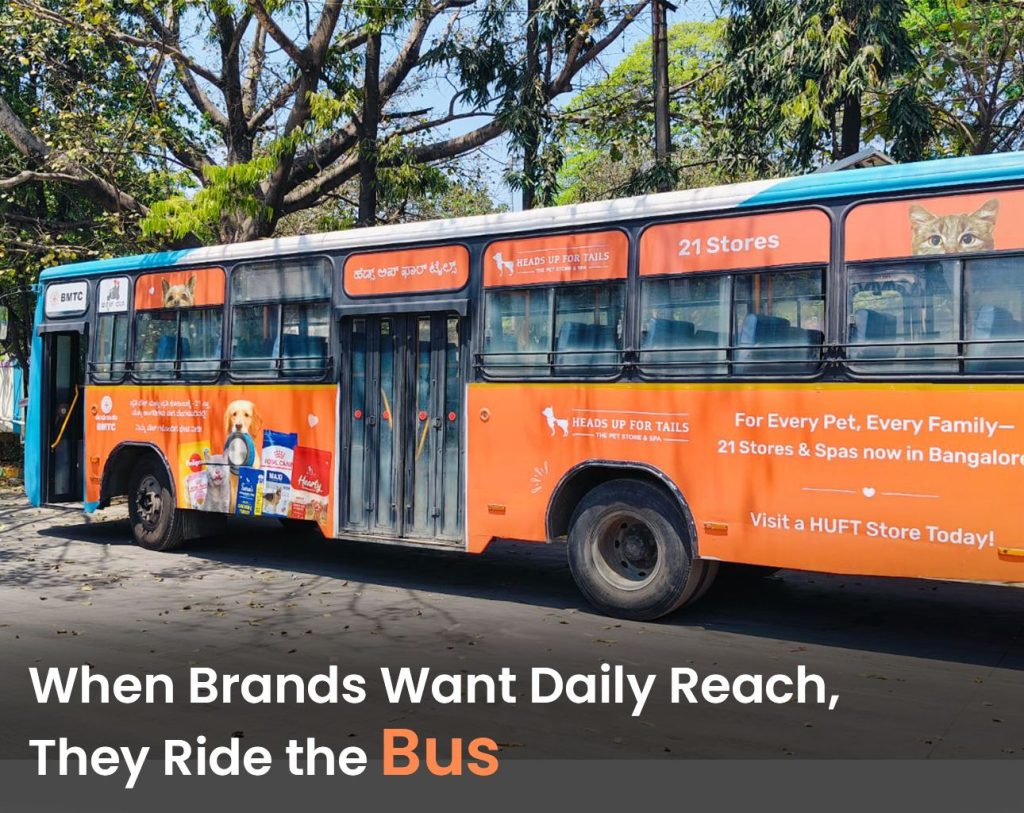

If you’ve spent any time in a Bangalore or Mumbai traffic jam lately, you’ve noticed something. Your phone is full of ads you’re trying to skip, but the bus right next to you? You can’t look away from it.
In 2026, the “Digital Fatigue” is real. We are all overwhelmed by 15-second reels and sponsored posts. For FMCG (Fast-Moving Consumer Goods) brands where the goal is to make you crave a snack or remember a soap the battle has moved back to the streets. Bus branding has become the “heavy lifter” of the marketing world, especially in high-density urban pockets.
1. The “Bigger is Better” Rule of Appetite Appeal
Let’s be honest: a picture of a sizzling hot noodle bowl or a chilled soft drink looks “okay” on a 6-inch smartphone. But on the side of a 40-foot Volvo bus? It looks like a feast.
FMCG is all about sensory triggers. In high-density areas, where people are often commuting home hungry or tired, seeing a massive, high-definition product wrap acts as a physical “nudge.” It’s not just an ad; it’s a suggestion that stays with the commuter until they pass the next grocery store.
2. Winning the “Quick-Commerce” Race
2026 is the year of 10-minute deliveries. Apps like Blinkit, Zepto, and Swiggy Instamart have changed how we shop. But here’s the secret: Most people order what they last saw.
When an FMCG brand wraps a bus that plies through dense residential clusters (like Powai in Mumbai or Rohini in Delhi), they are essentially “pre-loading” the consumer’s brain. A person sees the bus from their balcony or while walking the dog, and ten minutes later, when they open their delivery app, that brand is the first one they search for. The bus provides the Trust, and the app provides the Transaction.

3. The “Un-Skippable” Ad at the Traffic Signal
High-density areas in India are synonymous with one thing: Traffic. While a 30-second TV commercial is a cue for people to check their phones, a branded bus at a red light is the entertainment.
-
Side Panels: These catch the eye of bike riders and car passengers.
-
Back Panels: These are the “long-read” spots for the person stuck directly behind. In these 2–3 minute windows of “forced idleness,” FMCG brands can communicate a new flavor launch, a promotional offer, or a celebrity endorsement with 100% viewability.
4. Reaching the “Silent Deciders”
Not everyone in a high-density household is on Instagram. Grandparents, domestic help, and young kids the “Silent Deciders” of household groceries are often more influenced by what they see in their physical neighborhood.
Buses penetrate the heart of middle-class India. They go where premium billboards aren’t allowed. For a brand selling tea, detergent, or biscuits, being on a bus means being a part of the daily visual landscape of the entire family, not just the tech-savvy Gen Z member.
5. Data-Driven Routes (Not Just Random Wraps)
In 2026, we aren’t just slapping stickers on random buses. Smart FMCG brands are using GPS-Heatmaps. If data shows that a specific biscuit brand has low market share in South Delhi but high potential, they saturate the exact routes plying through those neighborhoods. This is “Hyper-Local” targeting at scale. It’s about being in the right place at the exact time the “buying itch” happens.
6. The “Halo” of Reliability
In a market flooded with new “D2C” (Direct-to-Consumer) startups every day, there is a certain “bigness” associated with bus branding. To the Indian consumer, if a brand is on a city bus, it’s a “real” brand. It builds a layer of institutional trust that helps the product move faster off the shelves of a crowded kirana store.
Conclusion
FMCG marketing in 2026 is a game of “First Seen, First Bought.” Bus branding for FMCG products works because it doesn’t ask for permission it simply exists in the consumer’s world. It’s large, it’s repetitive, and in the crowded, high-density streets of India, it is the most honest way to tell a customer: “Hey, we’re here, and we’re exactly what you need right now.”