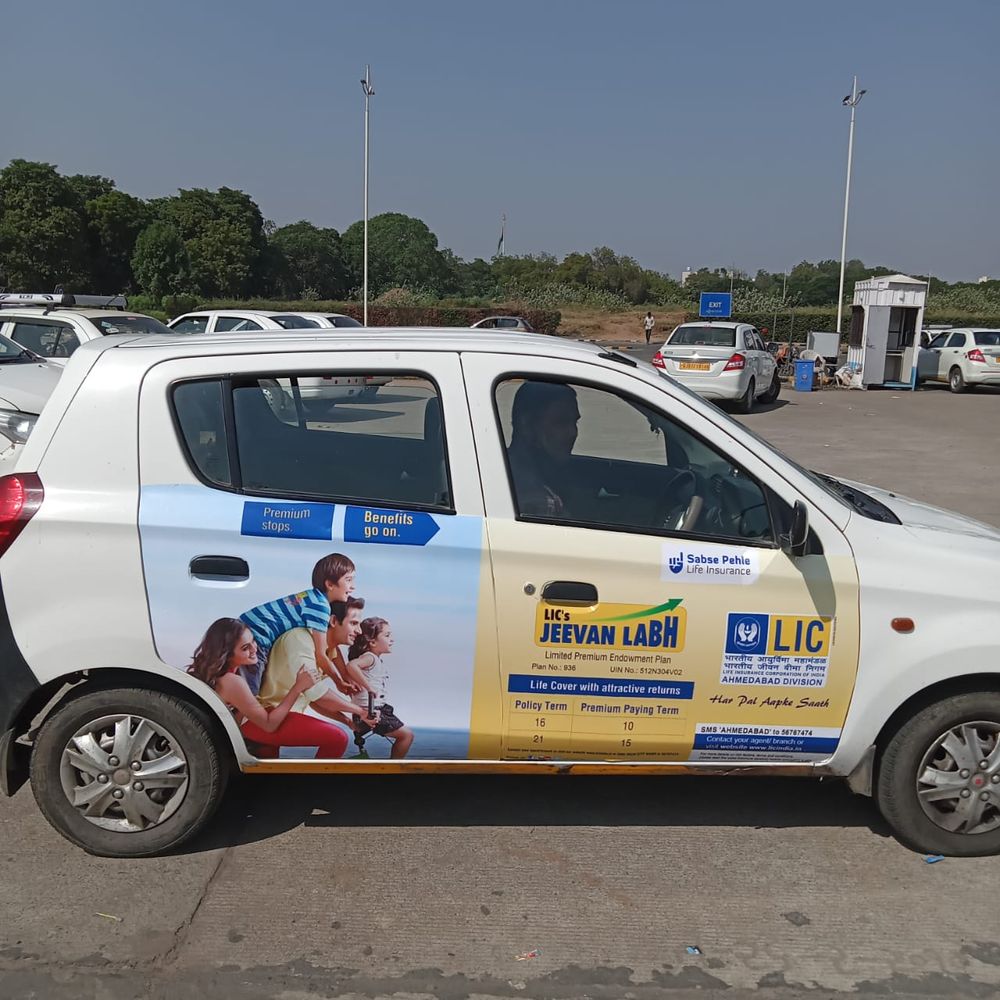

LIC (Life Insurance Corporation of India) has rolled out a creative car door wrap advertising campaign for its ‘Jeevan Labh’ plan. The bright design carries the reassuring tagline “Premium stops. Benefits go on.” The initiative shows how transit media in India is helping brands connect with people during their daily commutes.
A Moving Message of Protection and Assurance
The wrap features a smiling family that reflects LIC’s message of security and happiness. The soft blue-and-yellow design reinforces warmth and reliability—two traits the brand has long been known for.
The line “Premium stops. Benefits go on.” clearly communicates the plan’s advantage in simple terms. Moreover, the creative includes essential policy details so viewers can understand the product even with a quick glance. Therefore, it balances visual appeal with useful information.
Why Car Door Wraps Are Redefining Urban Advertising
Car door wrap advertising is changing how Indian brands reach city audiences. Unlike fixed hoardings, these cars move across different routes every day, gaining continuous exposure. Additionally, they bring messages to diverse audiences—from office-goers to families—without requiring extra ad space.
LIC’s campaign proves how OOH advertising and transit media can support financial literacy while strengthening brand visibility. Furthermore, it gives LIC a strong street-level presence in areas that traditional media often misses.
Mobile Media: Reaching People Where They Live and Work
Modern consumers spend hours in traffic. Vehicle wrap advertising allows brands to reach them naturally. In this case, the LIC Car Door Wrap becomes a friendly reminder of security and savings. Also, its design builds emotional connection by showing relatable family moments.
As a result, the campaign improves awareness while reinforcing LIC’s reputation as a dependable life-insurance partner.
OOH Innovation for Financial Brands
The ‘Jeevan Labh’ initiative highlights how financial companies are embracing creative outdoor media formats. Additionally, it shows that innovation can go hand-in-hand with trust. LIC’s move demonstrates that even traditional institutions can stay modern through engaging, mobile advertising ideas.
Conclusion
Through its car branding campaign, LIC brings insurance awareness to city roads in a relatable, friendly way. The campaign combines creativity, credibility, and movement—three essentials of effective transit media in India. It is yet another reminder that LIC continues to evolve while keeping its promise of lifelong protection.