The Role of Food Court Branding in Influencing Consumer Purchase Decisions
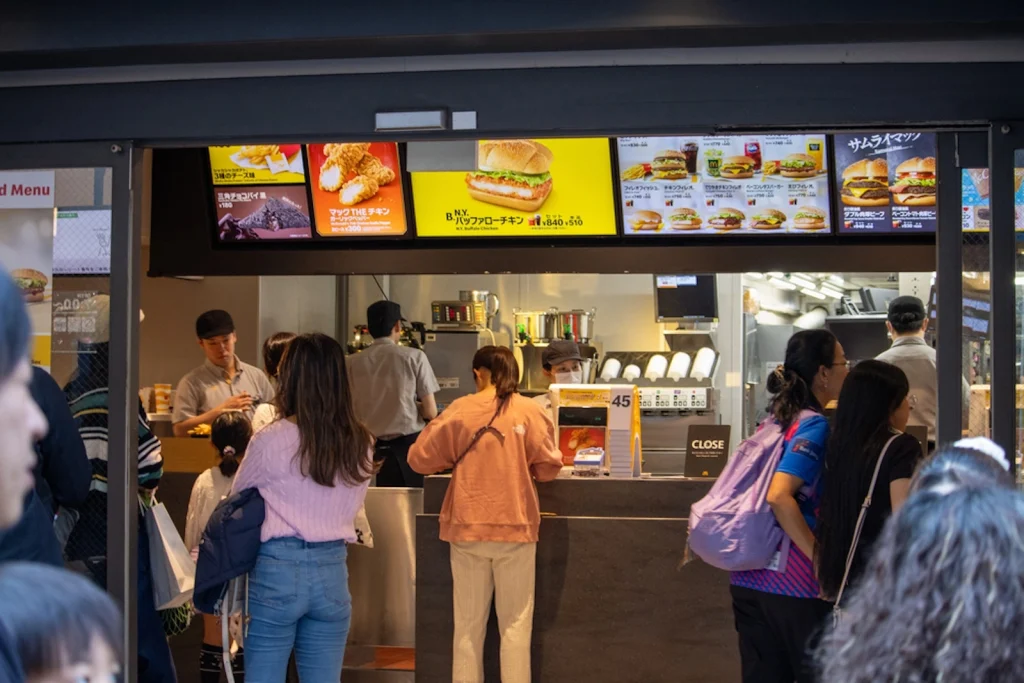
We spend a fortune on store window displays and high-traffic aisle placements, but the real “battle for the wallet” often happens in a place dominated by the smell of grilled food and the clatter of trays.
The mall food court advertising is the only place in the entire retail ecosystem where a shopper’s “defense guard” is down. Everywhere else, they are being sold to. In the food court, they are recharging. For a brand, this 20-minute window of intentional stillness is a goldmine. Here is the psychological breakdown of why food court branding is the ultimate “nudge” for consumer spending.
1. The Death of Decision Fatigue
By the time a shopper reaches the food court, they have usually hit “The Wall.” They have compared prices, checked sizes, and navigated crowds for hours. Their brain is tired. In psychology, this is called Decision Fatigue.
When a shopper is fatigued, they stop being rational and start being impulsive. They look for the path of least resistance. Branding in the food court whether it’s a vibrant digital menu board or a strategically placed table wrap doesn’t just offer food; it offers a “solution” to their hunger and exhaustion. A brand that simplifies the choice with a “Power Combo” or a “Quick Grab” package isn’t just selling a meal; it’s rescuing a tired brain.
2. Emotional Anchoring: The “Halo Effect”
Food is tied to the pleasure centers of the brain. When we eat something we enjoy, we release dopamine. If a shopper is sitting at a table branded with your luxury watch line or your new summer fashion collection while they are enjoying a meal, your brand becomes “anchored” to that positive physical sensation.
This is the Halo Effect in action. The consumer isn’t just seeing an ad; they are seeing your brand while they are in their most relaxed and rewarded state of the day. You are literally borrowing the good vibes from their lunch and attaching them to your logo.

3. The “Social Proof” of the Tray
In a food court, every customer is a walking billboard. We are hardwired to look at what other people are doing to validate our own choices. This is “Social Proof” at its most raw.
When a brand invests in high-visibility packaging a bright neon cup or a uniquely shaped carry-out bag they are creating a “Bandwagon Effect.” If I see ten people walking past with a specific branded bag, my brain tells me, “That must be the best thing here.” In a high-traffic environment, the physical presence of your branding in the hands of other people is more persuasive than any 30-second commercial.
4. Captive Attention vs. Passing Attention
Compare an ad in a hallway to an ad in the food court:
-
The Hallway: The shopper is moving at 3 mph. You have maybe 2 seconds of their attention before they walk past.
-
The Food Court: The shopper is sitting for an average of 22 minutes. You have their undivided, passive attention.
This is where you move beyond a simple logo. This is where you tell a story. Use QR codes on table-tops that lead to a “Behind the Scenes” video or a “Meet the Maker” profile. Since the shopper is already on their phone while eating, you are meeting them exactly where they are without forcing them to go out of their way.
5. The “Post-Meal” Pivot
The most critical moment in the food court is the Stand-Up. The moment a shopper finishes their meal and stands to leave, they have a burst of “new energy.” They are deciding: “Do I go home, or do I go to one more store?”
Directional branding placed near the tray-return stations or the exits is your “Last Mile” nudge. An ad that says, “Coffee finished? Grab the perfect dessert at [Store Name] on Level 1,” acts as a GPS for their next impulse. You are essentially hijacking their renewed energy and directing it back into the retail environment.
Conclusion
The mall advertising food court is far more than a refueling station; it is a high-conversion theater where consumer behavior is molded. By understanding that shoppers in this space are looking for simplicity, reward, and social cues, brands can transcend traditional advertising.
Whether it is through the sensory appeal of a digital menu or the navigational nudge at the exit, food court branding captures the consumer at their most vulnerable and receptive. In the race for retail dominance, the brand that wins the food court usually wins the rest of the afternoon. Don’t just feed the shopper guide their next move.