How Food Court Advertising Drives Impulse Purchases in Shopping Malls
If you’ve ever walked into a food court at 4:00 PM just looking for a chair and walked out with a “buy-one-get-one” pizza and a massive iced tea, you’ve seen 2026 retail psychology in action. In the world of high-traffic Indian malls, the food court is where “logic” goes to die and “impulse” takes over.
Here’s why brands are moving their budgets away from the parking lot and into the dining area.
1. The “Low Blood Sugar” Decision
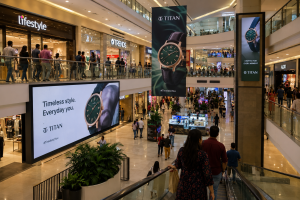
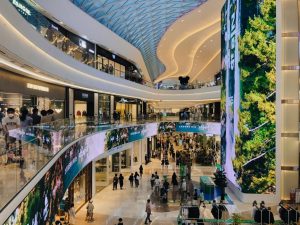
By the time a family reaches the food court, they’ve likely been walking for two hours. They are tired, their “decision-making” muscles are exhausted, and their blood sugar is dipping. This is the Impulse Goldmine. In 2026, brands are using high-brightness digital screens that don’t just show food they show relief. A slow-motion video of a cold, condensation-covered soft drink or a steaming plate of momos isn’t an ad; it’s a solution to the shopper’s current physical discomfort. When you’re tired, you don’t “evaluate” a brand; you grab what looks the most rewarding.

2. The “Table-Talk” Influence
Unlike a billboard on the road that you see for three seconds, food court ads have a 30-minute window. When people sit down to eat, they finally put their shopping bags down and look around.
Strategic brands are now using Table-Top QR Codes that offer “Post-Lunch Perils”—like a discount on a movie ticket or a “free dessert” coupon for a store on the floor below. Because the family is already talking and relaxed, they are much more likely to scan a code and plan their next impulse move while finishing their current meal.
3. “Tray-Scanning” and Social Proof
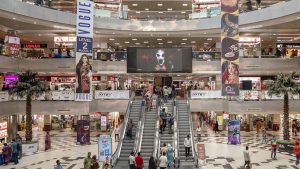
Indian food courts are communal. We naturally peek at what the person at the next table is eating. In 2026, smart marketers are using Dynamic Leaderboards on large LED walls.
When a screen flashes: “50 people just ordered the ‘Monster Bucket’ at Stall #4,” it creates an instant “Bandwagon Effect.” It takes the pressure off the shopper to choose. If everyone else is buying it, it must be good. This “Social Proof” is the ultimate shortcut for a brain that is too tired to read a menu.
4. Capitalizing on the “Kid Factor”
In 2026, children are the primary “Chief Impulse Officers” of the Indian family. Food court ads are increasingly placed at child-eye level on the lower panels of counters or interactive floor decals.
Bright, animated characters and “Toy-with-Meal” promotions are designed to catch a child’s attention while the parents are busy staring at the main menu. Once a child sees a vibrant ad for a “Rainbow Sundae,” the parent’s “planned purchase” usually goes out the window.

5. The “Recency Effect” for Retail
The food court is often the last stop before people head to the exit. Retail brands (like fashion or electronics) are using food court signage to trigger “One Last Look” sales. Seeing an ad for a “Flat 50% End of Season Sale” while you’re sipping your coffee often leads to a “Let’s just check that one store before we leave” conversation. It’s the final nudge that turns a dining break back into a shopping spree.
Conclusion
A food court is the only place in a mall advertising where the audience is stationary, hungry, and already spending money. Food court advertising works because it doesn’t fight for attention; it feeds a craving. In 2026, the brands that win aren’t the ones with the loudest ads, but the ones that understand that a hungry shopper is the most impulsive buyer in the building.