How to Select the Right Shopping Mall for Your Brand Promotion
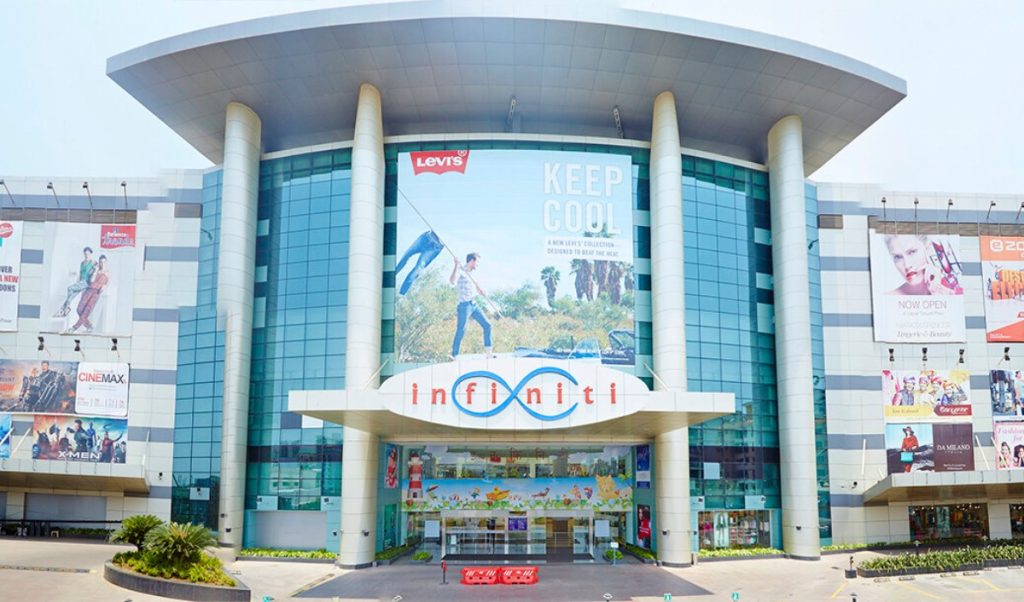
Selecting the right shopping mall for your brand promotion is a lot like choosing a location for a first date: if the “vibe” is wrong, it doesn’t matter how good your pitch is.
In the Indian retail landscape of 2026, we’ve moved past the era where “biggest is best.” With massive hubs like Sarath City Capital in Hyderabad or Lulu Mall in Lucknow dominating the square-footage charts, it’s easy to get blinded by size. But for a brand manager, the goal isn’t just to be seen it’s to be seen by the right people.
Here is the human guide to picking the perfect stage for your brand.
1. Match the “Mall Grade” to Your Price Tag
Not all mall branding are created equal. In the industry, we categorize them into Grades (A, B, and C), and your brand needs to fit the neighborhood.
-
Luxury & Premium (Grade A): If you are promoting high-end tech, designer fashion, or premium skincare, you need “Destination Malls” like DLF Mall of India (Noida), Palladium (Mumbai), or Select Citywalk (Delhi). These shoppers have high discretionary income and come specifically for an “experience.”
-
High-Street & Value (Grade B): If your brand is about everyday utility, fast fashion, or family-centric products, look for “Regional Centers” like R City (Mumbai) or Amanora Mall (Pune). These malls have high footfall but a more price-conscious demographic.

2. Analyze the “Anchor Tenant” Synergy
The stores already inside the mall act as a magnet for specific types of people. This is called Synergy Mapping.
-
If your brand sells high-performance athletic wear, you want a mall where the anchor tenants are Decathlon, Nike, or a massive PVR/Inox (which draws the active youth).
-
If you’re a home-decor brand, look for malls anchored by IKEA or Home Centre.
-
The Rule: Don’t just look at the mall’s total footfall; look at the footfall of the three stores closest to your proposed promotion spot.
3. The “Dwell Time” vs. “Transit” Logic
Malls are designed with different flow zones. Where you place your promotion depends on what you want the shopper to do.
-
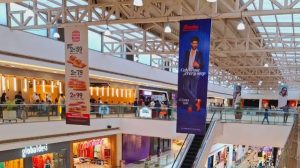
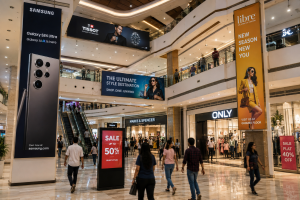
Transit Zones (Entrances/Elevators): Great for “Quick Recall.” People are moving fast. Use these for bold, high-impact visuals (like 3D anamorphic screens).
-
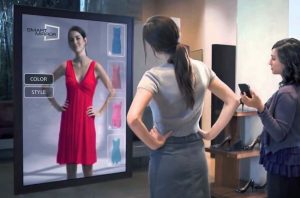
Dwell Zones (Food Courts/Entertainment Hubs): This is where the magic happens for interactive promotions. In Indian malls, the food court is the “village square.” People sit there for 30–45 minutes. This is the perfect spot for AR kiosks, sampling, or long-form storytelling.
4. Understand the “Catchment” Demographics
A mall in Gurgaon (Cyber Hub area) serves a very different human than a mall in Chandigarh or Kochi.
-
The Corporate Catchment: Malls near IT hubs see a massive spike in “Young Professionals” during weekday evenings. Great for gadget launches and quick-service food brands.
-
The Family Catchment: Tier-2 city giants like Lulu Mall (Lucknow) see massive multigenerational family outings, especially on Sundays. If your brand is family-oriented, these “Super-Regional” malls are your goldmine.

5. Check the “Digital Infrastructure”
In 2026, if a mall doesn’t have high-speed guest WiFi and integrated digital signage, it’s a relic.
-
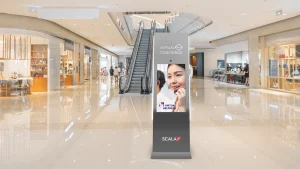
Ask the mall management: “Can my digital ad trigger a push notification to shoppers’ phones via your app?” Check if they allow CGI/OOH (Fake Out-of-Home) activations or if they have the power requirements for a massive LED installation. A mall that is “Tech-Forward” will make your promotion look 10x more professional.
The Final Checklist: Before You Sign
Before you commit your marketing budget, do a “secret shopper” visit on a Saturday afternoon.
-
Is the crowd smiling? (Happy shoppers spend more).
-
Is the mall well-maintained? (A leaky ceiling or broken escalator reflects poorly on your brand).
-
Are people carrying bags? (High footfall is useless if they are just “window shopping” to escape the heat).
Conclusion
Selecting a mall isn’t a data-entry task; it’s an exercise in empathy. You have to imagine your target customer: Where do they park? Where do they eat? What makes them stop and say, “Hey, look at that!”? When you find the mall that aligns with your customer’s Saturday routine, you’ve found your winner.