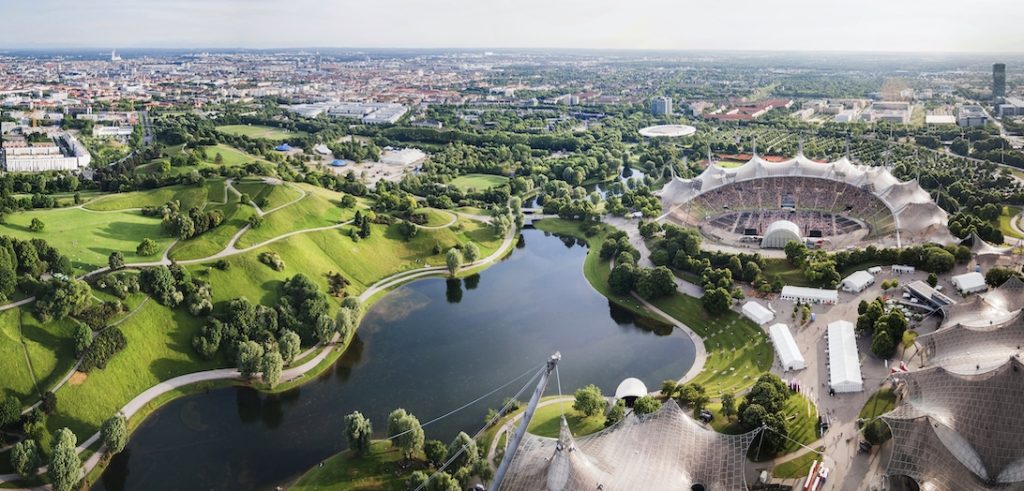

Munich stands at the heart of Europe’s industrial transformation. The city’s high-tech parks now function as critical innovation engines driving automotive engineering, artificial intelligence, and Industrial IoT development. Because Germany remains Europe’s manufacturing backbone, Munich plays a decisive role in shaping the future of smart industry.
Moreover, the city combines deep engineering heritage with advanced digital research. As a result, Munich’s technology districts increasingly attract global manufacturers, AI startups, and industrial software leaders seeking scalable innovation environments.
Why Munich’s High-Tech Parks Matter to Europe’s Industry
Munich’s high-tech parks operate as tightly integrated industrial innovation ecosystems. Therefore, collaboration between automotive firms, AI labs, and industrial automation companies occurs continuously.
Additionally, proximity to manufacturing headquarters accelerates real-world testing. Consequently, technologies move faster from simulation to factory deployment.
Key ecosystem strengths include:
-
Strong automotive engineering legacy
-
Advanced robotics and automation expertise
-
Industrial-grade AI research facilities
-
Deep integration with European supply chains
Because of these factors, Munich remains central to Europe’s digital-industrial competitiveness.

High-Tech Parks Driving Automotive Innovation
Automotive innovation represents Munich’s most visible technology pillar. The city’s tech parks support next-generation mobility development across hardware and software layers.
Key automotive innovation areas include:
-
Electric vehicle platforms
-
Autonomous driving systems
-
Vehicle software architectures
-
Battery management technologies
-
Connected mobility ecosystems
Furthermore, close collaboration between OEMs and startups enables faster prototyping. As a result, Munich serves as a live innovation lab for future mobility.
Because automotive digitization continues accelerating, the city’s influence remains strategically significant.
Artificial Intelligence Integration Across Industrial Systems
Artificial intelligence increasingly powers Munich’s high-tech park ecosystem. AI does not operate in isolation; instead, it integrates directly with manufacturing and mobility systems.
Primary AI innovation domains include:
-
Computer vision for quality inspection
-
Predictive maintenance models
-
Autonomous robotics intelligence
-
Industrial process optimization
-
Digital twin simulation platforms
Additionally, AI researchers collaborate with mechanical engineers daily. Therefore, solutions remain grounded in operational realities rather than theoretical models.
This applied AI focus differentiates Munich from purely software-driven hubs.
Industrial IoT Growth Strengthening Smart Manufacturing
Industrial IoT forms the connective tissue of Munich’s innovation economy. High-tech parks host companies developing sensors, edge devices, and industrial connectivity platforms.
Core Industrial IoT focus areas include:
-
Smart factory infrastructure
-
Machine-to-machine communication
-
Edge analytics platforms
-
Real-time production monitoring
-
Secure industrial networks
Moreover, integration with AI enhances decision automation. Consequently, factories achieve higher efficiency and reduced downtime.
Because Europe prioritizes Industry 4.0 adoption, Munich remains a key implementation center.
Role of Global Manufacturers and Technology Enterprises
Munich hosts numerous global manufacturers, engineering firms, and industrial technology companies. These organizations maintain R&D centers within high-tech parks to stay close to innovation.
Enterprise involvement supports:
-
Long-term research investment
-
Manufacturing-scale testing environments
-
Cross-border industrial collaboration
-
Global product commercialization
Meanwhile, startups benefit from immediate enterprise exposure. As a result, partnership-driven innovation becomes the norm rather than the exception.
This ecosystem balance strengthens long-term industrial resilience.
Research Institutions and Applied Innovation Frameworks
Academic and research institutions play a foundational role. Munich’s universities and applied research organizations collaborate directly with industry players.
Their contributions include:
-
Robotics research
-
Automotive systems engineering
-
AI algorithm development
-
Industrial simulation modeling
Because research institutions prioritize application, technology transfer occurs rapidly.
This applied research culture sustains continuous innovation flow.

Talent Density Supporting Industrial Transformation
Munich attracts highly specialized talent across mechanical engineering, AI, robotics, and embedded systems.
This concentration enables:
-
Interdisciplinary problem-solving
-
Faster innovation cycles
-
Strong engineering leadership pipelines
-
Consistent skill upgrading
Furthermore, quality of life strengthens long-term talent retention.
As industrial technologies grow more complex, this talent ecosystem becomes increasingly valuable.
Munich’s Role in Europe’s Digital-Industrial Future
Technologies developed inside Munich’s high-tech parks power factories, vehicles, and infrastructure across Europe.
Because automotive, AI, and Industrial IoT increasingly converge, Munich benefits from natural ecosystem synergy.
This convergence positions the city as a cornerstone of Europe’s smart manufacturing future.
Conclusion
Munich’s high-tech parks represent a powerful fusion of industrial heritage and digital innovation. By uniting automotive engineering, artificial intelligence, and Industrial IoT under one ecosystem, the city drives Europe’s next phase of industrial growth.
Through applied research, enterprise collaboration, and elite engineering talent, Munich continues shaping the future of intelligent industry.