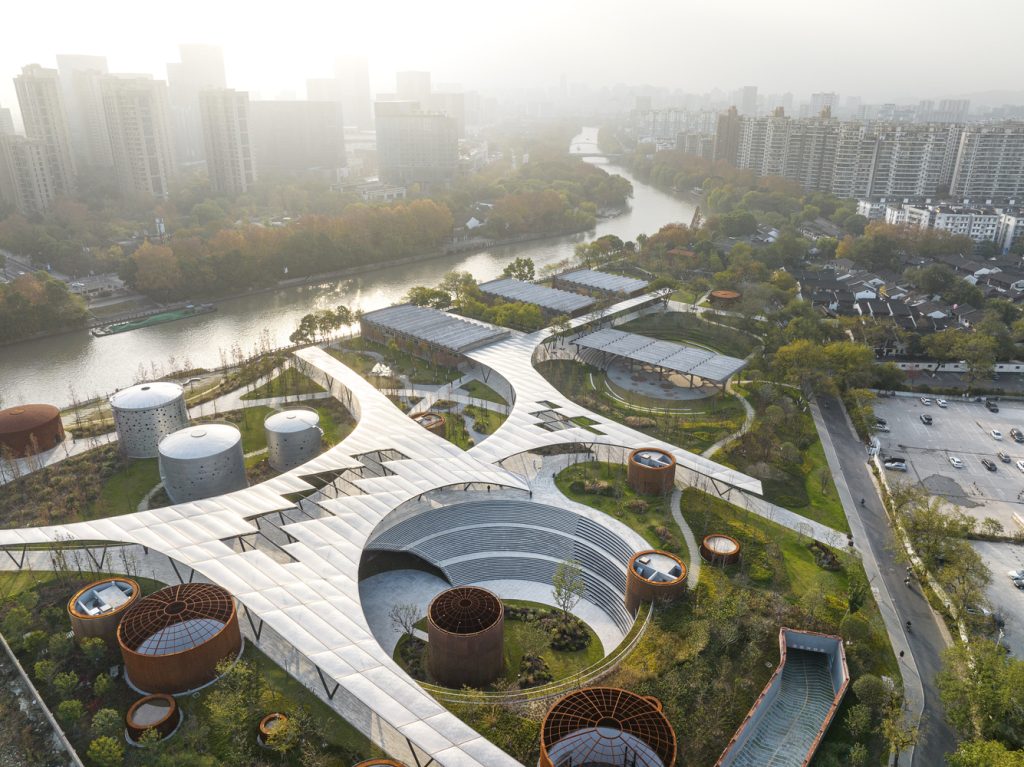

Tech Parks Transform Urban Landscapes across India as cities adapt to new economic realities. Over the last two decades, large technology campuses have changed how urban growth unfolds.
Instead of concentrating offices within traditional central business districts, development now spreads across peripheral corridors. This shift has altered land use, mobility patterns, and infrastructure planning.
As a result, Indian cities are evolving into decentralised economic networks.
Decline of the Single-Core City Model
Earlier, central business districts served as the primary employment hubs. However, rising congestion and limited land restricted expansion. Tech companies required large, scalable spaces. City centres could no longer meet this demand.
Therefore, developers began creating technology parks outside core urban zones. This decision marked the beginning of a multi-node city structure.
Emergence of New Economic Corridors
Tech parks quickly attracted large workforces. Their presence encouraged supporting development. Residential townships, retail centres, healthcare facilities, and schools followed. Over time, these areas evolved into independent economic corridors.
Examples can be seen in Bengaluru’s Outer Ring Road, Hyderabad’s HITEC City belt, and Pune’s Hinjawadi region. Thus, tech parks reshaped spatial growth.

Decentralisation of Employment
Tech Parks Transform Urban Landscapes by redistributing jobs. Employment no longer remains concentrated in historic districts.
Workers now commute toward peripheral hubs instead of city cores. This pattern reduces pressure on central infrastructure. At the same time, it promotes balanced metropolitan expansion.
Infrastructure Development Driven by Tech Parks
Large technology campuses often trigger infrastructure investment. Governments prioritise roads, metro links, and civic utilities in tech corridors.
Private developers complement this with internal mobility systems and smart facilities. Consequently, previously underdeveloped areas gain urban significance.
Changing Real Estate Dynamics
The rise of tech parks has transformed real estate markets. Demand has shifted toward areas near employment hubs.
Office developers focus on campus-style projects. Residential buyers prefer proximity to workplaces. This interaction reshapes land valuation and long-term density patterns.
Rise of Mixed-Use Urban Environments
Modern tech parks increasingly support mixed-use development. Offices now coexist with retail, recreation, and community spaces.
Such planning reduces dependency on long-distance travel. It also improves daily convenience for employees. Therefore, tech parks contribute to live-work ecosystems.
Impact on Sustainable Urban Planning
Planned campuses allow better sustainability control. Many tech parks integrate energy-efficient systems and green zones.
Water recycling, renewable energy, and waste management are easier to implement in large developments. This approach supports environmentally responsible urban expansion.
Urban Planning Challenges
Rapid decentralisation also brings challenges. Transport systems must keep pace with growth.
Unplanned expansion can strain local infrastructure. Coordination between city authorities and developers remains critical.
Effective planning ensures long-term urban balance.
Long-Term Urban Transformation
Tech Parks Transform Urban Landscapes by redefining how Indian cities function. Instead of one dominant centre, cities now operate through multiple economic hubs.
This polycentric structure improves resilience, scalability, and employment distribution.
As technology-driven growth continues, this model will shape future urban planning.
Conclusion
Tech Parks Transform Urban Landscapes by decentralising economic activity away from traditional CBDs. They influence infrastructure development, housing patterns, and employment geography.
As India’s digital economy expands, tech parks will remain key drivers of urban evolution. Their impact extends beyond offices to defining the cities of the future.