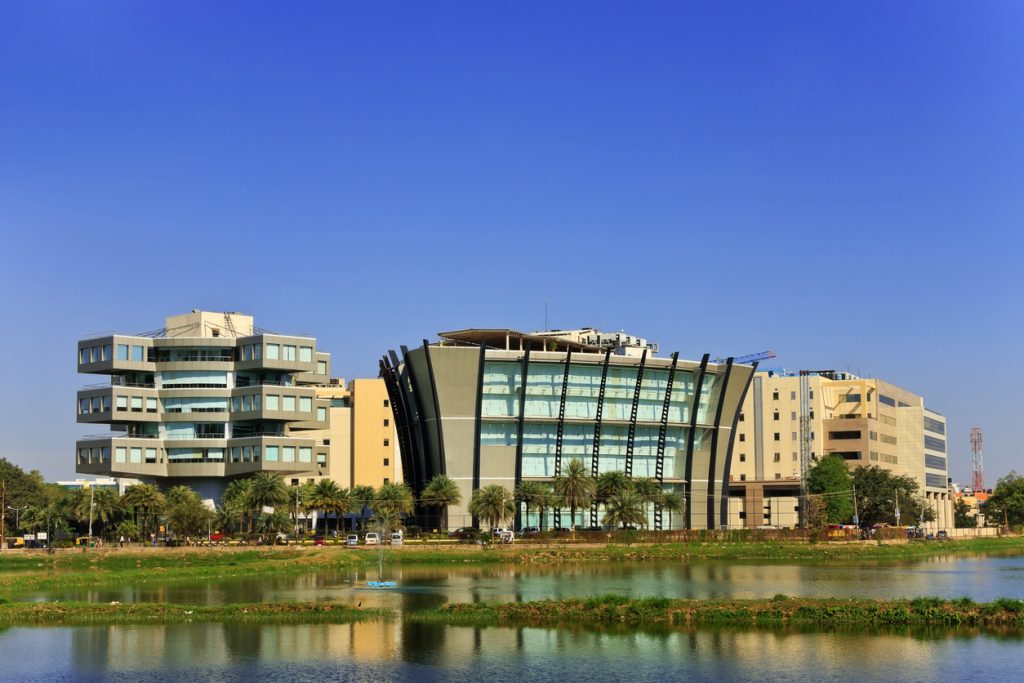

India’s technology landscape is undergoing a powerful structural shift. At the center of this transformation lies the Bangalore–Hyderabad tech park corridor, which is rapidly emerging as Asia’s most influential SaaS and enterprise technology belt. Because both cities already operate as independent innovation powerhouses, their combined growth has created a continuous corridor of digital capability.
Moreover, this corridor benefits from deep engineering talent, global enterprise demand, and strong venture capital inflows. As a result, India’s software ecosystem now commands greater global relevance.
Why the Bangalore–Hyderabad Tech Park Corridor Matters
The Bangalore–Hyderabad tech park corridor functions as an integrated innovation ecosystem rather than two isolated markets. Therefore, companies scale faster across regions while maintaining cost efficiency.
Additionally, strong air connectivity and digital infrastructure enable seamless collaboration. Consequently, SaaS founders manage distributed teams with minimal friction.
Key structural advantages include:
-
Massive engineering talent pool
-
Mature enterprise client exposure
-
High startup density
-
Strong cloud and data infrastructure
Because of these factors, the corridor continues attracting global SaaS investment.
Tech Parks Driving SaaS Innovation Across the Corridor
SaaS remains the dominant growth engine within the Bangalore–Hyderabad tech park corridor. Both cities host dense clusters of enterprise software companies serving global markets.
Key SaaS focus areas include:
-
CRM and customer experience platforms
-
FinTech infrastructure solutions
-
HRTech and payroll automation
-
DevOps and cloud management tools
-
Cybersecurity SaaS platforms
Furthermore, proximity to global clients enables real-time product iteration. As a result, Indian SaaS companies now compete directly with US and European counterparts.
Because subscription-based models require continuous optimization, tech park collaboration accelerates learning cycles.

Enterprise Technology Expansion Strengthening the Corridor
Beyond SaaS, enterprise technology development continues expanding rapidly. Large enterprises increasingly rely on Indian innovation centers for mission-critical systems.
Enterprise innovation areas include:
-
ERP modernization
-
Data engineering platforms
-
AI-driven business intelligence
-
Cloud migration services
-
Digital transformation frameworks
Moreover, enterprise customers prefer long-term partnerships. Therefore, companies within this corridor benefit from stable recurring revenue models.
This combination of SaaS agility and enterprise scale creates unmatched ecosystem resilience.
Role of Global Enterprises and GCC Ecosystem
Global Capability Centers (GCCs) represent a major growth pillar. Multinational corporations increasingly establish technology hubs across Bangalore and Hyderabad.
These centers focus on:
-
Core product engineering
-
Platform modernization
-
AI and data science research
-
Cybersecurity operations
-
Enterprise architecture design
Because GCCs now handle strategic functions, India’s role has shifted from support to ownership. Consequently, innovation authority continues moving toward the corridor.
This transition significantly strengthens Asia’s enterprise technology map.

Government Policy and Infrastructure Development
State-level digital policy alignment further accelerates corridor growth. Karnataka and Telangana both prioritize technology-led economic development.
Support mechanisms include:
-
Dedicated IT and startup policies
-
Large-scale tech park development
-
Digital infrastructure investments
-
Startup funding initiatives
Additionally, smart city projects enhance livability for talent. Therefore, long-term workforce retention improves.
Public–private collaboration ensures sustained ecosystem momentum.
Talent Density Fueling SaaS and Enterprise Leadership
Talent availability remains the corridor’s strongest advantage. Bangalore supplies deep startup experience, while Hyderabad delivers scalable enterprise execution.
This complementary talent mix enables:
-
Faster startup formation
-
Efficient product scaling
-
Strong middle-management depth
-
Global customer servicing capability
Furthermore, universities and private training platforms maintain continuous skill upgrades.
As global demand for SaaS talent increases, the corridor’s relevance continues rising.
Global Impact of India’s SaaS and Enterprise Belt
Products built within the Bangalore–Hyderabad tech park corridor power businesses across North America, Europe, the Middle East, and Southeast Asia.
Because Indian SaaS firms increasingly target mid-market and enterprise clients, global dependence continues growing.
In addition, successful exits and IPOs reinforce investor confidence. As a result, capital recycling sustains innovation cycles.
This momentum positions India as Asia’s enterprise technology backbone.
Conclusion
The Bangalore–Hyderabad tech park corridor represents a defining chapter in Asia’s digital evolution. By combining startup agility, enterprise depth, global capability centers, and scalable talent, the region has emerged as the strongest SaaS and enterprise belt in the continent.
With continued infrastructure development and global market alignment, this corridor will remain central to the future of global enterprise software.