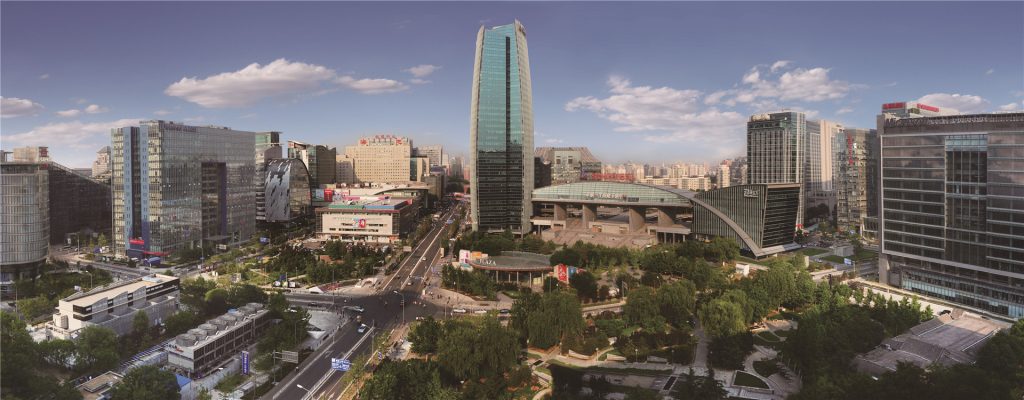

Beijing’s Top Tech Parks play a decisive role in driving China’s leadership in artificial intelligence, semiconductors, and deep-tech innovation. While Beijing is widely recognised as the nation’s political capital, it is equally powerful as a technology nerve centre. Over the years, government-backed policies, elite universities, and large-scale industrial zones have transformed the city into a global hub for advanced research and industrial-scale innovation. As a result, Beijing now anchors China’s ambitions in next-generation technologies.

Why Tech Parks Matter to Beijing’s Technology Leadership
Beijing’s tech parks operate at a scale unmatched by most global cities. Rather than focusing only on startups, these parks integrate research institutes, manufacturing facilities, state-backed labs, and global enterprises. Consequently, innovation does not stop at prototypes. Instead, ideas move rapidly from research to mass production. Moreover, close alignment with national technology priorities ensures sustained funding and long-term growth.
Key Tech Parks Powering Beijing’s AI and Semiconductor Ecosystem
Zhongguancun Science Park – China’s Silicon Valley
Zhongguancun Science Park is the most influential technology district in China. Often referred to as “China’s Silicon Valley,” it hosts thousands of technology companies across AI, semiconductors, software, and robotics. In addition, the park benefits from proximity to top universities such as Peking University and Tsinghua University. Because of this academic linkage, cutting-edge research consistently feeds into commercial innovation. Therefore, Zhongguancun remains the backbone of Beijing’s deep-tech ecosystem.
Beijing Economic-Technological Development Area – Semiconductor Manufacturing at Scale
Also known as Yizhuang Development Zone, this tech park focuses heavily on semiconductors, advanced manufacturing, and industrial automation. Unlike research-centric hubs, Yizhuang specialises in large-scale production and supply chain integration. Moreover, major chipmakers and equipment manufacturers operate facilities here. As a result, the zone plays a strategic role in strengthening China’s semiconductor self-reliance.
Haidian District – AI Research and Algorithm Leadership
Haidian District forms the intellectual core of Beijing’s AI development. It hosts leading AI companies, national laboratories, and government-backed research centres. Additionally, talent concentration in data science, machine learning, and computer vision remains extremely high. Consequently, AI innovation in Haidian moves quickly from algorithms to real-world applications across healthcare, security, and smart cities.
Beijing Future Science City – Frontier Technologies and National Labs
Beijing Future Science City focuses on frontier technologies such as quantum computing, aerospace technology, and advanced materials. Supported by national-level research funding, it connects scientific discovery with industrial deployment. Furthermore, long-term infrastructure planning enables sustained experimentation. Therefore, this tech park supports innovations that require years of research before commercialisation.
Shunyi Industrial Park – Hardware and Deep-Tech Manufacturing
Shunyi Industrial Park supports hardware innovation, robotics, and intelligent manufacturing. It complements Beijing’s research-heavy districts by providing production and testing facilities. As a result, startups and enterprises can scale hardware innovations without relocating outside the city.

How Beijing Tech Parks Accelerate Deep-Tech Scale
State Support and Strategic Alignment
Beijing’s tech parks benefit from strong government alignment with national technology goals. Since AI and semiconductors are strategic priorities, funding and policy support remain consistent. Therefore, companies can pursue long-term R&D without excessive market uncertainty.
Talent Pipeline from Elite Universities
Beijing hosts China’s top universities and research institutes. Consequently, tech parks enjoy a steady pipeline of engineers, scientists, and researchers. This talent advantage enables rapid experimentation and sustained innovation.
Integrated Research-to-Manufacturing Ecosystem
Unlike many global tech hubs, Beijing integrates research, prototyping, and manufacturing within the same regional ecosystem. As a result, time-to-market reduces significantly, especially in hardware and semiconductor sectors.

Global Impact of Beijing’s Tech Parks
Technologies developed in Beijing increasingly shape global markets. From AI algorithms to semiconductor components, Beijing-based companies influence supply chains worldwide. Additionally, emerging economies look to Beijing’s tech parks as models for state-supported innovation ecosystems. Hence, the city’s influence continues to expand beyond China’s borders.
Conclusion: Beijing’s Blueprint for Deep-Tech Dominance
In conclusion, Beijing’s Top Tech Parks demonstrate how strategic planning, research excellence, and industrial scale can coexist within a single ecosystem. By powering AI, semiconductor, and deep-tech growth, these parks anchor China’s position in the global technology race. As advanced technologies define future economies, Beijing will remain at the forefront of deep-tech innovation and large-scale execution.