
The Inside the San Francisco Bay Area’s Top Tech Parks story is, above all, about scale meeting speed. Globally, very few regions can match the Bay Area’s ability to nurture ideas and then rapidly convert them into billion-dollar businesses. Moreover, the concentration of technology parks across this region has created a powerful ecosystem where startups, global enterprises, universities, and investors operate side by side. As a result, these tech parks have become the backbone of innovation, talent attraction, and economic growth in the United States.
Importantly, the Bay Area is not a single cluster. Instead, it is a network of specialized technology parks spread across cities, each offering unique strengths. Therefore, understanding these hubs provides valuable insight into how innovation truly scales.
Why the San Francisco Bay Area Is the World’s Tech Capital
To begin with, the Bay Area benefits from a rare mix of academic excellence, venture capital access, and entrepreneurial culture. Furthermore, proximity to institutions like Stanford University and University of California, Berkeley ensures a steady flow of research-driven talent.

Additionally, the region’s culture encourages risk-taking. Consequently, tech parks here are designed not just as office spaces but as innovation ecosystems with open campuses, collaborative zones, and rapid scalability options.
Silicon Valley Tech Parks: The Engine of Global Innovation
When discussing Inside the San Francisco Bay Area’s Top Tech Parks, Silicon Valley remains the centerpiece. Located south of San Francisco, this region hosts some of the most influential technology campuses in the world.
Stanford Research Park – The Academic–Industry Bridge
Stanford Research Park is one of the earliest examples of a successful tech park. Initially developed to commercialize academic research, it now houses major players like HP, Tesla, and VMware. Moreover, its close link with Stanford University enables continuous innovation and startup spin-offs.
Mountain View and the Googleplex
Mountain View is another critical node. Most notably, the Googleplex represents how tech parks have evolved into mini cities. Beyond offices, the campus includes recreational areas, testing zones, and sustainability-focused infrastructure. As a result, productivity and employee retention remain high.
Cupertino and Sunnyvale: Design, Hardware, and Scale
Moving further south, Cupertino and Sunnyvale form a powerful hardware and product-design corridor.
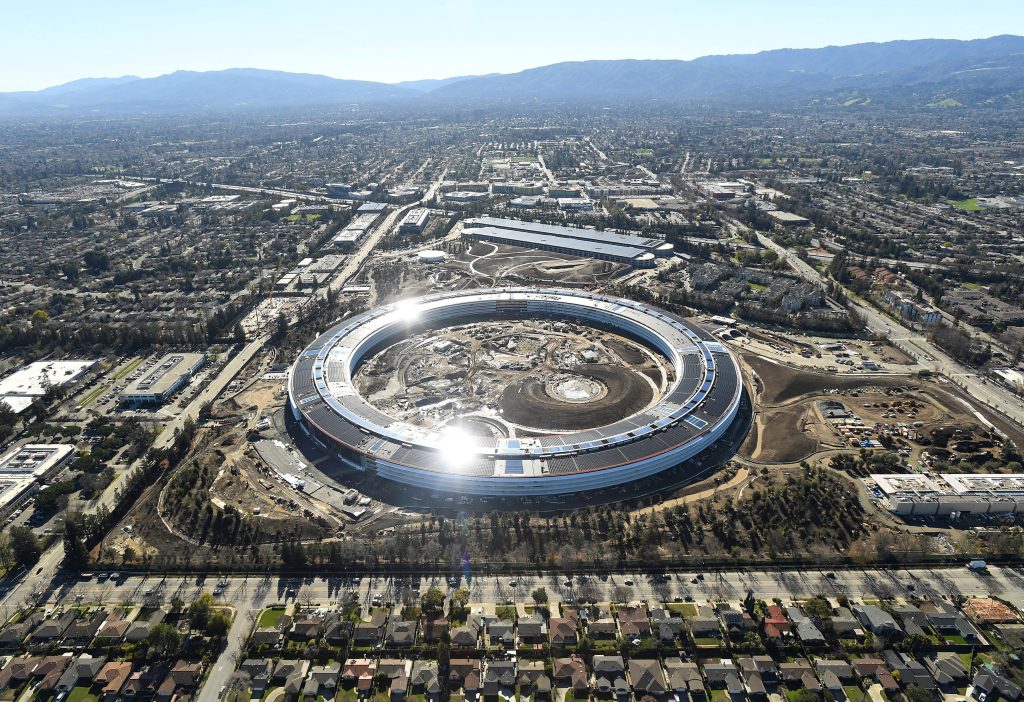
Apple Park, Cupertino
Apple Park showcases how architecture supports innovation. Designed as a circular campus, it encourages collaboration across departments. Additionally, the campus emphasizes renewable energy and green spaces, setting new benchmarks for corporate campuses globally.
Sunnyvale Tech Campuses
Sunnyvale hosts multiple semiconductor and SaaS companies. Therefore, it plays a crucial role in enterprise software and hardware development. Its strategic location between San Jose and Mountain View further enhances accessibility.
San Francisco Tech Parks: Urban Innovation at Scale
While Silicon Valley dominates suburban campuses, San Francisco itself offers a different model. Tech parks here integrate into dense urban environments.
SoMa (South of Market) Innovation District
SoMa has transformed into a vertical tech park. Startups, fintech firms, and AI companies operate in repurposed warehouses and modern towers. Consequently, innovation happens closer to consumers, culture, and creative industries.

Mission Bay and Biotech Growth
Mission Bay has emerged as a biotech and life sciences hub. With research labs, incubators, and hospital-linked innovation centers, it adds diversity to the Bay Area’s tech ecosystem.
East Bay Tech Parks: The Rise of Oakland and Berkeley
The East Bay is increasingly significant. Areas around Berkeley and Oakland offer relatively lower costs and strong academic backing. As a result, clean-tech, climate-tech, and social-impact startups are rapidly moving eastward.
Why These Tech Parks Matter for Global Brands
From a business perspective, Inside the San Francisco Bay Area’s Top Tech Parks reveals why global brands prioritize presence here. First, talent density accelerates hiring. Second, proximity to venture capital shortens funding cycles. Finally, collaboration across companies fuels faster innovation.
Moreover, these parks influence global technology trends. Ideas developed here often shape platforms, products, and services used worldwide.
Conclusion
In conclusion, the San Francisco Bay Area’s tech parks are more than physical locations. Instead, they are living ecosystems where innovation meets scale every day. Whether it is Silicon Valley’s sprawling campuses, San Francisco’s urban tech districts, or the East Bay’s emerging hubs, each park contributes uniquely to the region’s dominance. Therefore, understanding these tech parks offers a clear view into how the future of technology is built, tested, and scaled globally.