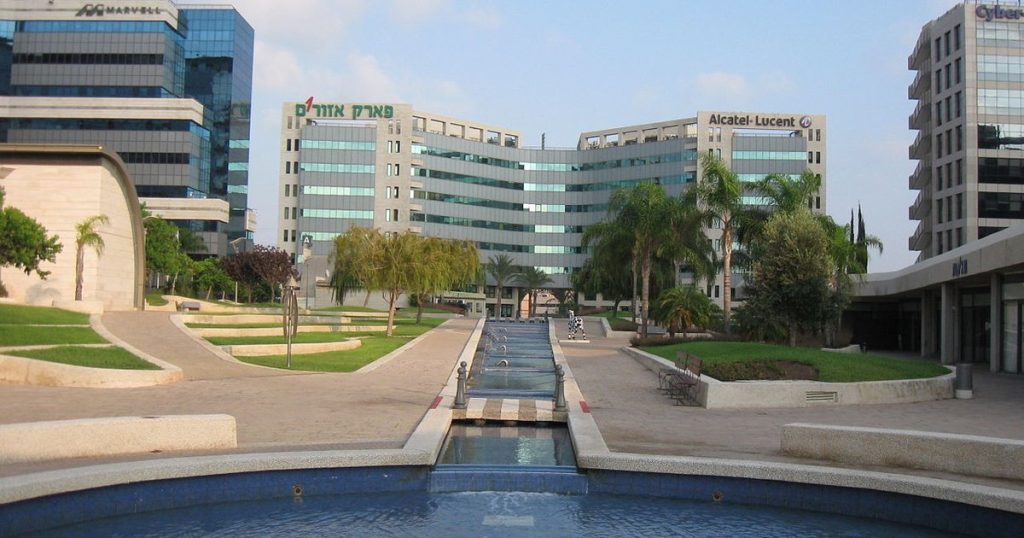

Tel Aviv high-density tech parks have become a cornerstone of global cybersecurity and defense-technology advancement. Over the last two decades, the city has transformed into one of the world’s most concentrated innovation ecosystems. As companies, startups, military veterans, and global investors operate side by side, Tel Aviv continues to redefine how urban density fuels technological leadership.
Unlike traditional business districts, these tech parks function as innovation accelerators. They compress talent, capital, and infrastructure into compact zones. As a result, collaboration happens faster, experimentation increases, and commercialisation cycles shorten significantly.
Why Tel Aviv Emerged as a Global Cybersecurity Hub
Several structural factors pushed Tel Aviv into global prominence. First, Israel’s mandatory military service created a steady pipeline of technically trained professionals. Many graduates from elite intelligence units later transition into civilian innovation roles.
Moreover, the city encourages rapid idea exchange. When engineers, founders, and investors work within walking distance, innovation becomes continuous rather than episodic. Therefore, Tel Aviv high-density tech parks operate less like offices and more like living laboratories.
Additionally, government-backed innovation programs further strengthen this ecosystem. Policy support ensures early-stage startups receive funding, mentoring, and market access, which accelerates growth.
High-Density Tech Parks: The Core Advantage
High-density environments create measurable advantages for cybersecurity and defense-tech development.
Key Benefits of Density
-
Faster knowledge transfer between startups and enterprises
-
Immediate access to specialized cybersecurity talent
-
Stronger partnerships between defense, AI, and data firms
-
Reduced time from prototype to deployment

Because teams work closely, ideas evolve organically. Furthermore, engineers often collaborate informally outside office hours, which strengthens cross-company innovation.
As a result, Tel Aviv high-density tech parks outperform traditional technology campuses that rely on physical scale rather than proximity.
Cybersecurity Innovation Thriving in Tel Aviv
Cybersecurity remains the most dominant vertical within Tel Aviv’s tech ecosystem. Startups focus on threat intelligence, cloud security, zero-trust frameworks, and AI-driven defense platforms.
Importantly, real-world exposure gives Israeli cybersecurity companies a competitive edge. Many solutions originate from firsthand operational experience rather than theoretical models.
Consequently, global enterprises increasingly partner with Tel Aviv-based firms to strengthen their digital defense strategies. This trust has positioned the city as a cybersecurity testing ground for international markets.
Defense-Tech Startups and Dual-Use Innovation
Defense-tech innovation in Tel Aviv extends beyond traditional military applications. Most startups operate on a dual-use model, meaning their technologies serve both civilian and defense sectors.
For example:
-
Drone navigation systems adapt for logistics and surveillance
-
AI vision platforms support both urban security and industrial automation
-
Secure communication tools power enterprise collaboration
This dual applicability increases commercial scalability. Therefore, defense-tech startups achieve faster revenue generation compared to purely military-focused ventures.
Tel Aviv high-density tech parks enable this flexibility by hosting mixed-sector companies under one roof.
Role of Venture Capital and Global Corporations
Venture capital firms actively embed themselves within Tel Aviv’s tech parks. This physical presence allows investors to monitor innovation trends in real time.
Meanwhile, multinational corporations establish R&D centers nearby. Companies in software, aerospace, and data security recognize that proximity equals access.
Because decision-makers and innovators operate locally, partnerships form faster. In turn, startups gain enterprise validation early in their lifecycle.

Talent Density Driving Continuous Innovation
Talent density remains the strongest differentiator. Engineers frequently move between startups, spreading technical expertise across the ecosystem.
Additionally, mentorship occurs organically. Senior founders advise new entrepreneurs, while early-stage teams exchange lessons learned. This circular flow ensures that innovation compounds rather than resets with each new company launch. As a result, Tel Aviv high-density tech parks sustain momentum even during global economic slowdowns.
Urban Infrastructure Supporting Tech Growth
Tel Aviv’s infrastructure supports high-intensity innovation. Reliable connectivity, modern workspaces, and lifestyle amenities attract global professionals.
Moreover, the city’s compact geography reduces commuting friction. Short travel times encourage longer collaboration hours and spontaneous meetings.
When infrastructure removes friction, creativity expands.
Global Influence of Tel Aviv’s Innovation Model
Today, cities worldwide attempt to replicate Tel Aviv’s model. However, density alone is not enough.
The real success lies in combining:
-
Military-grade technical training
-
Entrepreneurial culture
-
Risk-tolerant investment mindset
-
High-density collaboration zones
Together, these elements form a self-reinforcing innovation engine.
Tel Aviv high-density tech parks demonstrate that innovation thrives not through size, but through proximity, speed, and trust.
Conclusion
Tel Aviv has proven that compact ecosystems can outperform sprawling tech campuses. Through high-density tech parks, the city has created a global command center for cybersecurity and defense-tech innovation.
By uniting talent, capital, and real-world experience within tightly connected environments, Tel Aviv continues to shape the future of digital security and advanced defense solutions. As global threats evolve, the innovation emerging from these parks will remain critical to protecting both digital and physical infrastructures worldwide.