Delhi — Inside-Train Media: metro interior panels, grab-handle sleeves & QR-led lead-gen
4 min read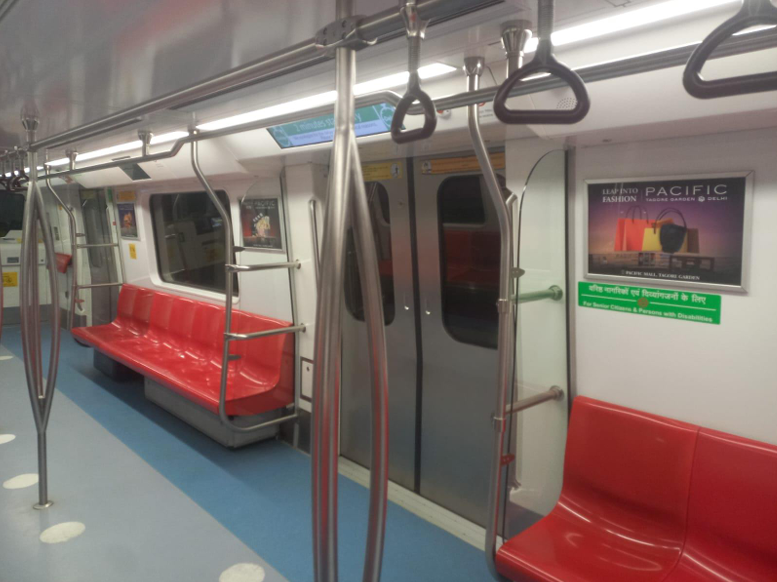
Inside-Train Media on Delhi Metro: Formats, Reach, Rules & Use of QR-Lead Gen
1) Formats — What kinds of “inside-train” media exist
| Format | What it is | |
|---|---|---|
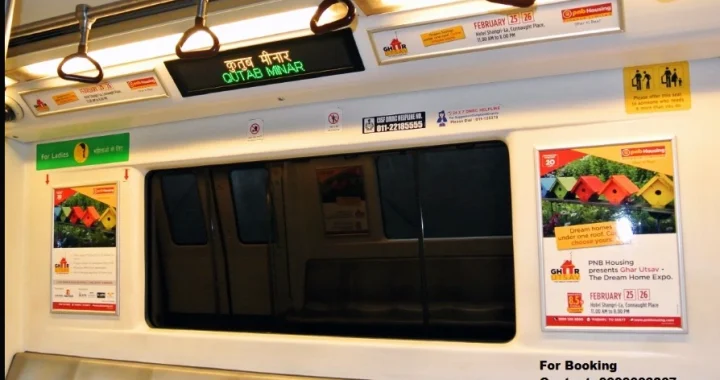
| Internal static panels (above seated windows, between windows & doors) | Paper/print panels fixed inside coach walls, often near windows or over doorways. High visibility because passengers glance around interior. | |
| Grab-handle / strap-handle sleeves (handle bars, hanging handles) | Sleeves around or attached to grab handles that hang from overhead rails. Passengers physically touch or hold them, so high dwell & tactile attention. | |
| Upper strips / header panels over doors or windows, sometimes on ceiling edges | These are fixed continuous or segmented strips overhead inside the coach. Good for short messaging, brand slogans. | |
| Seat back panels / side panels near seats | Near head height of seated passengers. Good for more detailed copy or QR codes because time available to read. | |
| Information display screens / digital PIDS (if present in-train) | Some coaches have screens or display map/destination info; sometimes adjacent space can carry ads or partner content. | |
| Door panels / glass near doors | Often frames or glass / metal panels beside entry/exit doors. These get seen whenever doors open/close. |
2) Supply & Pricing / Tender Rights
- EG Communications is a major concessionaire for “inside advertisement rights” in DMRC, on many lines including Line 2 & Line 3.
- In a past tender, EG got rights for all ad panels inside 83 metro coaches on Lines 2 & 3.
- Inventory per coach: e.g. for those lines, each train may have ~54 ad panels & ~86 handle/strap handle pieces (grab-handles) available for branding.
- Cost examples:
- Panels set (≈ 54 panels) costs ~ ₹3 lakh/month.
- Handle bar / handle-strap sleeve inventory (≈ 86 handles) is ~ ₹1 lakh/month.
- Other pricing: interior panel branding on the Green Line: around ₹20,000 per panel set per month; “Panel sets” defined as upper + lower inside wall panels.

3) Rules, Limits, and Operational Constraints
- Tender / concession terms specify that certain ad formats are permissible; some not. For example, Line-8 tenders allow inside static panels, PDIs, etc., but strap hangers might be excluded.
- Maintenance costs, print & mounting cost are usually borne by advertiser / concessionaire.
- Size constraints, visibility (must not block safety signage, windows, emergency info), material quality, branding guidelines by DMRC.
- Durations: is usually by month or multi-month contracts. Tenders may specify exclusivity or partial inventory. Eg: EG Communications’ deals lasted 3 years, etc.
4) QR / Lead-Gen Opportunities inside-train
Because commuters are captive, even if just for few minutes, inside media is well suited for lead generation / interactive campaigns. Here are how QR / lead-gen can work in this environment:
| Lead-Gen Tactic | Why It Works | Things to Mind |
|---|---|---|
| QR codes on panels near seats or near handles | Seated passengers have idle time. They can scan, redeem vouchers, sign up. High dwell time = higher chance of action. | QR should be large enough, high contrast. Clear CTA (“Scan to get __ ”). Minimal text. Lighting inside coach matters. |
| Try “scan + win” or “scan to avail offer at next station/shop nearby” | Drives footfall or app installs. Good for brands with stores near station exits. | Must consider restrictions: DMRC permits certain types of ad formats. Also policies about couponing / commerce via ads. |
| Digital content via in-train displays (if available) or via AR triggered by in-train panels | More engaging; short video teasers that lead to landing pages. | Need good UI for mobile; ensure connectivity (mobile signal inside tunnels sometimes weak). |
| Gamification; fail-safe fallback if scanning fails (print coupon code) | Enhances engagement; increases recall. | Must ensure QR leads to mobile-optimized page; use analytics to track conversions. |
5) Rider profiles & Exposure inside-train
- Dwell & attention: Once inside the coach, many riders stand, some sit. In both cases, they often look around, wait. Handle bars / overhead handles are touched / looked at, so physical touchpoints get attention.
- Commute length: Varies; some ride only a stop or two, some for long distances. For longer rides (20-30 mins), more time to scan / absorb.
- Lighting & visibility: Interiors are well lit; panels placed at eye level (seated / standing) have good visibility.
- Repetition: Regular commuters — same routes / coaches — so repeated exposure. Good for brand recall & taking action over time.
6) Best Practices / Creative Tips
- Keep it simple & bold: Short headline + CTA + QR code; avoid clutter. The movement of train + crowding means complexity is lost.
- High contrast & durable material: Must endure wear & tear, touching, cleaning. Use anti-glare print.
- Location matters: Panels near handles or doors get more attention; seats get more dwell time.
- Offer value: If you’re asking users to scan QR, something meaningful should be on offer (discount, coupon, content).
- Optimize for mobile: Landing page must load fast, data-light.

7) Sample Metrics & Estimated Reach
- One set of 54 panels + 86 handles on a train: tens of thousands of impressions per train per day. Exactly how many depends on ridership, train frequency. For busy lines, panel ad set (₹3 lakh/month) implies agencies believe ROI is strong.
- If you buy a panel set across multiple trains / multiple lines, reach multiplies.
- Because handle sleeves tend to get closer attention (people hold them), cost per engagement might be lower though conversion rates for QR scanning tend to be small (1-3%), but absolute numbers decent because base is large.