Mumbai — Mumbai Local Train Exterior Wraps on WR/CR: reach, frequency, and cost-efficiency
4 min read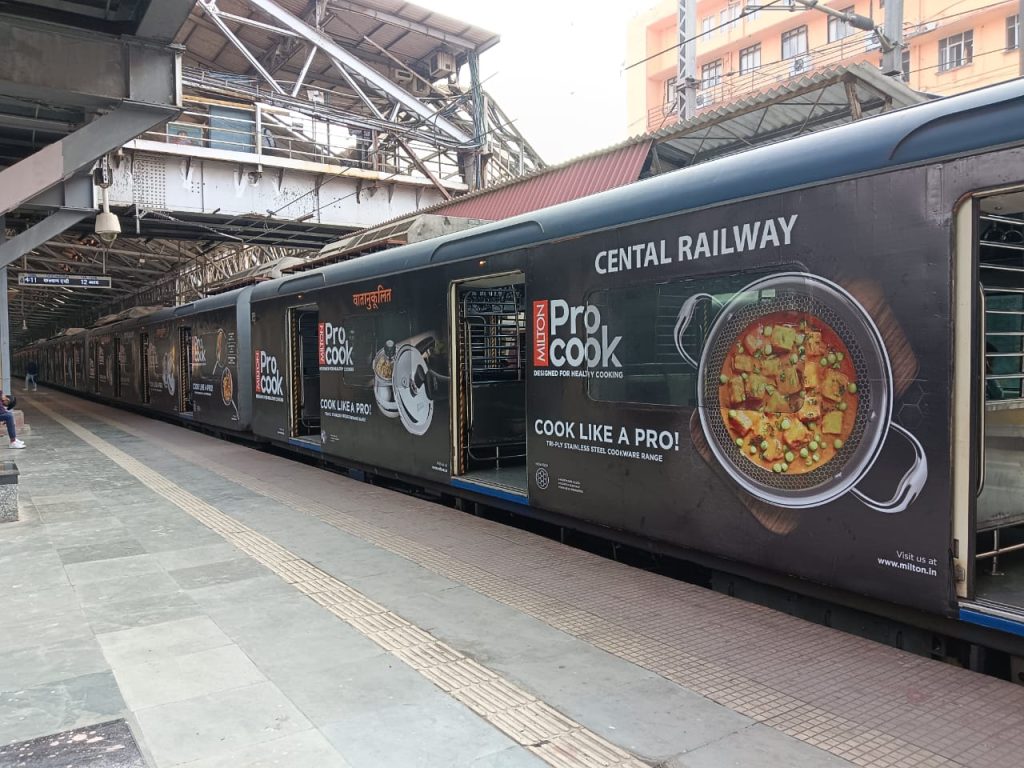
Mumbai Suburban Rail (WR & CR)
| Metric | Value / Insight |
|---|---|
| Daily ridership (pre-COVID / recent recovery) | ~ 70-72 lakh (7.0-7.2 million) riders daily across CR + WR. |
| Linewise split | Central Railway (CR): ~ 40-42 lakh; Western Railway (WR): ~ 28-30 lakh daily. |
| Peak train frequency & service volume | Thousands of local services daily. For example, prior data: CR ~ 1,660 services / day; WR ~ 1,290 services / day. |
So, any exterior wrap on a WR or CR train rides this enormous ridership base and has potential very high exposure.
“Exterior Train Wraps” — What They Cover & How They Perform
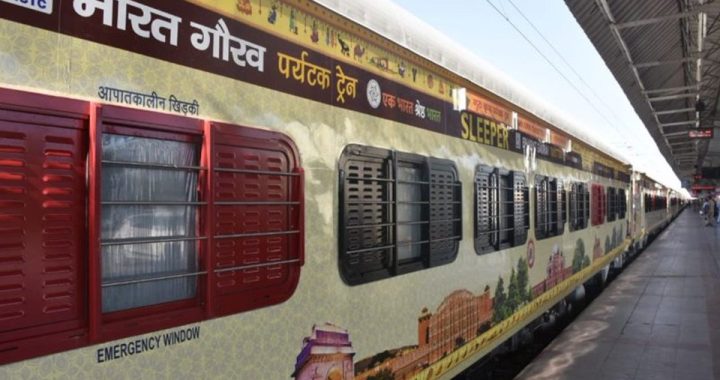
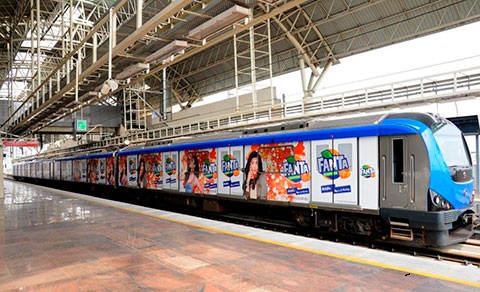
“Exterior wrap” typically means vinyl/full or partial graphics that cover the outside sides (sidewalls, doors, sometimes roof/ends) of one or more coaches, often an entire rake (all coaches of a train). These are visible:
- During train movement (along platforms, over bridges, while approaching / departing stations).
- When trains stop at stations (boarding/alighting), which gives more dwell-time visibility.
- To people on platforms, in adjacent traffic, or from across open spaces (bridges, foot-over-bridges, etc.).
Because these are big, static visuals or large graphics, their impact is “reach + frequency” more so than “deep engagement.”

Reach & Frequency
Here’s what the data & marketplace signals suggest:
| Factor | Implication for Exposure / Frequency |
|---|---|
| Ridership volume | Since tens of lakhs ride daily, a train wrap on a regularly used rake will be seen by many thousands daily. The more coaches wrapped, the higher the incremental reach. |
| Train frequency & rotations | Rakes on busy corridors run many trips per day, covering many stations. That means one wrap might get exposure multiple times per day in different parts of the route. |
| Platform dwell & station visibility | At stations, when the train is stopped, many people on platform view the sides of the train — good dwell-time. Outside the station too (bridges, road traffic etc.), you capture non-commuter eyeballs. |
| Line and stretch matters | On routes with high footfall stations (termini, interchange, near commercial hubs), visibility is magnified. If the train covers fast / express services, even more reach. |
So frequency in this context means how often the same or different people see the wrap: morning + evening commute, and as the train traverses many stops.
Cost & Cost-Efficiency
Based on current advertising offerings:
| Sample Cost Estimate | ||
|---|---|---|
| Media Space: Exterior wrap-full train (12-15 coaches) Western Line: ~ ₹ 3,00,000 / per train / 30 days | ||
| Same for Central / Harbour Line: ~ ₹ 2,00,000 / per train / month for exterior wrap of 12-15 coaches. | ||
| From Crown Media: Wraps advertised from ~ ₹ 1,75,000 in some cases (though may be partial or with limitations) |
Cost-Efficiency (Reach per Rupee)
To evaluate whether these are “worth it”, advertisers look at:
- Impressions: Number of eyeballs / exposures per day. With ridership in tens of lakhs, even modest visibility portions yield high impression counts.
- Cost per Thousand Impressions (CPM): The cost divided by the number of impressions in thousands. Exterior train wraps tend to have lower CPMs than many station digital or premium OOH formats, because of the sheer scale.
- Duration: Monthly campaigns give time for frequency; shorter campaigns may waste installation cost. Longer campaigns amortize creative and install costs better.
- Number of trains / rotation: Single train wrap gives reach, but multiple train wraps multiply reach. Buying more trains or wrapping trains that run through high foot traffic zones increases value.
Trade-Offs & Challenges
- Visibility vs Maintenance: Exteriors are exposed to weather, grime, and mechanical damage. Wrapping material, durability, and maintenance matter.
- Regulatory / Permission: Authorization from railway authorities (WR / CR), adhesion, safety compliance may take time & cost.
- Color / design constraints: Bright, clean designs work better; dark or small details get lost at distance or speed.
- Standards of train movement: Trains Moving fast limit viewing time; those stopping at stations help visibility more.
- Audience fragmentation: Not all riders may see every wrap; frequent commuters may block view; some exterior sections (ends of coaches) may not be visible from platforms or outside.
Rough Estimate: Impressions & CPM Example
Let me sketch a hypothetical campaign to illustrate:
- Suppose you wrap 1 full train (12-15 coaches) on WR, for ₹ ₹ 3,00,000/month.
- Assume the train does 20 round trips a day, passing through stations with average platform dwell that gives side visibility to ~5,000 people each time (across all stops) plus incidental viewers outside (~roads near tracks, bridges etc.).
- Suppose you conservatively estimate 100,000 eyeballs per day see the wrap (this is plausible given Mumbai’s density). Over 30 days = ~3 million impressions.
- Then cost per 1,000 impressions = ₹ 3,00,000 / 3,000 = ₹ 100 / – per 1,000 impressions.
Of course, if the train goes through more crowded zones, more trips, or multiple trains, you may get better CPM (lower cost per 1,000). If less, cost goes up.
Comparative Efficiency vs Other Formats
- Versus Station Hoardings / LED Kiosks: Exterior train wraps reach people over wide geography; station hoardings may reach high dwellers but limited to that station. Wraps can deliver continuous exposure across many stations.
- Versus Inside-train / Panels: Interiors have more dwell time for seated commuters, but lower reach (fewer people see inside vs everyone outside sees the train). Also better for detailed messaging / QR codes etc.
- Versus Metro / Digital OOH: Metro may cost more for high visibility, but reach is narrower (metro covers certain corridors). Local trains’ network is extensive; wraps give coverage over a large area for relatively lower incremental cost.

When Exterior Wraps on WR / CR Make Good Sense
Exterior train wraps are especially cost-efficient when:
- You can commit for a full month or more, to amortize installation and logistic costs.
- Your brand’s target audience includes regular commuters (intra-city daily travellers), or general public exposure (platform watchers, road users).
- You want mass awareness rather than deep or interactive engagement.
- The train route includes high visibility zones (busy stations / interchange / high footfall).
- You use bold and simple creative so message can be grasped even in motion.