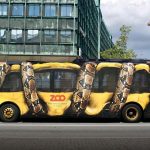

If you’ve spent any time in a major Indian city be it the humid chaos of Mumbai or the tech-heavy traffic of Bengaluru you know the “Red Bus” or the “Blue Bus” is a permanent part of the skyline. For decades, these buses were just moving walls. You’d see a faded, dusty ad for a cement brand or a local coaching center, and you’d tune it out. It was visual background noise.
But walk down a street in 2026, and things look different. We are officially entering the era of Interactive Transit Media. We aren’t just looking at buses anymore; we’re playing with them, scanning them, and letting them talk to our phones.
1. The “Magic” in Your Pocket (AR Wraps)
The biggest change isn’t on the bus itself it’s in how the bus reacts to your phone. We’ve all seen QR codes, but the new wave is Augmented Reality (AR) Triggering.
Imagine you’re waiting at a bus stop in Gurgaon. A bus pulls up with a massive wrap for a new sneaker brand. Instead of just looking at a photo of the shoe, you point your phone at the bus. Suddenly, through your screen, a 3D version of that sneaker “pops” out of the bus and hovers in mid-air. You can rotate it, see the grip, and here’s the kicker hit a button to virtually “wear” it using your phone’s camera.
This isn’t just a “cool trick.” It’s a bridge. It takes a person from being a passive bystander to an active participant in under ten seconds.

2. Smart Shelters: The New Neighborhood Hangout
The bus stop used to be a place of pure frustration hot, dusty, and boring. In India’s “Smart Cities,” these shelters are becoming high-tech hubs.
We’re starting to see Gesture-Controlled Screens at bus stops. Think of a massive iPad built into the wall of the shelter. While you wait for your ride, you can wave your hand to browse a digital catalog or play a 30-second mini-game to win a discount coupon.
If a skincare brand can give you a digital “skin analysis” while you’re waiting for the 502 route, they’ve done more for their brand in two minutes than a TV commercial could do in a year. You’re giving the commuter something they actually want: a distraction from the heat and the wait.
3. “Live” Content: The End of Static Ads
The old way of advertising was: print a vinyl sheet, stick it on the bus, and leave it there for six months. That’s dead. The future is Dynamic DOOH (Digital Out-of-Home).
Digital LED screens on the sides of buses are now synced with GPS and live data.
-
Scenario A: The bus is passing through a corporate hub at 9:00 AM. The screen shows an ad for a high-end coffee brand or a productivity app.
-
Scenario B: It’s 6:30 PM and the bus is stuck in a monsoon downpour. The screen automatically switches to an ad for a hot food delivery service or a rain-gear sale.
This is “contextual” advertising. It feels human because it actually knows what the world looks like outside the window at that exact moment.

Why India is the Perfect Playground for This
India is unique because we are a mobile-first nation. Almost everyone waiting for a bus has a smartphone in their hand. We are also a culture that loves “Value.”
Interactive ads allow brands to offer Instant Gratification. A “Scan to Win” or a “Play to Get ₹50 Off” works incredibly well in the Indian context. It taps into our love for a good deal and our comfort with digital payments like UPI.
The Real ROI: It’s All About the Data
For the brand manager, the “interactive” part is a goldmine. In the old days, you had no idea how many people actually looked at your bus ad. Now? You know exactly how many people scanned the AR dragon, how many played the game at the shelter, and most importantly how many of them actually used the coupon.
Conclusion
We are moving away from “shouting” at people and moving toward “inviting” them. The future of bus advertising in India isn’t about having the biggest logo; it’s about having the most interesting conversation.
The next time you’re stuck in traffic, don’t be surprised if the bus next to you asks you to play a game. The street is officially the new digital frontier.