
There’s a reason why, hours later, you can still perfectly picture that brand’s logo or its witty tagline. It isn’t just luck; it’s science. High-recall bus advertising taps into the way our brains are wired to survive and navigate the world. When a brand moves through a city, it triggers psychological responses that a static digital ad simply can’t touch.
1. The Power of the “Pattern Interrupt”
Most of our commute is spent on autopilot. We know the route, we know the buildings, and our brains effectively “tune out” the background noise to save energy.
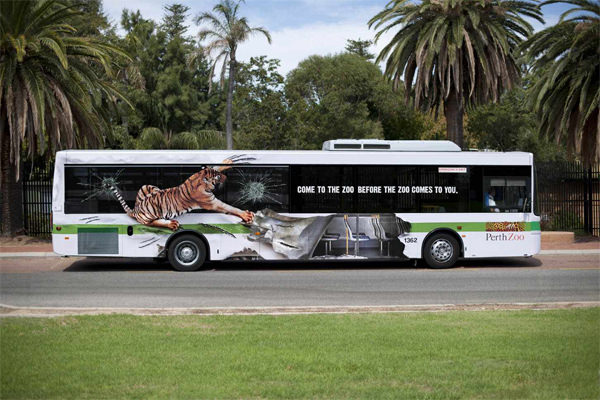
A fully wrapped bus is a massive pattern interrupt. When a giant, vibrant 40-foot moving wall enters your field of vision, your brain’s “novelty detector” spikes. Because the ad is the only thing changing in an otherwise static environment, your brain gives it a higher priority for memory storage. You remember the bus because it was the most interesting thing that happened during a boring stretch of road.
2. The “Mere Exposure” Effect
Psychology tells us that the more we see something, the more we like and trust it. This is the “Mere Exposure Effect.”
Buses are unique because they follow the same routes every single day. If you’re a commuter, you aren’t seeing that ad once; you’re seeing it at 8:30 AM on Monday, Tuesday, and Thursday. This constant, physical presence in your neighborhood builds a sense of “fame.” You start to perceive the brand as a local authority, even if you’ve never visited their website. By the time you need that product, your brain has already “vetted” the brand through sheer repetition.

3. High Dwell Time and Focused Attention
We often talk about “glance media,” but at a red light or a bus stop, that glance turns into a gaze.
When a bus is idling at a traffic signal, the audience is captive. Whether you are a pedestrian waiting to cross or a driver waiting for the green light, you have 60 to 90 seconds of nothing to do but look at that bus. This is a massive window for “deep encoding.” Your brain has enough time to process the imagery, read the hook, and connect the brand’s solution to a problem you might have.
4. Spatial Memory: Putting the Brand on the Map
Humans have incredible spatial memory we remember where we saw things. When you see a bus ad near your office or your favorite park, your brain “pins” that brand to a physical location.
This creates a much stronger memory trace than an ad seen in the “nowhere land” of a smartphone screen. You associate the brand with the real world, making it feel tangible, reliable, and “real.”
Conclusion
High-recall bus advertising works because it doesn’t fight for your attention it earns it by being a part of your physical journey. By combining massive scale with the psychology of repetition and the “pattern interrupt” of a moving canvas, transit ads move from the street into the long-term memory of the consumer. In a world of digital clutter, the brands that “move” with the people are the ones that stay in their minds.