
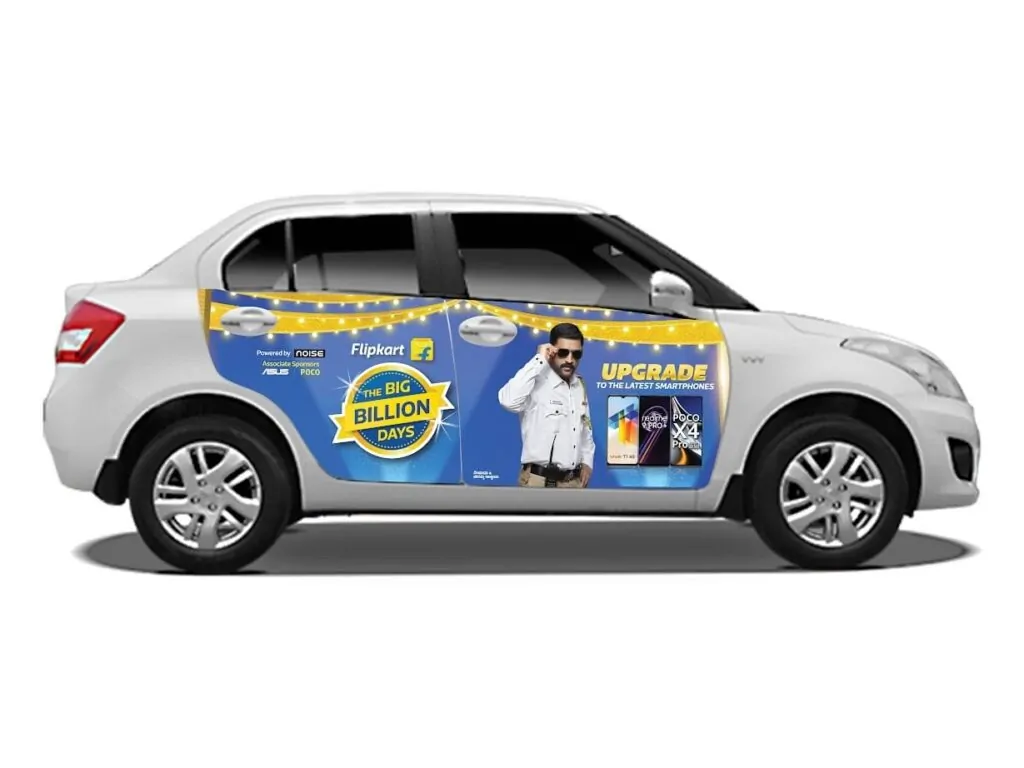
Outdoor advertising has always faced one core question—how do you measure return on investment? With mobility-led formats gaining momentum, marketers are now closely evaluating Car Wrap Advertising ROI to understand whether cost justifies reach. Car Wrap Advertising ROI: What Recent Campaigns Tell Us About Cost vs Reach looks at how brands are using real-world data, traffic behavior, and exposure metrics to assess effectiveness.
Unlike digital media, car wrap advertising does not rely on clicks or impressions alone. Instead, it delivers value through sustained visibility, repetition, and urban presence.
Understanding the Cost Structure of Car Wrap Advertising
Car wrap advertising typically involves a one-time production cost and a fixed campaign duration. Costs vary depending on wrap type—partial, full body, or rear-glass—and campaign length.

Unlike static OOH, there are no recurring rental fees for premium locations. Once a car is wrapped, it operates as an active advertising unit daily. Therefore, cost efficiency improves over time as vehicles continue to generate impressions without incremental spend.
Car Wrap Advertising ROI: What Recent Campaigns Tell Us About Cost vs Reach
Recent campaigns show that ROI improves significantly in traffic-heavy cities. When wrapped cars move through congested corridors, exposure multiplies naturally.
Because vehicles slow down or stop frequently, surrounding commuters get longer viewing time. As a result, the same creative delivers repeated impressions across multiple days. This repetition boosts recall, which is a key driver of ROI in brand-led campaigns.
Reach Expansion Through Daily Route Coverage
One major insight from recent campaigns is reach diversity. A single wrapped car may cover office districts in the morning, commercial zones in the afternoon, and residential areas in the evening.
Over a 30–60 day campaign, this movement translates into thousands of unique exposures. Therefore, reach is not limited to one audience segment. Instead, brands access multiple demographics without additional media buying.
Traffic Congestion as a Performance Multiplier
Traffic congestion plays a crucial role in improving ROI. Campaigns executed in cities like Mumbai, Delhi, and Bengaluru benefit from high dwell time at signals, junctions, and bottlenecks.
In these environments, car wraps act almost like semi-static billboards. Consequently, impressions accumulate faster compared to free-flowing highway routes. This makes urban congestion a performance multiplier rather than a drawback.
Ride-Hailing and Managed Fleets Amplifying ROI
When executed through managed fleets or ride-hailing ecosystems, car wrap ROI improves further. Platforms such as Ola and Uber operate vehicles for extended hours each day.
Because these cars remain active throughout peak traffic windows, daily exposure increases. Moreover, consistent routes allow advertisers to plan coverage strategically, improving impression quality rather than random reach.
Brand Recall vs Immediate Conversions
Recent car wrap campaigns highlight an important truth—ROI is strongest when measured through brand recall, familiarity, and consideration rather than instant conversions.
Brands in fintech, FMCG, OTT, and D2C categories reported uplift in app searches, direct traffic, and assisted conversions during active wrap periods. Although car wraps may not always drive instant actions, they significantly influence decision-making over time.
Cost Per Impression Over Campaign Lifespan
When impressions are averaged across campaign duration, car wrap advertising delivers a competitive cost per impression compared to premium static OOH.
Since wrapped vehicles operate daily, impressions accumulate continuously. Therefore, the longer the campaign runs, the lower the effective CPI becomes. This long-tail exposure is a major contributor to positive ROI.
Creative Simplicity Enhancing ROI
Campaigns that delivered the best ROI followed a clear creative principle—simplicity. Bold colors, minimal text, and strong brand identifiers ensured readability in traffic.
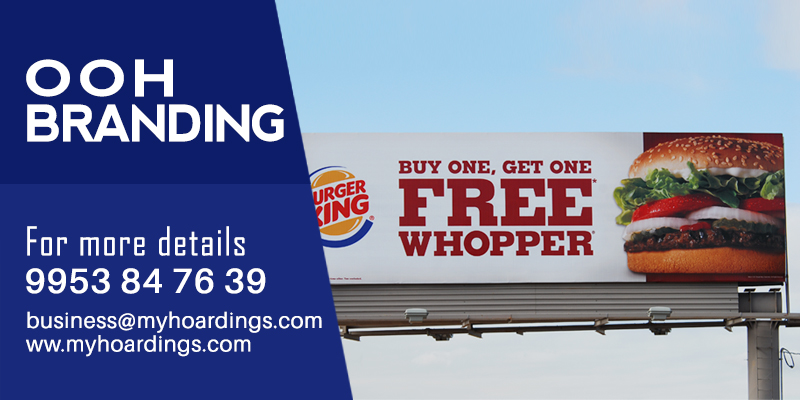
Overloaded creatives performed poorly, while clean designs improved recall. As a result, creative clarity directly impacted cost efficiency and overall ROI.
Integration With Digital Improves Measurable Returns
Recent campaigns also show higher ROI when car wraps are integrated with digital efforts. QR codes, app prompts, and consistent messaging across social and performance channels helped convert offline exposure into online engagement.
This integration allows marketers to attribute spikes in traffic or installs to ongoing wrap campaigns, strengthening ROI evaluation.
Industries Seeing the Strongest ROI
Based on recent deployments, the following sectors reported strong ROI from car wrap advertising:
-
Fintech & Apps: Sustained app discovery
-
FMCG: High-frequency brand recall
-
OTT & Entertainment: Release awareness
-
Retail & D2C: City-wide presence
These categories benefit most from repetition and visibility rather than one-time exposure.
Conclusion: ROI Is Built Over Time, Not Overnight
Car Wrap Advertising ROI improves with time, traffic, and consistency. Recent campaigns confirm that while car wraps may not deliver instant clicks, they build powerful brand presence at a predictable cost.
When measured through reach quality, recall, and long-term influence, car wrap advertising proves to be a high-value urban media format—especially in traffic-heavy cities where visibility naturally multiplies.