
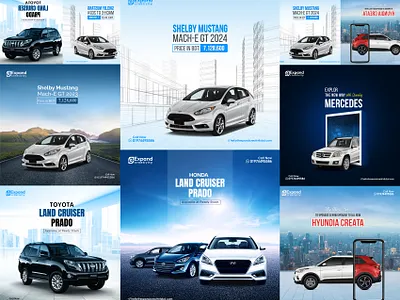
Urban advertising is undergoing a significant transformation as brands compete for attention in increasingly cluttered city environments. While traditional outdoor media still holds relevance, advertisers are actively shifting toward mobile visibility solutions. Among these, creative formats in car branding have emerged as a powerful alternative that blends mobility, repetition, and visual dominance.
Earlier, brands relied heavily on door wraps for vehicle advertising. However, as audience exposure patterns evolve, marketers are now exploring advanced branding formats such as roof-top panels, rear branding, and full body coverage. These innovative options allow brands to maximize surface area while delivering stronger recall in dense urban markets.
Understanding Creative Formats in Car Branding
Car branding involves placing promotional creatives on different parts of a vehicle to convert it into a moving advertisement. Over time, this medium has evolved from basic vinyl door stickers into high-impact multi-format executions.
Today, creative formats in car branding include:
-
Side door wraps
-
Roof-top display panels
-
Rear windshield branding
-
Bumper creatives
-
Full body vehicle wraps
Each format serves a distinct visibility purpose. When combined strategically, they ensure consistent brand exposure across traffic signals, highways, residential streets, and commercial zones.
Why Door Wraps Alone Are No Longer Enough
Door wraps remain cost-effective; however, they offer limited creative space. In fast-moving urban traffic, small visuals often fail to deliver brand messaging effectively.
Moreover, modern advertising demands stronger visual storytelling. Therefore, brands require formats that allow bold colors, product visuals, and readable messaging within seconds.
As a result, advertisers are increasingly supplementing door wraps with larger and more dynamic branding formats.
Roof-Top Panels for High-Traffic Visibility
Roof-top panel branding has gained popularity in metro cities due to its elevated visibility. These panels sit above the vehicle, making them visible even during heavy congestion.
Key advantages of roof-top panels include:
-
Clear visibility from long distances
-
High recall at traffic signals
-
Strong impact during peak commuting hours
-
Minimal obstruction from surrounding vehicles
Since urban traffic often moves slowly, roof-top panels remain in the viewer’s line of sight for extended durations. Consequently, brand recognition improves without additional media investment.
Full Body Car Branding for Maximum Impact
Among all creative formats, full body car branding delivers the highest visual dominance. This format wraps the entire vehicle surface, allowing uninterrupted creative flow.
Because of its size, full body coverage supports:
-
Large product imagery
-
Brand storytelling layouts
-
Premium campaign perception
-
Strong color blocking for instant recall
Additionally, fully wrapped vehicles stand out clearly among ordinary traffic. Therefore, brands launching new products or services often prefer this format for rapid awareness generation.
Rear Windshield and Back Panel Branding
Rear branding plays a crucial role in traffic-based advertising. When vehicles stop at signals, drivers behind them naturally focus forward, creating longer viewing duration.
This placement works effectively for:
-
App download promotions
-
QR code visibility
-
Short CTA messaging
-
Website or contact recall
As a supporting format, rear branding strengthens message reinforcement when paired with side or roof branding.
Combination Formats for 360-Degree Exposure
To enhance campaign effectiveness, many advertisers now deploy combination car branding formats. These combinations ensure visibility from multiple angles throughout the day.
Popular combinations include:
-
Door wraps + roof-top panels
-
Full body wrap + rear glass branding
-
Side panels + bumper creatives
This multi-surface approach ensures that brand messaging remains visible regardless of traffic direction or vehicle positioning.
Consequently, impression frequency increases significantly in dense city conditions.
Creative Flexibility in Modern Car Branding
One of the strongest advantages of creative formats in car branding is design flexibility. Unlike static hoardings, vehicle creatives can adapt to campaign themes and seasonal messaging.
Brands commonly use:
-
Festival-based creatives
-
Hyperlocal language messaging
-
Minimalist design layouts
-
High-contrast brand colors
Because vehicles move across diverse neighborhoods, dynamic creative execution helps brands connect emotionally with varied audience segments.
Higher Engagement Through Moving Media
Consumers encounter branded vehicles repeatedly during daily commutes. As a result, mobile branding generates subconscious recall rather than forced attention.
Moreover, eye-level placement ensures better readability compared to elevated hoardings. This natural engagement leads to stronger brand familiarity over time.
Therefore, moving media consistently outperforms static formats in dense city environments.
Ideal Campaign Use Cases
Advanced car branding formats work exceptionally well for:
-
App-based platforms
-
Food delivery services
-
OTT launches
-
Real estate promotions
-
Retail brand visibility
-
Event and exhibition marketing
These sectors benefit from continuous city-wide movement rather than fixed-location exposure.
Conclusion
As urban advertising becomes more competitive, brands must innovate beyond conventional formats. While door wraps continue to offer baseline visibility, they no longer unlock the full potential of vehicle-based advertising.
Creative formats in car branding, including roof-top panels and full body coverage, deliver stronger recall, higher frequency, and superior urban reach. By adopting multi-format vehicle branding strategies, advertisers can dominate city streets with consistent and high-impact presence.
In modern metro markets, creative car branding is no longer an experiment—it is a strategic necessity.