
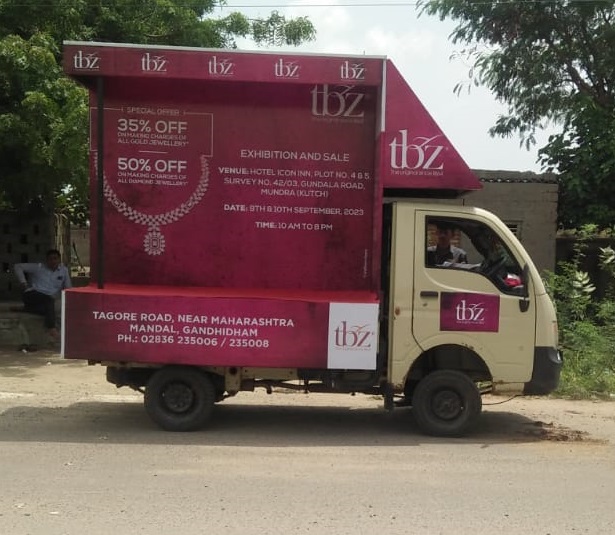
Urban landscapes are no longer defined only by billboards and digital screens. Increasingly, branded commercial vehicles are shaping how cities look and how brands are remembered. Fleet Branding Campaigns: Turning Commercial Vehicles into Always-On Advertisements explains why companies are investing in fleets as long-term, high-frequency media assets rather than short-term promotional tools.
From delivery vans and service vehicles to logistics trucks and corporate fleets, branding on wheels ensures that a brand is visible every day, across multiple locations, without switching media on or off.
What Is Fleet Branding and Why It Matters
Fleet branding involves applying brand creatives—logos, colors, messages, and calls to action—on a group of commercial vehicles. These vehicles operate daily across cities, industrial zones, residential areas, and highways.
Unlike traditional outdoor advertising, fleet branding is always active. Vehicles move during peak hours, park in high-footfall areas, and revisit the same routes regularly. As a result, brands gain consistent exposure that builds familiarity and trust over time.
Fleet Branding Campaigns: Turning Commercial Vehicles into Always-On Advertisements
The biggest strength of fleet branding lies in repetition. When consumers see the same branded vehicles every day in their neighborhood or commute route, recall increases naturally.
Because fleets operate for months or years, branding is not limited to a short campaign window. Instead, it functions like a permanent outdoor presence. Therefore, fleet branding delivers long-term value compared to time-bound static hoardings or digital bursts.
High Visibility Across Multiple Touchpoints
Commercial vehicles travel through diverse environments:
-
Residential neighborhoods
-
Business districts
-
Industrial zones
-
Highways and arterial roads
-
Markets and retail hubs
This movement ensures exposure to different audience segments throughout the day. Morning office commuters, afternoon shoppers, and evening residents all encounter the same brand. Consequently, messaging reaches audiences at multiple moments without additional media buying.
Trust and Credibility Through Utility
Fleet-branded vehicles often belong to service-driven businesses—logistics, e-commerce, utilities, healthcare, and FMCG distribution. When consumers repeatedly see a brand performing a real-world function, trust builds faster.
A branded delivery van feels more credible than a standalone advertisement. Therefore, fleet branding supports brand authenticity by associating the message with daily operations rather than pure promotion.
Cost Efficiency Over Long Durations
While fleet branding requires an initial investment in wraps or decals, the cost spreads over months or years of usage. There are no recurring rental fees, no bidding wars for locations, and no dependency on ad slots.
As vehicle usage increases, the cost per impression continues to drop. Hence, fleet branding becomes one of the most cost-efficient outdoor advertising formats for brands seeking sustained visibility.
Creative Simplicity That Works in Motion
Effective fleet branding relies on clarity. Since vehicles are viewed in motion or traffic, successful creatives focus on:
-
Bold colors and high contrast
-
Minimal text and strong typography
-
Clear logos and brand identifiers
-
Simple calls to action
This simplicity ensures readability even at a distance or in slow-moving traffic. As a result, messaging remains impactful without overwhelming viewers.
Hyperlocal Presence Without Hyperlocal Buying
Fleet branding naturally supports hyperlocal exposure. Vehicles repeatedly serve specific zones, routes, or delivery areas. Therefore, brands dominate visibility within their operational geography.
For example, a last-mile delivery brand builds strong neighborhood-level recognition without buying multiple local hoardings. This makes fleet branding especially valuable for city-specific or regional brands.
Integration With Digital and Performance Campaigns
Modern fleet branding campaigns often include QR codes, short URLs, or app prompts. These elements connect offline exposure with online action.
When vehicles park or slow down in traffic, audiences have enough time to scan or remember the message. Consequently, fleet branding supports app installs, website visits, and inquiry generation alongside awareness.
Industries Benefiting Most From Fleet Branding
Several sectors leverage fleet branding as a core media strategy:
-
E-commerce & Logistics: Delivery vehicle visibility
-
FMCG & Distribution: Supply chain branding
-
Healthcare & Diagnostics: Service credibility
-
Utilities & Services: Local trust building
-
B2B Brands: Industrial and commercial recall
Because fleets operate daily, these brands remain top-of-mind without repeated media planning cycles.
Measurement and Brand Impact
Although fleet branding is a long-term medium, impact can still be tracked. Route coverage, vehicle count, duration, and area density provide exposure estimates. When combined with brand lift studies or digital traffic spikes, effectiveness becomes clearer.
Over time, consistent fleet presence translates into stronger brand familiarity—one of the most powerful drivers of consumer choice.
Conclusion: Advertising That Never Switches Off
Fleet Branding Campaigns turn commercial vehicles into always-on advertisements that work silently, consistently, and efficiently. In a world of fleeting impressions and skipped ads, fleet branding offers something rare—continuous, real-world presence.
As brands look for sustainable visibility rather than momentary attention, fleet branding stands out as a smart, scalable, and enduring outdoor advertising solution.