
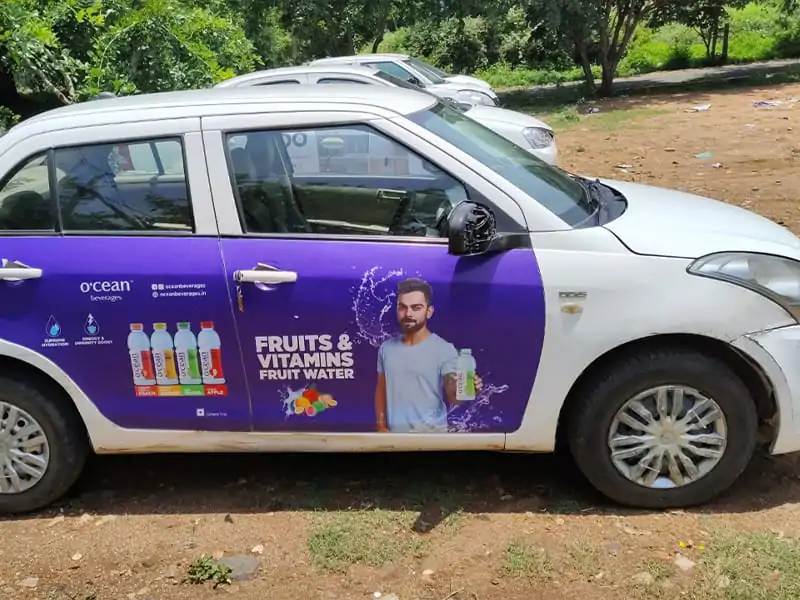
Every day millions of urban Indians spend significant time commuting. Savvy marketers are no longer letting these moments go to waste. Inside Recent Cab Branding Campaigns That Turned Daily Commutes into Brand Touchpoints, we explore how brands reimagined ordinary travel time into powerful engagement opportunities.
From bold visuals to interactive messaging, today’s cab branding campaigns are more than just moving hoardings. Instead, they act as strategic touchpoints that connect consumers with brands during idle traffic, slow signals, and app-based ride experiences.
Why Cab Branding Works in Urban India
With traffic congestion increasing in cities like Mumbai, Delhi, Bengaluru, and Chennai, commuters are often stuck in long rides. This slowdown creates extended visibility for cab advertising. Unlike static billboards, cab branding travels through multiple neighborhoods, diversifying reach and boosting recall.
Moreover, ride-hailing platforms such as Ola and Uber ensure that branded cabs are everywhere—from office hubs to residential streets. As a result, campaigns reach audiences at different stages of their day, turning each commute into a brand interaction.
Case Study: Fintech App Launch with Full Cab Wraps
One recent campaign by a leading fintech brand used full-body cab wraps to generate awareness for a new payment app. The bright, distinctive graphics covered every side of the cab, ensuring high visibility in crowded urban zones.
Because traffic moves slowly in peak hours, commuters and pedestrians spent more time absorbing the design. The campaign also included QR codes on rear doors that directed riders to a download page, transforming passive impressions into measurable actions.
By combining visual dominance with a clear call-to-action, this campaign turned ordinary traffic snarls into meaningful brand touchpoints that drove both installs and conversations.
Case Study: FMCG Brand’s Seasonal Promotion
An FMCG company recently leveraged cab top media during a festive season. The creative featured vibrant illustrations and catchy taglines designed to uplift daily commutes. Drivers were instructed to move through high-footfall zones like markets, malls, and transit hubs.
In addition, special weekend routes were optimized to pass through residential clusters where family shopping peaks. This multi-faceted deployment ensured that the message reached both corporate commuters and weekend shoppers alike. As a result, the campaign not only enhanced visibility but also increased in-store foot traffic near core urban markets.
Case Study: Entertainment Release with Interactive Messaging
A popular OTT platform turned cab interiors into mini-billboards for their latest series. Seat-back panels featured character art, memorable quotes, and hashtags encouraging passengers to join the conversation online.
Additionally, scannable codes led to teaser videos and early-bird subscription offers. Because riders had dwell time during their journey, they engaged more with the content, resulting in higher social media buzz and trending hashtags.
This campaign demonstrated how creative cab branding can move beyond visuals to become an interactive brand experience.
Key Elements That Make Cab Branding Campaigns Successful
Several factors differentiate effective cab branding from run-of-the-mill taxi wraps:
Strategic Routes: Successful campaigns analyze traffic patterns to ensure maximum visibility during peak hours.
Creative Design: Bold colors, readable fonts, and locally relevant themes improve attention and recall.
Interactive Features: QR codes, SMS shortcodes, and dedicated hashtags help convert visibility into action.
Integrated Media: Syncing with social, digital, and on-ground activations amplifies impact across channels.
These elements together ensure that daily commutes are transformed into memorable brand moments.
Measurable Outcomes and ROI
Modern cab branding is no longer guesswork. GPS tracking and route analytics help marketers measure exposure, frequency, and geographic reach. By pairing this data with digital activation metrics—such as scans and campaigns visits—brands can quantify returns much like other performance channels.
For example, fintech and consumer apps reported measurable uplift in app downloads coinciding with cab branding flight dates. Retail and entertainment brands noted higher footfall and online engagement—especially when promotions were tied to physical and digital incentives.
The Future of Cab Branding in Urban India
Cab branding campaigns prove that daily commutes are valuable brand touchpoints. As urban mobility continues to rise, more brands across categories—education, travel, healthcare, and real estate—are exploring this medium. With smarter routing, creative integration, and data-backed results, cab branding is redefining how brands connect with on-the-go consumers.
In essence, cab branding transforms traffic jams from wasted time into repeat brand engagements—and the trend is only accelerating.