
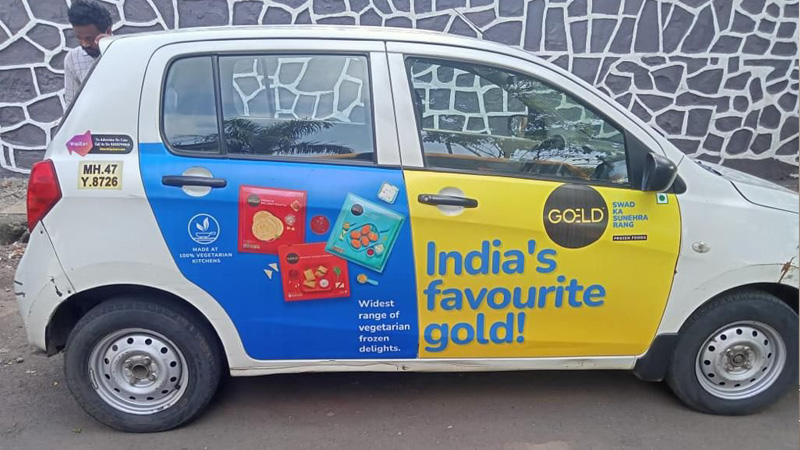
Urban advertising is undergoing a quiet but powerful transformation. Beyond cabs, buses, and commercial fleets, private car advertising networks are emerging as a new growth channel for brands seeking continuous, city-wide visibility. Private Car Advertising Networks: A New Growth Channel for Urban Brand Visibility highlights how everyday personal vehicles are being transformed into decentralized, always-on advertising platforms.
As cities become more congested and commute times increase, private cars spend more hours on the road than ever before. Consequently, brands are tapping into this underutilized asset to reach urban audiences organically and repeatedly.
What Are Private Car Advertising Networks?
Private car advertising networks consist of individually owned vehicles that display brand creatives through wraps, decals, magnetic panels, or rear-glass branding. These cars are driven by everyday commuters—office-goers, delivery partners, gig workers, and frequent travelers.
Unlike traditional outdoor advertising, these networks are not restricted to fixed locations or professional fleets. Instead, they scale through volume and daily movement. Therefore, brands gain widespread coverage across residential areas, office corridors, highways, and neighborhood streets.
Private Car Advertising Networks: A New Growth Channel for Urban Brand Visibility
The key advantage of private car advertising lies in distributed reach. Instead of relying on a few premium locations, brands appear simultaneously across hundreds or thousands of micro-locations.

Because private cars follow authentic daily routines, exposure feels natural rather than forced. As a result, audiences perceive these ads as part of the urban environment, not as intrusive marketing. This subtlety increases acceptance and recall over time.
Higher Dwell Time in Traffic-Heavy Cities
Traffic congestion plays a crucial role in the effectiveness of private car advertising. In cities like Mumbai, Delhi, Bengaluru, and Hyderabad, cars often move slowly or remain stationary for long periods.
During these moments, surrounding drivers, pedestrians, and two-wheeler riders repeatedly view the same branding. Therefore, dwell time increases organically. Unlike fast-moving highway billboards, private car ads benefit from stop-and-go traffic conditions that improve message retention.
Hyperlocal Penetration Without Location Buying
One of the strongest benefits of private car advertising networks is hyperlocal penetration. Since cars are driven within specific neighborhoods and daily routes, brands achieve deep local visibility without purchasing multiple hoardings.
For example, a food delivery brand gains recognition within residential clusters, while a fintech app builds familiarity in office-heavy corridors. Hence, brands dominate local mindshare without separate city or ward-level media planning.
Cost Efficiency and Scalable Reach
Compared to premium static OOH, private car advertising offers a more flexible cost structure. Campaigns are typically priced by vehicle count and duration rather than by location.
As the number of participating cars increases, reach scales proportionally. Moreover, since branding remains active daily, impressions accumulate continuously. Therefore, cost per impression decreases over time, making this channel attractive for startups, D2C brands, and regional advertisers.
Trust and Authenticity Through Everyday Presence
Ads placed on private cars often feel more authentic than large billboards. When consumers repeatedly see branding on vehicles driven by people like them, familiarity builds faster.
This perceived authenticity is especially valuable for app-based services, fintech, education platforms, and local brands. As a result, private car advertising supports trust-building alongside awareness.
Creative Simplicity Designed for Real Roads
Successful private car advertising focuses on clarity and simplicity. Since cars are viewed from different angles and distances, creatives emphasize:
-
Bold brand colors
-
Clear logos and icons
-
Short, memorable messaging
-
QR codes or simple CTAs
This design approach ensures readability in traffic and parking situations. Consequently, messaging remains effective even without prolonged attention.
Integration With Digital and Performance Marketing
Private car advertising networks often integrate seamlessly with digital campaigns. QR codes, app download prompts, and localized offers connect offline exposure to online action.

When a car stops at a signal or parks in a residential lane, viewers have time to scan or remember the message. Thus, offline impressions translate into measurable digital engagement.
Industries Adopting Private Car Advertising Networks
Several categories are actively exploring this channel:
-
Fintech & Apps: App installs and brand familiarity
-
E-commerce & D2C: City-wide presence without warehouses
-
Education & EdTech: Local trust building
-
Real Estate: Catchment-area awareness
-
Entertainment & OTT: Show and app promotion
Because private cars operate across diverse routes, these industries benefit from consistent urban exposure.
The Future of Decentralized Urban Advertising
As cities grow more complex, advertising is becoming more decentralized. Private car advertising networks reflect this shift. Instead of concentrating visibility in a few landmarks, brands spread presence across the city’s daily movement.
Private Car Advertising Networks are not replacing traditional OOH—they are complementing it with scale, flexibility, and authenticity. In the coming years, this channel will play a crucial role in urban brand-building strategies.
Conclusion: Visibility That Moves With the City
Private Car Advertising Networks turn ordinary commutes into continuous brand impressions. By leveraging real people, real routes, and real traffic, brands achieve visibility that feels organic and constant.
In an era where attention is fragmented and locations are crowded, advertising that moves with the city is not just innovative—it is inevitable.