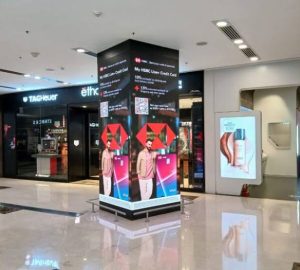
Hyperlocal Targeting Strategies in Mall Advertising for Better Conversions
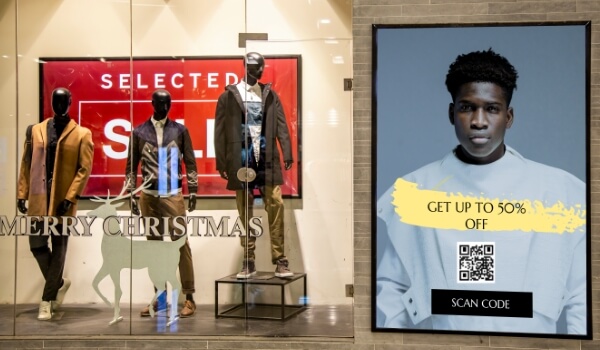
In the world of 2026 retail, “broadcasting” is dead. If you’re showing a winter coat ad to a shopper who just walked into a mall from 40°C heat in Mumbai, you’ve already lost them. Modern mall advertising has shifted toward Hyperlocal Targeting the art of reaching the right person, in the right aisle, at the precise moment they are ready to swipe their card.
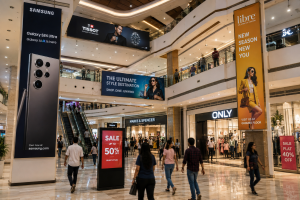
In India, where malls like Phoenix Citadel (Indore) or Lulu (Kochi) are practically cities unto themselves, “hyperlocal” doesn’t just mean the city; it means the specific floor or even the specific store entrance.
Here is how brands are using surgical precision to drive conversions in 2026.
1. Geofencing: The “Digital Perimeter”
Geofencing allows you to draw a virtual fence around the mall. But the real magic happens when you layer it.
-
The Strategy: Instead of targeting everyone in the city, you target people within a 2-km radius of the mall with a “Limited Time Offer.”
-
The Conversion Hook: As soon as they cross the mall’s physical threshold, their phone receives a push notification: “Welcome to the mall! You’re 300 meters away from a free coffee at [Brand X]. Tap for directions.” * Why it works: It creates a sense of “planned serendipity.” The shopper feels like they stumbled upon a deal exactly when they needed it.

2. Beacon Technology for “Aisle-Level” Accuracy
Bluetooth Low Energy (BLE) beacons are the unsung heroes of hyperlocal ads. Unlike GPS, which struggles indoors, beacons know exactly which floor a shopper is on.
-
The Strategy: Place beacons near high-traffic zones like food courts or cinemas. If a shopper lingers near a cinema playing a blockbuster, a nearby digital screen can instantly pivot to show merchandise related to that movie.
-
The Human Touch: It’s not just about selling; it’s about navigation. Use beacons to send a “Save for Later” map pin to a shopper’s phone for a product they just stared at for more than 10 seconds.
3. Smart Signage with “Anonymous Audience Analytics”
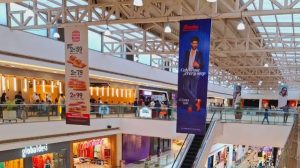
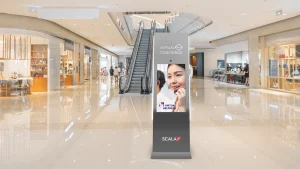
Modern digital out-of-home (DOOH) screens in Indian malls are now equipped with AI sensors that “read” the crowd in real-time without ever storing personal data.
-
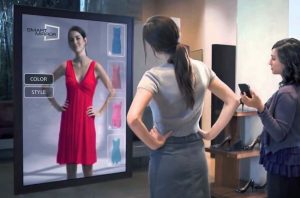
The Strategy: If a group of college students clusters around a screen, the ad flips to high-energy streetwear or the latest smartphone. If a family with a toddler walks by, the screen switches to a toy store promotion or a “Kids Eat Free” deal.
-
The Result: This is hyperlocal targeting based on Demographics-in-the-Moment. It ensures the ad is always relevant to the literal eyeballs staring at it.
4. Weather-Triggered Creative Swaps
In a country as climatically diverse as India, the weather is your best sales tool. Hyperlocal targeting means syncing your mall ads with the outdoor API.
-
The Strategy: Is it a sudden monsoon downpour in Bengaluru? The mall’s digital entrance screens should instantly switch from showing summer dresses to umbrellas, rain-friendly footwear, and hot chai combos.
-
The Conversion Factor: You are solving a problem that the shopper literally just experienced two minutes ago in the parking lot.

5. Cross-Tenant “Synergy” Targeting
One of the smartest hyperlocal moves is targeting based on where a shopper just was.
-
The Strategy: If a shopper uses the mall’s guest WiFi and spends 20 minutes in a high-end electronics store, a digital screen near the exit can show them an ad for premium laptop bags or noise-canceling headphones available three shops down.
-
The “Nudge”: This “Recency Targeting” captures the shopper while they are still in a “buying state of mind.”
The Secret Sauce: The “Last Mile” Coupon
The biggest hurdle in mall advertising is the “gap” between the screen and the store. Hyperlocal strategies close this gap with Dynamic QR Codes.
-
The Tactic: A screen near the elevator shows a 10-minute “Flash Sale” countdown. To claim it, the shopper must scan the QR, which opens a Google Maps “walking route” directly to the store.
-
The ROI: Because the coupon is hyperlocal and time-sensitive, it forces an immediate decision, leading to significantly higher conversion rates than a standard “20% Off” sign.
Conclusion
Hyperlocal targeting isn’t about stalking; it’s about relevance. In a massive Indian mall, shoppers are often overwhelmed by choice. By using geofencing, beacons, and real-time data, you aren’t just “advertising” you’re acting as a concierge, guiding them to exactly what they want, right when they’re standing in front of it.