Tracking Offline Conversions from Mall Advertising Campaigns Effectively
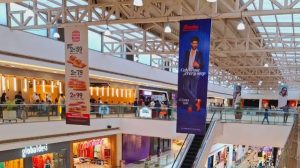
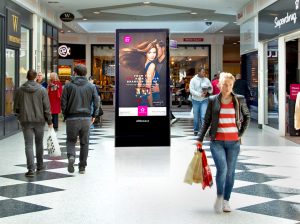
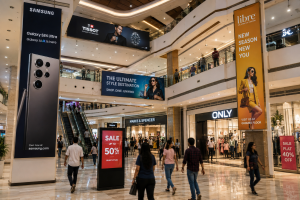
For years, the biggest criticism of mall advertising was that it was a “black hole” for data. You knew people saw your atrium banner, but you couldn’t prove they were the ones who eventually bought your product.
In 2026, the “Phygital” revolution has changed the game. Brands are no longer guessing; they are using a sophisticated mix of AI, mobile integration, and server-side tracking to close the loop between a physical ad and a cash register. Here is how to track your mall campaign conversions effectively.
1. The “Digital Bridge”: QR Codes and NFC 2.0
The simplest and most effective way to track a mall ad is to give the customer a reason to scan it. In 2026, static QR codes have evolved into Dynamic Incentives. * The Strategy: Instead of just linking to a website, the QR code on your mall pillar advertising or elevator screen should offer a “Mall-Exclusive” discount or a digital coupon that is saved to the user’s Apple or Google Wallet.
-
The Tracking: Each ad location (e.g., “Entrance North” vs. “Food Court”) has a unique ID. When the customer redeems that coupon at your store, your Point-of-Sale (POS) system records exactly which physical ad sparked the journey.
2. Geofencing and Mobile Ad-ID Matching
Malls are now high-precision GPS zones. By setting up a Geofence around the mall, brands can identify mobile devices that have entered the premises.
-
The Strategy: If a user is exposed to your digital out-of-home (DOOH) ad in the atrium and later enters your store, “Footfall Attribution” software can match their anonymous Mobile Advertising ID (MAID) to both locations.
-
The Tracking: By comparing the “exposed” group (those who were near your ad) against a “control” group (those in the mall who weren’t), you can calculate the exact “uplift” your mall ad provided in driving store visits.
3. AI Vision and Demographics
Modern mall cameras are no longer just for security; they are now sophisticated Audience Measurement tools.
-
The Strategy: AI-powered cameras mounted on or near your advertisement can track “Dwell Time” (how long someone looked) and basic demographics (age, gender, mood) without storing personal data.
-
The Tracking: You can see if your luxury watch ad is actually attracting the 35–50 age demographic you intended. If the “Look-to-Visit” ratio is high, you know your creative is working, even if they don’t buy immediately.
4. Leveraging Mall Management Apps
Most premium malls now have their own “Smart Apps” for parking, wayfinding, and loyalty.
-
The Strategy: Partner with the mall to feature your brand on their app’s “Offers” page.
-
The Tracking: When a user clicks an offer in the app while standing near your physical ad (detected via Bluetooth Beacons or Wi-Fi nodes), you get a 1:1 map of the customer’s journey from the hallway to the checkout counter.

5. The “Sought-After” Lead: WiFi Splash Pages
Malls offer free high-speed WiFi, but it usually requires a “Splash Page” login.
-
The Strategy: Brands can sponsor the WiFi login. As part of the login process, users see a 5-second video ad or a “Claim Your Gift” button.
-
The Tracking: Since the WiFi system knows exactly where the user is in the mall, it can track if a user who saw the “Sponsor Ad” eventually spent more than 10 minutes inside your specific store.
6. Post-Purchase Surveys (The Human Touch)
Sometimes the best tech is a simple question.
-
The Strategy: Train your retail staff to ask, “Did you happen to see our display in the main atrium today?” or include this as a one-click question on the digital billing screen.
-
The Tracking: This provides qualitative data that tech sometimes misses—like a customer who saw the ad, went home to think about it, and came back three days later to buy.
Conclusion: Data-Driven Retail
In 2026, mall advertising is no longer a gamble. By combining physical “hooks” like QR codes with backend “eyes” like geofencing and POS integration, brands can see exactly how many rupees every square foot of ad space is generating. The “black hole” is officially closed; welcome to the era of the Trackable Mall.