

Why Transit Advertising is the Most Underrated Marketing Channel in India
The digital marketing world is obsessed with “scroll-stoppers,” but in India, the real engagement is happening where people can’t scroll away: in transit.
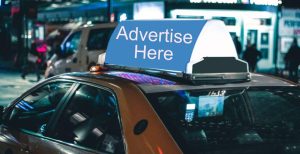
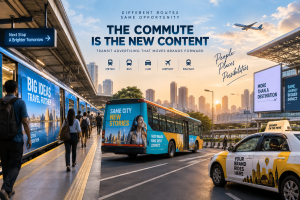
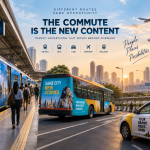
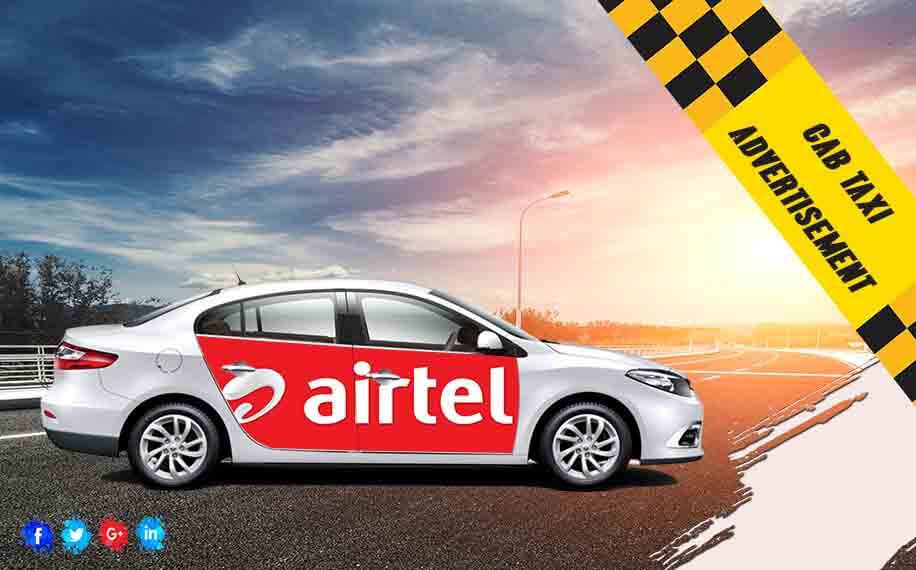
While billboards get the prestige and Instagram gets the buzz, transit advertising (advertising on buses, metros, autos, and cabs) remains the most underrated workhorse of the Indian marketing landscape. In 2026, as urban congestion hits an all-time high, transit media has evolved from “cheap stickers” into a high-tech, data-driven powerhouse.
Here is why transit advertising is secretly the most effective channel in India today.
1. The “Captive Audience” Advantage (Dwell Time)
The biggest problem with digital ads is the “Skip” button. The problem with billboards is the “Drive-by” effect (you see it for 3 seconds).
-
The Transit Reality: The average Delhi Metro commuter spends 20–40 minutes inside a coach. A passenger in a Mumbai local or a Bangalore bus is a “captive” audience.
-
The Result: When someone is stuck in a seat with limited mobile connectivity or simply “commuter boredom,” they don’t just glance at your ad they read it. This leads to a recall rate that is roughly 22% higher than static roadside hoardings.
2. Hyper-Local Targeting That Actually Works
Traditional billboards are fixed. If you want to target IT professionals in Hyderabad, you buy a board in Hitech City and hope they see it.
-
The Innovation: Transit ads move with the audience. You can brand specific bus routes that only travel through university areas or wrap auto-rickshaws that ply exclusively in high-end residential colonies.
-
The Precision: In 2026, GPS-enabled “moving billboards” (cabs and autos) allow brands to track exactly which neighborhoods their ads are visiting, providing a level of geographic data that traditional OOH simply can’t match.
3. The “Unbeatable” ROI (Cost per Mille)
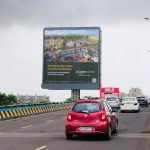
Let’s talk numbers. A premium billboard in a Tier-1 city like Mumbai or Delhi can cost anywhere from ₹5 lakh to ₹20 lakh per month.
-
The Comparison: For the price of one billboard, you can brand an entire fleet of 50–100 auto-rickshaws or multiple bus back-panels.
-
The Efficiency: Transit advertising typically offers a CPM (Cost per 1,000 views) of ₹15–₹30, which is significantly lower than the ₹50–₹200 range seen in high-end static billboards. For startups and local businesses, it’s the most “bang for your buck” you can get in the physical world.
4. 360-Degree Visibility (The Mobile Billboard)
A billboard faces one direction. A wrapped bus or auto-rickshaw is a 360-degree moving object.
-
The Reach: It reaches the passenger inside, the driver in the car behind, the pedestrian on the sidewalk, and the shopkeeper on the corner.
-
The “Sneak Attack”: Transit vehicles go where billboards are banned. Large hoardings are often restricted in narrow heritage lanes or quiet residential “gallis,” but an auto-rickshaw with your branding can go exactly where your customer lives.

5. The 2026 Tech Upgrade: DOOH & QR Integration
Transit advertising isn’t “analog” anymore.
-
Smart Screens: High-end cabs and Metro coaches now feature digital screens that show ads based on the vehicle’s real-time location.
-
The Conversion Hook: Because commuters have their phones in their hands, transit ads are the perfect home for QR codes. We are seeing a 25% lift in sales leads for campaigns that combine a bold transit visual with a “Scan for Discount” call-to-action. It turns a commute into a shopping trip.
Conclusion
Many brands still view transit as “low-brow” compared to a massive highway billboard. But smart marketers in 2026 realize that prestige doesn’t pay the bills attention does. In a country where 60% of urban Indians use public transport daily, ignoring the vehicles they travel in is a massive missed opportunity. If you want high frequency, local trust, and an audience that actually has the time to look at what you’re saying, it’s time to stop looking at the sky and start looking at the street.