
How to Target Daily Commuters Using Smart Outdoor Advertising Formats
The modern commute is a state of semi-consciousness. Whether it’s the rhythmic hum of a Delhi Metro train or the stop-and-go frustration of a Mumbai traffic jam, most commuters are operating on a biological “autopilot.” They aren’t looking for products; they are looking for an escape. In 2026, the brands winning the battle for attention aren’t the ones shouting the loudest, but the ones that successfully “interrupt” this daily trance using smart outdoor formats.
The Dwell-Time Opportunity
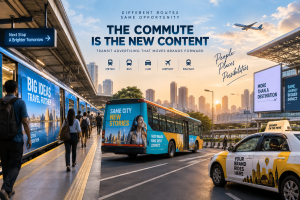
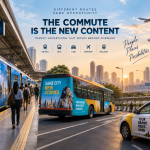
The most valuable currency in outdoor advertising isn’t size it’s time. A massive highway billboard is a high-speed “glance,” but the interior of a transit vehicle is a “session.” When a commuter is settled into a seat for a thirty-minute journey, their psychological state shifts from navigation to consumption.
This is where the “Smart Format” comes into play. By using high-resolution digital panels inside coaches that offer real-time news snippets or “weather-triggered” content alongside the brand message, advertisers are no longer seen as intruders. They become a source of entertainment. The key here is Value Exchange: if you give a bored commuter something interesting to read (like a 60-second industry tip or a localized joke), they are statistically 40% more likely to scan your QR code than if you simply showed them a static logo.

Syncing with the Biological Clock
A human being at 8:00 AM is a completely different consumer than that same person at 6:00 PM. Smart Out-of-Home (OOH) in 2026 thrives on Programmatic Triggers. Instead of a fixed vinyl sheet that stays up for a month, smart digital kiosks now flip their creative based on the sun’s position.
In the morning “Hustle Phase,” the messaging is sharp, high-contrast, and solution-oriented think insurance, quick breakfast, or productivity apps. As the sun sets and the “Fatigue Phase” kicks in, the screens shift to warmer colors and “Reward” messaging food delivery, streaming entertainment, or weekend getaways. By syncing with the commuter’s internal clock, the brand feels like it’s “in on the secret” of their day, creating an emotional resonance that a generic billboard can never achieve.
The Digital Handshake: From Street to Screen
The most effective smart formats today act as a “bridge” to the smartphone. We’ve moved past the era of tiny, unscannable QR codes on 40-foot hoardings. Today, it’s about Geofencing and Retargeting. When a commuter lingers at a “Smart Bus Shelter” for more than three minutes, their mobile device enters a virtual perimeter.
This allows for a “Double-Tap” marketing effect. The commuter sees a bold, intriguing visual on the physical shelter, and then, twenty minutes later while they are scrolling on the train, they see the “Call to Action” on their Instagram feed. This isn’t a coincidence; it’s a coordinated handshake between the physical world and the digital one. It turns a passive sighting into a trackable lead.
Breaking the Pattern with “Visual Friction”
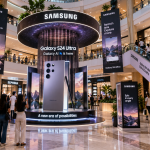
Human eyes are designed to ignore the predictable. We tune out the gray concrete, the green trees, and the standard rectangular signs. To capture a commuter, you need Visual Friction. This is why 3D anamorphic screens and “extensions” where parts of the ad physically break the frame of the billboard are seeing a massive resurgence.
When a commuter sees a 3D coffee cup that appears to be “pouring” over a digital screen at a busy junction, it forces the brain to snap out of autopilot. That split second of “Wait, what is that?” is the only window a brand has to plant a memory. If an ad doesn’t cause a “pattern interrupt,” it might as well be invisible.
Conclusion
At the end of the day, targeting a commuter is about empathy. The commuter is often tired, bored, or in a hurry. The “Smartest” format is the one that respects their situation. Whether it’s an ad that changes its copy to say “We know it’s raining here’s a 20% discount on a cab” or a screen that provides a free Wi-Fi hotspot in exchange for a 15-second video view, the goal is to be helpful. In 2026, the brands that commuters remember are the ones that made their journey a little bit easier, a little bit faster, or a little bit more interesting.