




Role of Outdoor Advertising in Building Trust for New Brands in India
In the high-speed world of 2026, where a new Indian startup seems to launch every hour, the biggest hurdle isn’t funding or technology it’s legitimacy. While digital ads can be spun up in minutes for a few thousand rupees, they often carry a “fly-by-night” stigma in the eyes of the skeptical Indian consumer.
Outdoor Advertising (OOH) has emerged as the ultimate “trust-builder” for new brands. It takes a brand out of the ethereal glow of a smartphone and anchors it into the physical reality of the street. Here is why OOH is the “silent partner” in establishing brand authority in India today.
The “Physical Proof” Paradox
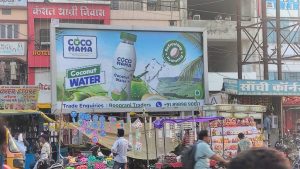
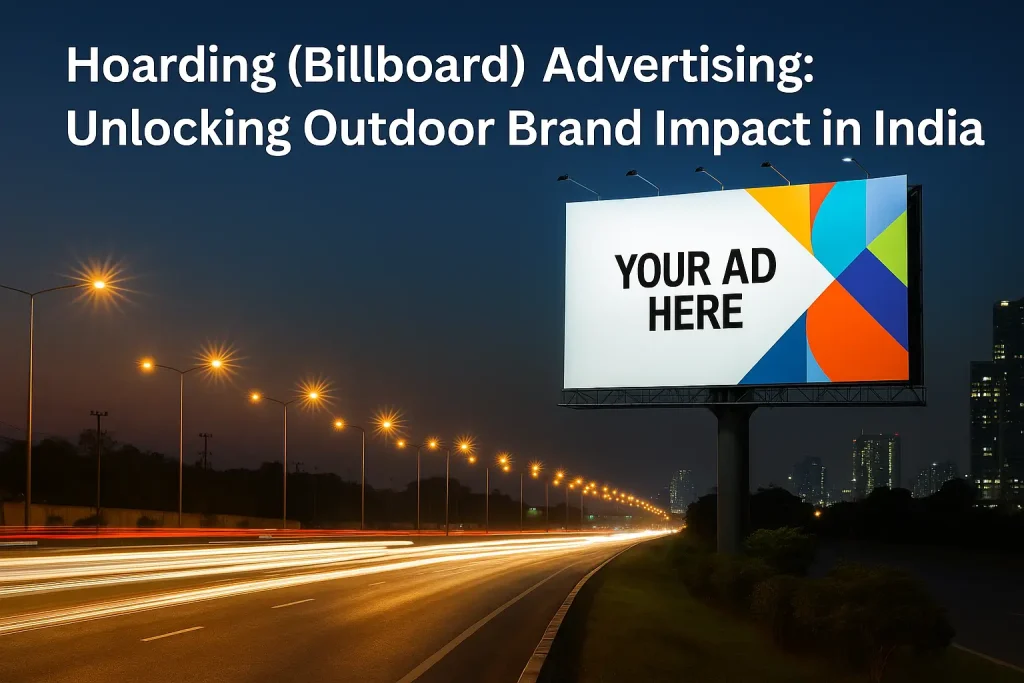
There is a deep-seated psychological bias in the Indian market: If a brand is on a massive hoarding at a major junction, it must be “real.” Digital ads are perceived as temporary and easily faked. A scammer can buy an Instagram ad, but it’s much harder (and riskier) to put up a 40-foot billboard in the middle of Gurgaon or South Mumbai. For a new brand, an OOH campaign acts as a “public deposit.” It signals to the consumer that the company has the capital, the permanence, and the confidence to stand out in the open. It’s not just an ad; it’s a physical manifesto.

Authentication for “Bharat”
While India’s Tier-1 cities are comfortable with digital-first brands, the real growth is happening in Tier-2 and Tier-3 cities. In these markets, trust is built through community presence.
When a new Fintech app or E-commerce platform appears on the local bus stand or a wall-wrap near the main market, it undergoes a process of “social authentication.” People see the ad while standing with friends or commuting with family. This shared viewing experience creates a collective trust—the brand is no longer a private secret on a phone; it’s a public entity recognized by the neighborhood. In these regions, OOH isn’t just marketing; it’s a “letter of introduction” to the community.
The “Anti-Scam” Shield
2026 has seen a rise in digital ad fatigue and “click-fraud” awareness. Consumers are increasingly wary of “sponsored” links that lead to phishing sites or sub-par products.
Outdoor advertising is fundamentally transparent. You cannot “hide” a billboard behind an algorithm or a bot. Because OOH is a broadcast medium meaning everyone sees the same message at the same time it holds the brand to a higher standard of accountability. For a new brand, this transparency is a powerful shield. It tells the customer: “We are here, we are visible to everyone, and we aren’t going anywhere.”
Bridging the “Trust Gap” with Digital
Smart brands in 2026 aren’t choosing between OOH and Digital; they are using OOH to make their Digital ads work better. This is known as the “Search Lift” effect.
Statistics show that consumers are 48% more likely to click on a digital ad if they have already seen the brand on a physical hoarding. The OOH ad builds the “foundation of trust” in the subconscious. Later, when the consumer sees a targeted ad on their phone, the brain recognizes it not as an “interruption,” but as a “reminder” of that credible brand they saw at the Metro station.

Beyond the Billboard: Transit as a Trust Vehicle
For new service-based startups (like home cleaning, delivery, or health-tech), transit advertising is the ultimate credibility hack.
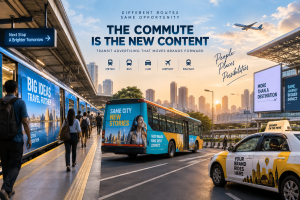
Branding a fleet of electric delivery bikes or wrapping a local city bus turns the entire city into a referral network. When a consumer sees a branded vehicle moving through their own residential colony, the brand is no longer a stranger it’s a service provider that is “already active” in their area. This “operational visibility” is the fastest way to turn a new name into a trusted household staple.
The Strategy for New Brands
-
Start Local, Go Big: Don’t spread a small budget across a whole state. Own one high-traffic junction or one Metro line completely. This “Domination” creates the illusion of being a market leader.
-
Simplicity is Authority: Trust isn’t built with cluttered fine print. A clean design with a bold value proposition and a clear logo signals a brand that knows exactly what it stands for.
-
Coordinate the Reveal: Match your OOH launch with your PR and Digital push. When a consumer sees you “everywhere” at once, the sheer scale of the launch creates an instant “legacy brand” feel.
Conclusion
In the Indian context, Outdoor Advertising is the “Bhoomi Pujan” (groundbreaking ceremony) of a brand’s journey. It validates the brand’s existence in the eyes of the public and provides the physical gravity needed to keep a digital identity from floating away. For a new brand looking to win the hearts and wallets of Indian consumers, being “seen on the street” is the shortest path to being “trusted in the home.“